CENTRE FOR
CLEAN
ENERGY SKILLS


In a new report, McKinsey examined the impact of net-zero transition on demand, capital spending, costs, and jobs across 69 countries.
To achieve net-zero emissions by 2050, the global economy will need to spend $9.2 trillion on physical assets annually by 2020, which is equal to half of global corporate profits and a quarter of total tax revenues today.
Power, industry, mobility, buildings, agriculture, forestry, and waste systems are just a few of the energy and land-use systems contributing to global emissions, according to McKinsey. Each of these systems must be transformed in order to achieve net-zero emissions.
Powering the skills and capability development of the clean energy industry and beyond.
As the world accelerates its sprint toward net-zero carbon emissions in the exponential growth market of clean energy, you will:
Gain actionable and practical key learning outcomes
Get up to speed and stay ahead of the curve
Acquire knowledge & insight easily and effectively
Obtain the toolkits needed to understand the technical, commercial and regulatory landscapes
Close blindspots and bridge information gaps
Covers a range of clean energy sources and verticals focusing on techno-commercial as well as regulatory and policy-oriented topics


Whether you’re looking to upskill, reskill, learn a new skill or bridge a knowledge gap, review the below categories of interest to uncover courses that help you achieve your learning outcomes.
Advance your career in an industry undergoing massive transformation with global investment in clean energy to surpass $1.5trn annually by 2025.
Increasing renewable energy demand is accelerating energy industry convergence. Don’t miss growth opportunities to to take your career to the next level.
Build your understanding of new technologies such as green hydrogen, offshore wind, advanced batteries and other forms of storage.
The adoption of clean energy will see consequential changes to all industries across the economy – e.g. the electrification of transportation.
Keeping up to date will enable you to take advantage of the rise of new business models and opportunities within the energy transition.


Every organization is set to be impacted by decarbonization and Numerous industries will be transformed by the net-zero economy.
From policy development, new standards and regulatory changes to commercial opportunities across value chains, a capable and skilled workforce will be crucial.
Upskill your workforce with confidence and in partnership with our highly experienced and qualified Expert Instructors.
Close the L&D gaps in your organization through a matrix of technical and commercial as well as fundamental and advanced learning curriculum.
From new-starters to existing staff, every team member can benefit without breaking the bank.
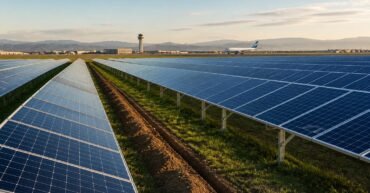
Kōwhai Park solar farm at Christchurch Airport has 300,000 panels on 568 acres, sends 150 MW to the grid and used a 66,000-volt cable laid at night.
Student unions shut Arunachal’s Upper Subansiri district for 12 hours in Menga Dam protests against a 1,605 MW project, and a public hearing was scrapped.
Singapore’s geothermal potential may exceed 60 times its annual electricity use, EMA survey finds. A 15-month feasibility study starts by end-2026.