
Blog
Ormat’s EGS push to power AI data centers
Estimated reading time: 5 minutes · Last updated: 2026-08-22
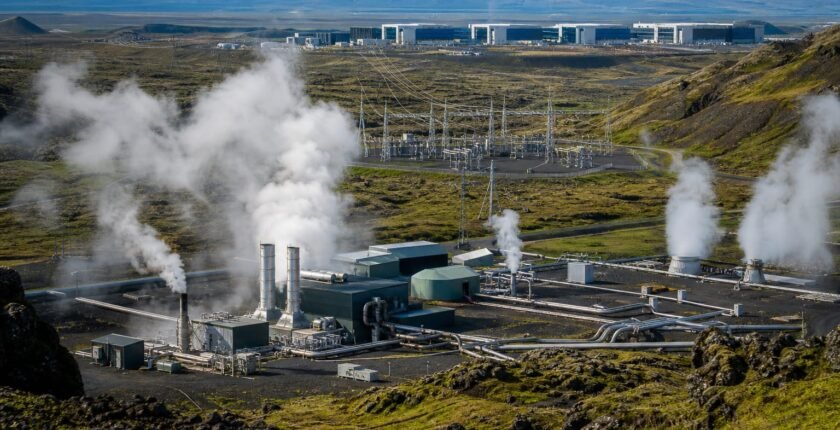
Ormat Technologies is positioning enhanced geothermal systems (EGS) to supply baseload power for hyperscaler AI data centers, using deeper wells and oilfield drilling methods to reach hotter reservoirs. Ormat EGS is intended to let developers site geothermal where customers need it rather than only above natural steam or hot-water reservoirs. Ormat operates 1.85 gigawatts of geothermal capacity worldwide and has a 2028 growth target of up to 2.8 gigawatts through traditional geothermal and battery storage, exclusive of EGS. As first reported by Fortune, Doron Blachar said Ormat’s two Nevada pilot projects with Sage Geosystems and SLB could be online by late 2027.
We’re in a very rare situation where all the stars are aligned exactly on time.
Doron Blachar, Ormat CEO
Key takeaways
- Global capacity: Ormat operates 1.85 gigawatts of geothermal capacity worldwide, enough to power about 1.4 million U.S. homes.
- Financials: Ormat reported $662.7 million in revenue and a $71.2 million net profit for the first half of 2026.
- Pilots and partners: Ormat is running EGS pilots in Nevada with Sage Geosystems at Blue Mountain and with SLB at Desert Peak, aiming for online status by late 2027.
- Scale potential: Ormat says it previously developed roughly 100 megawatts per year; each hyperscaler EGS project could be on the order of 500 megawatts.
Table of contents
Why EGS matters for AI's energy appetite
AI training and inference at hyperscale require steady, high-density baseload power because data centers run heavy compute loads continuously. Ormat frames enhanced geothermal systems (EGS) as a way to meet that need by creating engineered reservoirs at depths and temperatures not constrained to naturally productive fields. The company argues EGS could let developers site baseload plants closer to major load centers and data parks rather than being limited to classic geothermal locales.
EGS uses techniques borrowed from advanced oil‑field drilling — longer horizontal wells and targeted stimulation — to access hotter rock that can produce electricity when coupled with a surface plant. That shift matters because data center operators value predictable, dispatchable output and long-term contracts; a valid EGS project that achieves those attributes can compete with gas-fired baseload and firming combinations of renewables and storage.
How Ormat plans to drill, test and standardize plants
Ormat is running two pilot programmes in Nevada: a Sage Geosystems pilot staged at Blue Mountain and an SLB-backed pilot at Desert Peak. The companies will test subsurface characterisation, drilling approaches and reservoir behaviour under production conditions. Sage’s milestone pilot near San Antonio came online in August, and Ormat says it will bring lessons from that and its Nevada testing into both pilots.
To reduce unit costs and speed replication, Ormat launched the Ormega100 platform earlier this year as a standardized, simplified power plant design with fewer moving parts. The company intends to combine improved drilling methods with a repeatable surface package so that once a reservoir is proven, the plant design and interconnection process can be replicated across acreage positions it has acquired in states such as New Mexico, Oregon and Idaho.
Where Ormat stands: finance, contracts and capacity
Ormat reported $662.7 million of revenue and $71.2 million net profit for the first half of 2026, and the stock has risen nearly 20% over the past 12 months to about a $6.75 billion market capitalization. The company stresses it is already profitable outside its EGS pilots and points to existing agreements for "hundreds of megawatts" of supply with hyperscalers and utilities as the commercial underpinning for scale.
Management’s 2028 target for traditional geothermal plus battery storage is up to 2.8 gigawatts, which excludes any EGS capacity. By comparison, Ormat’s ongoing development pace has been in the order of 100 megawatts per year; the company says each successful hyperscaler EGS project could deliver roughly 500 megawatts, a step change if replicated. On public markets, EGS pure-play Fervo earlier this year briefly reached a $10 billion valuation before trading down to about $5 billion, a reminder that investors are still testing the sector’s risk‑reward profile.
Obstacles: cost, drilling risk and market fit
The central challenge is proving EGS at a cost and timeline that compete with existing firming options: gas peakers, combined-cycle plants, renewables plus batteries, or nuclear. Ormat and competitors must show repeatable reservoir performance, manageable stimulation risk, and predictable drilling costs at depths and temperatures targeted for EGS. If drilling or reservoir creation proves slower or more expensive than predicted, final project economics will suffer.
Permitting, interconnection queues and the need for long-term offtake agreements with hyperscalers are additional practical constraints. The company highlights bipartisan political acceptance of geothermal at present, and SLB’s entry signals that oilfield service capability can be repurposed for geothermal — but political and market support can shift if costs or timelines disappoint.
| Item | Detail |
|---|---|
| Ormat operational capacity | 1.85 GW worldwide |
| Ormat H1 2026 results | $662.7M revenue; $71.2M net profit |
| 2028 target (traditional geothermal + batteries) | Up to 2.8 GW (excludes EGS) |
| Ormat development pace before EGS | About 100 MW per year |
| Potential hyperscaler EGS project size | About 500 MW each (company estimate) |
How Ormat’s EGS strategy could play out
The case for
- If the Nevada pilots validate reservoir creation and production, Ormat can replicate the Ormega100 surface design across positions and scale capacity materially above its historical ~100 MW per year.
- Long-term contracts with hyperscalers and utilities for 'hundreds of megawatts' would provide revenue visibility that accelerates permitting and financing for multi-hundred-MW EGS projects.
The case against
- Higher-than-expected drilling and stimulation costs or underperforming reservoirs would raise levelised costs and make EGS uncompetitive with gas or renewables plus storage.
- Delays in interconnection or in securing firm offtake contracts would lengthen the timeline to commercial repayment and keep EGS projects off the market despite technical success.
What to be careful about
- Economic risk if EGS capex and operating costs do not fall enough to compete with gas, renewables plus storage, or nuclear.
- Subsurface risk from unsuccessful reservoir stimulation or shorter-than-expected production life for engineered reservoirs.
- Permitting and interconnection bottlenecks that delay commercial operation even if pilots prove technically successful.
- Concentration risk tied to securing long-term hyperscaler contracts; demand assumptions rely on those counterparties committing to large, long-term purchases.
The bottom line
Ormat’s strategy pairs technical experimentation with immediate commercial positions: the company brings a 1.85 GW operating base, recent profitability, and hyperscaler relationships into a programme that tests whether EGS can be made repeatable and economical. The pilots in Nevada and lessons from Sage’s August milestone will determine whether Ormat can convert its acreage and standardized Ormega100 design into multi-hundred‑megawatt projects for AI data centers. The commercial prize is large, but the path requires drilling success, cost reduction and firm offtake agreements before EGS can shift from pilot to scale.
What to watch
- Watch for the SLB and Sage Nevada pilots to reach online status; Ormat expects them by late 2027.
- Watch Ormat’s 2028 capacity update to see whether it maintains the target of up to 2.8 gigawatts from traditional geothermal and battery storage.
- Watch for the first commercial deployment of an Ormega100 unit; no firm date has been set.
Frequently asked questions
What is enhanced geothermal systems (EGS)?
EGS is an engineered approach that accesses hot rock at depth using advanced drilling and stimulation to create a heat-exchanging reservoir; the approach decouples geothermal development from naturally occurring steam or hot-water fields and aims to expand where plants can be built.
How large is Ormat today and what are its targets?
Ormat currently operates 1.85 gigawatts of geothermal capacity and said it targets up to 2.8 gigawatts of traditional geothermal plus battery storage by 2028, excluding any EGS buildout.
When will the EGS pilots report results?
Ormat says its Nevada pilots with Sage and SLB could be online by late 2027; the company will publish operational and reservoir data from those tests when available.
Related reading
This article is information, not financial advice. Anyone acting on it should do their own checks.