
Blog
Ohio Regulator Clears Gas Plant and Brownfield Solar
Estimated reading time: 5 minutes · Last updated: 2026-08-22
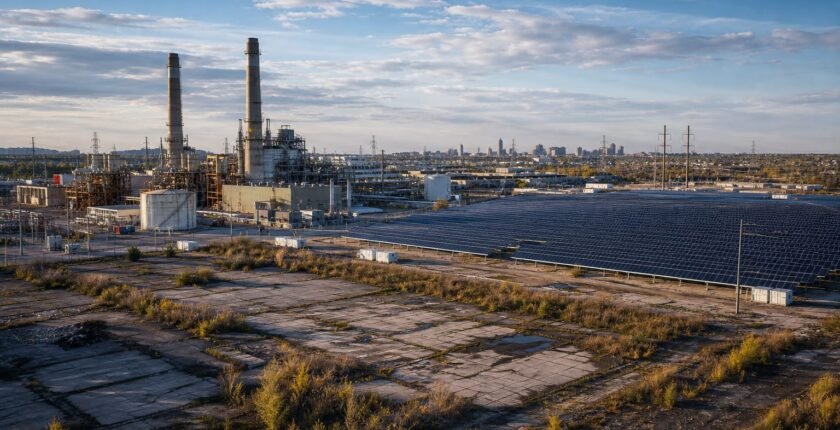
The Ohio Power Siting Board on Thursday issued environmental permits for two large new generators: a natural gas-fired plant called Chestnut Run Energy Project and a brownfield solar farm sited on a former coal mine. Advanced Power, backed by ArcLight Capital Partners, will place Chestnut Run over 240 acres in Carroll County; a review of Ohio Power Siting Board records shows it would be the first non-data-center-affiliated gas plant permitted in Ohio since 2019. Recurrent Energy, a subsidiary of Canadian Solar, plans a 280-megawatt installation in Vinton County using 314,000 panels atop the Sands Hill Coal Mine in Hamden.
Key takeaways
- Chestnut Run permit: Advanced Power’s Chestnut Run Energy Project was permitted for construction on 240 acres in Carroll County.
- Gas plant jobs: The Chestnut Run project is expected to create 500 construction jobs and 20 long-term operational positions.
- Brownfield solar scale: Recurrent Energy will build a 280-megawatt solar farm in Vinton County using 314,000 panels on the Sands Hill Coal Mine.
- Solar jobs: The Vinton County project is estimated to create 300 construction jobs and 11 long-term operational jobs.
- Regulatory context: The decisions follow 2025 state legislation easing taxes and permitting for gas projects and a 2021 law that gives local governments broad sway over solar siting.
Table of contents
Projects and developers: scale, location and workforce
Advanced Power, backed by private equity firm ArcLight Capital Partners, plans the Chestnut Run Energy Project on 240 acres in Carroll County. The company intends a conventional natural gas-fired plant; state filings and the OPSB decision list 500 estimated construction-related jobs and 20 long-term operational positions tied to the build. The permit notice also records an expectation that the plant will emit millions of tons of carbon dioxide annually and smaller sums of other air pollutants, as the board’s paperwork describes environmental impacts.
Recurrent Energy, a subsidiary of Canadian Solar, will develop a 280-megawatt solar array in Vinton County. The installation will use 314,000 solar panels sited on the former Sands Hill Coal Mine in Hamden, population 796. The OPSB paperwork attached to the permit estimates 300 construction jobs and 11 long-term operations roles for that project, and frames the work as a brownfield reuse rather than conversion of agricultural land.
How the permits fit Ohio’s recent policy and permitting history
A review of Ohio Power Siting Board records cited in the board’s materials shows Chestnut Run would be the first non-data-center-affiliated gas power plant permitted in Ohio since 2019. That timing matters because state lawmakers in 2025 passed legislation that reduced property taxes and eased procedural hurdles for gas developers, a change the board’s order references as part of a broader policy shift aimed at responding to data-center-driven demand on the grid.
The solar approval sits against a contrasting record for large-scale solar on farmland: the OPSB has rejected eight industrial-scale solar projects since 2020, many after formal township opposition. Ohio’s 2021 law that expanded local governments’ influence over solar permitting remains a dominant factor in those rejections and is why the Sands Hill brownfield location is notable: it avoids conversion of agricultural fields and faces a different local-authority review path.
Local impacts, legal challenges and emissions trade-offs
Both projects carry local economic and environmental consequences. The gas plant’s expected creation of 500 construction jobs and 20 operations roles is the main local economic case in the permit filings, but the board’s environmental summary makes clear the plant would release millions of tons of carbon dioxide each year alongside smaller pollutant emissions. Recurrent Energy’s 280-megawatt project highlights job creation — 300 construction and 11 long-term positions — and the reuse of a shuttered strip mine, a factor that regulators and proponents cite when weighing community impacts.
Permitting outcomes are already the subject of litigation and appeals. The OPSB denied an anti-solar complaint against Fountain Point Solar, which won a permit in 2024; Citizens Against Fountain Point has asked the Ohio Supreme Court to review that permit and the court has not yet ruled. Separately, the board upheld its rejection of Sloopy Solar in Clark County, a decision that could itself move to the state’s high court if appealed.
| Project | Developer / Backer | Location | Scale / equipment | Estimated jobs |
|---|---|---|---|---|
| Chestnut Run Energy Project | Advanced Power / ArcLight Capital Partners | Carroll County | 240 acres; natural gas-fired plant | 500 construction; 20 long-term |
| Vinton County solar (Sands Hill) | Recurrent Energy (Canadian Solar) | Vinton County; Hamden | 280 megawatts; 314,000 panels | 300 construction; 11 long-term |
Case for and against the approvals
The case for
- Both permits promise local construction employment and, in the solar project’s case, brownfield reuse rather than conversion of farmland.
- The 2025 legislative changes and OPSB approvals could accelerate grid capacity additions to serve rising demand, including data-center growth that lawmakers cited when easing rules for gas builds.
The case against
- The gas plant permit brings large ongoing greenhouse-gas emissions; the board’s filings reference 'millions of tons of carbon dioxide' annually, a major climate downside.
- The history of solar rejections and active legal challenges — including an Ohio Supreme Court petition over Fountain Point — create regulatory uncertainty for future projects.
What to be careful about
- Pending litigation: Citizens Against Fountain Point has asked the Ohio Supreme Court to review a 2024 permit and the court has not yet ruled.
- Local political resistance can still block or delay projects, as shown by eight industrial-scale solar rejections since 2020.
- Permits do not guarantee construction: economic or contracting issues could postpone ground‑breaking despite the approvals.
The bottom line
The OPSB approvals mark a contrast in Ohio policy outcomes: a first non-data-center-affiliated gas permit since 2019 and a large brownfield solar approval that avoids agricultural land. Both projects cite significant construction work — hundreds of jobs each — but they point in different directions on emissions and community impact. The gas build brings ongoing greenhouse‑gas releases described in the filings as millions of tons of carbon dioxide per year; the solar project trades lower operational emissions for a large footprint of panels on a former strip mine. Pending appeals and local politics mean the approvals are a milestone, not a finish line.
What to watch
- Watch for an Ohio Supreme Court decision in Citizens Against Fountain Point’s appeal of the Fountain Point Solar permit; no date has been set.
- Watch whether the Sloopy Solar rejection in Clark County is appealed to the Ohio Supreme Court; no date has been set.
- Watch for construction permits or lender filings that signal groundbreakings for Chestnut Run and the Vinton County solar project; no dates have been set.
Frequently asked questions
Who is building the Chestnut Run gas plant?
Advanced Power, backed by ArcLight Capital Partners, is the developer named in the permit; the project is called Chestnut Run Energy Project and is sited on 240 acres in Carroll County.
How large is the Vinton County solar project and where will it sit?
Recurrent Energy, a subsidiary of Canadian Solar, plans a 280-megawatt array using 314,000 panels on the Sands Hill Coal Mine in Hamden, Vinton County.
Are the permits final or are there legal challenges?
The OPSB issued the permits but legal challenges remain: Citizens Against Fountain Point has asked the Ohio Supreme Court to review a 2024 permit, and the board’s rejection of Sloopy Solar could also proceed to appeal.
Related reading