
Blog
Central Asia Blackout Traced to Toktogul Plant
Estimated reading time: 5 minutes · Last updated: 2026-08-22
On August 14 a short shutdown of two generators at the Toktogul hydropower plant triggered an initial disturbance that coincided with power outages in four Central Asian states. Kyrgyzstan’s Energy Ministry recorded the shutdowns and on August 17 published a statement that called the event a “technological disruption” and said a special commission will investigate; this account is as first reported by Eurasianet. Kyrgyz officials also disputed responsibility for all subsequent outages, saying each affected country’s grid behaviour must be analysed separately.
this initial disturbance should not be equated with the direct cause of the shutdown of individual power systems and power nodes in other countries.
Kyrgyz Energy Ministry
Key takeaways
- Initial fault: Kyrgyzstan’s Energy Ministry recorded a short-term shutdown of two generators at the Toktogul Hydroelectric Power Station on Aug 14.
- Countries affected: Power outages were reported across four states in Central Asia, including Bishkek and southern Kazakhstan, where Almaty saw blackouts.
- Kyrgyz response: On Aug 17 Kyrgyz authorities called the event a “technological disruption” and said a special commission will investigate the causes.
- Regional resilience: Uzbekistan’s Energy Ministry said recent investments in energy storage limited the disruption inside Uzbekistan.
Table of contents
- Key takeaways
- What Toktogul’s shutdown means: the immediate facts
- How an initial fault spread through a linked network
- Demand, storage and external support: the wider pressures
- Investigations and likely fixes under consideration
- Outlook: which forces could stabilise — and which could worsen — the regional grid
- What to be careful about
- Frequently asked questions
What Toktogul’s shutdown means: the immediate facts
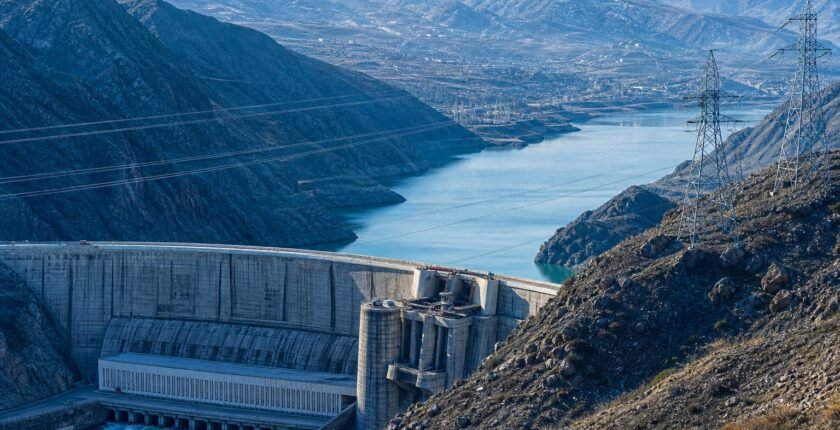
Kyrgyz officials have identified the origin of the weekend disturbance as a brief failure at the Toktogul hydropower facility. The Energy Ministry recorded a short-term shutdown of two generators, and linked that event to an initial disturbance in parallel operations across the regional grid.
The ministry labelled the incident a “technological disruption” and emphasised that the shutdown was the initiating event recorded inside Kyrgyzstan. Kyrgyz authorities say safeguard procedures were employed to isolate and stabilise transmission flows after the generators tripped.
The phrase two generators at the Toktogul Hydroelectric Power Station appears in official Kyrgyz communications as the recorded starting point of the disturbance, and Kyrgyzstan has called for further technical analysis rather than accepting automatic attribution for later outages in neighbouring systems.
How an initial fault spread through a linked network
Central Asia’s electricity systems operate with substantial interconnection. When flows change suddenly inside one node, automatic protections and emergency control systems in other parts of the network can respond in ways that alter frequency and load-sharing across borders.
Kyrgyzstan’s statement links the Toktogul shutdown to a change in power flows and the activation of emergency controls in the Unified Energy System of Central Asia. Officials in Kazakhstan and elsewhere reported outages that followed the disturbance, and the sequence exposed how tightly coupled supplies and protections are across the region.
Investigations will need to separate the initiating mechanical or operational fault at Toktogul from later grid reactions in Kazakhstan, Uzbekistan and Tajikistan so that each interruption’s proximate causes can be determined.
Demand, storage and external support: the wider pressures
Regional analysts and the Kyrgyz statement point to rising electricity demand as a background pressure on the system. Governments across Central Asia are expanding generation, transmission and storage capacity to keep pace with growth, and those changes change how disturbances propagate.
Uzbekistan’s Energy Ministry said recent investments in energy storage allowed the country to supply the grid quickly after the disturbance, limiting local outages. At the international level, the World Bank in January 2026 launched REMIT, a 10-year programme intended to build regional market links and expand transmission capacity to support larger renewable deployments.
Those policy and investment responses are visible drivers that could either reduce the chance of cascading outages in future or, if poorly sequenced, shift strain elsewhere in the network.
Investigations and likely fixes under consideration
Kyrgyzstan has said a special commission will examine the Toktogul incident; the ministry argued that the initial disturbance should not be treated as the sole cause of later shutdowns in other countries. Technical teams will therefore need to review generator logs, protection relay actions and cross-border power exchanges.
Expected outcomes from investigations include identification of whether the fault at Toktogul was mechanical, operational or software-related, and whether protection settings on cross-border links require harmonisation. Governments and multilateral lenders are already funding transmission upgrades and storage projects, and investigators are likely to prioritise changes that reduce the risk of rapid frequency shifts.
Any recommended fixes will have to balance near-term interventions—settings, coordination and emergency procedures—with longer-term investments in transmission capacity and storage to absorb shocks.
| Country | Area hit | Official response |
|---|---|---|
| Kyrgyzstan | Bishkek | Recorded two-generator shutdown at Toktogul; launched a special commission |
| Kazakhstan | Southern regions including Almaty | Reported outages after frequency recovered; disputed sole attribution to Kyrgyz fault |
| Uzbekistan | Portions limited | Said energy storage investments limited disruption |
| Tajikistan | Portions affected | Affected but causes to be determined by further analysis |
Outlook: which forces could stabilise — and which could worsen — the regional grid
The case for
- Expanded energy storage and new transmission links under programmes like the World Bank’s REMIT could reduce the chance that a single plant’s fault cascades across borders.
- If investigators identify protection-setting mismatches, coordinated changes to emergency controls and relay settings can be implemented quickly to limit cross-border impacts.
The case against
- Rising electricity demand, driven by economic growth and hotter summers, increases system loading and narrows operational margins where faults can be absorbed.
- Political disagreement over responsibility between capitals could delay harmonised fixes and slow cross-border coordination of protection settings and operational protocols.
What to be careful about
- Cascading outages remain possible while protection settings and cross-border coordination are not fully harmonised across the Unified Energy System of Central Asia.
- Delayed or contested investigations could slow adoption of technical fixes and transmission investments funded under regional programmes.
- Insufficient storage capacity in parts of the region could leave some systems vulnerable to short-term supply gaps when a large generator trips.
The bottom line
The August outage underlines how a short failure at a major hydropower node can stress an interconnected grid when demand is high. Kyrgyzstan has acknowledged the initial shutdown at Toktogul and has opened a special commission, but it disputes direct responsibility for later outages in neighbouring systems. Practical remedies now under review range from coordinated protection-setting changes to accelerated transmission and storage investments supported by programmes such as the World Bank’s REMIT. The immediate task for investigators is to separate the plant-level fault from subsequent cross-border grid behaviour so that fixes target the true causes.
What to watch
- Watch for the special commission’s findings on the Toktogul shutdown; no date has been set for a public report.
- Watch for REMIT implementation milestones from the World Bank and regional governments; no specific dates were provided in the public statements.
- Watch for announcements by Kazakhstan, Uzbekistan or Tajikistan about changes to protection settings or new storage projects; no dates have been announced.
Frequently asked questions
When did the blackout begin and which plant was involved?
The disturbance began on August 14 when Kyrgyz officials recorded a short-term shutdown of two generators at the Toktogul Hydroelectric Power Station; the ministry described the event as a technological disruption.
How many countries were affected by the outage?
Reports and government statements indicate outages occurred in four Central Asian states, including Kyrgyzstan, Kazakhstan, Uzbekistan and Tajikistan, with major urban impacts in Bishkek and parts of southern Kazakhstan such as Almaty.
What role did storage and investments play in limiting the disruption?
Uzbekistan’s Energy Ministry said recent investments in energy storage allowed the country to supply the grid quickly after the disturbance, reducing the local impact; the World Bank’s REMIT programme, launched on Jan 22, 2026, aims to expand such regional capacity over ten years.
Related reading