
Blog
Dama Solar set to be EU’s biggest solar farm at 1.24 GW
Estimated reading time: 5 minutes · Last updated: 2026-08-23
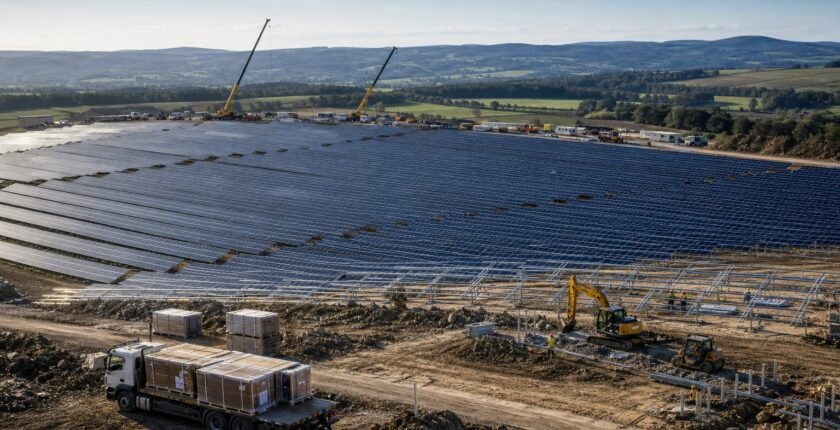
Rezolv Energy's Dama Solar project has cleared a key regulatory step: the Romanian Energy Regulatory Authority (ANRE) has issued an establishment authorisation that recognises the developers' financing arrangements. As first reported by Euronews, the scheme is planned in Arad County near the Hungarian border and is designed to install 1.24 GW of solar capacity with a commercial operation target in 2030. Rezolv Energy estimates peak theoretical output at 10.86 TWh per year and says the plant could replace a large share of Romania's current solar generation while allowing the developers to consider adding “substantial energy storage” later.
Key takeaways
- Permit: The Romanian Energy Regulatory Authority (ANRE) has issued an establishment authorisation for Rezolv Energy's Dama Solar project.
- Capacity: The project is designed to install 1.24 GW of solar capacity and has a theoretical maximum output of 10.86 TWh per year.
- Conservative output: Using a conservative 15% average capacity factor, the farm would produce about 1.63 TWh in a year.
- Impact: Developers say annual output could cover consumption in more than 280,000 households (close to one million people) and create over 500 jobs in the next three years.
Table of contents
Project basics: scale, location and schedule
Dama Solar is planned for north‑west Arad County, close to Romania's border with Hungary, and is led by Rezolv Energy. The developers have obtained an establishment authorisation from the Romanian Energy Regulatory Authority (ANRE), a procedural step that the regulator issues when developers demonstrate financing for major infrastructure. The design capacity is 1.24 GW and Rezolv Energy gives a theoretical maximum annual output of 10.86 TWh; both figures are developer estimates. The company has set a target to enter commercial operation by 2030 and has said it is evaluating the later addition of “substantial energy storage.”
The project team also plans land management measures that mix low‑quality agricultural use with conservation: an 82‑hectare private nature reserve will sit inside the site and grazing is proposed to control vegetation. Developers quote a jobs figure of more than 500 roles to be created during the next three years. For reference, the site would displace or add to Romania’s existing solar output; Rezolv Energy frames the scheme as a national-scale contribution to Romania’s 2030 renewables goals.
What Dama Solar would change in Romania’s power mix
Romania's electricity mix in 2025 was uneven compared with the EU average. Data compiled by the energy think‑tank Ember show Romania generated 9.78 per cent of its electricity from solar in 2025 versus a 13.1 per cent EU average, and 12 per cent from wind versus a 17 per cent EU average. Hydropower supplied the largest single share at 24.3 per cent in Romania that year, while gas and coal together remained substantial parts of the mix.
If Dama Solar were to reach developer estimates, its annual output would exceed Romania’s present solar production by a substantial margin. Even using a conservative 15 per cent capacity factor, 1.63 TWh of extra annual generation would materially shift Romania’s solar share. The project therefore targets both a volume increase and a symbolic nudge toward replacing fossil‑fuel generation in the national mix.
Design choices: storage, biodiversity and land use
Rezolv Energy has signalled that battery or other storage is under consideration, describing a potential future addition as “substantial energy storage.” Storage would be used to capture midday solar output that would otherwise be curtailed and to smooth deliveries into evening demand; the company has not published a storage capacity figure. The developers also plan on‑site land stewardship: much of the lower‑quality farmland within the array is to be returned to pasture with sheep grazing to manage vegetation and an 82‑hectare nature reserve will be established inside the site.
Those choices respond to two common objections to very large solar arrays: loss of productive land and biodiversity impact. Grazing and a designated reserve aim to preserve grazing and habitat value while still permitting large‑scale PV deployment. Precise design, fencing, wildlife corridors and the balance between ground‑mounted panels and conservation areas will be subject to later planning approvals and environmental studies.
Delivery challenges: grid, finance and permitting
Securing an establishment authorisation is a milestone but not the same as a final investment decision or grid connection agreement. The permit confirms developers have presented financing evidence to ANRE, yet separate approvals—land use consents, environmental permits, grid‑connection capacity and construction licences—remain. Large projects frequently face constraints in available high‑voltage grid capacity close to site, and resolving those constraints can require additional permitting and transmission upgrades.
Finance, too, is a live issue. The establishment authorisation implies financing arrangements exist, but developers have not disclosed lenders, equity partners, or a construction timetable in detail. Delays to a final investment decision, rising component or interest costs, or contested environmental approvals would all push the 2030 target later; conversely clear grid offers and confirmed finance would accelerate procurement and deployment.
| Metric | Romania (2025) | EU average (2025) |
|---|---|---|
| Solar share | 9.78 per cent | 13.1 per cent |
| Wind share | 12 per cent | 17 per cent |
| Hydropower share | 24.3 per cent | |
| Gas share | 16.9 per cent | 16.8 per cent |
| Coal share | 15.2 per cent | 9.18 per cent |
Prospects and headwinds for Dama Solar
The case for
- If built to plan, the 1.24 GW array would immediately scale Romania’s solar output and help reduce the country’s reliance on gas and coal generation.
- On‑site conservation and grazing commitments could reduce local opposition and set a template for combining large PV with biodiversity actions.
The case against
- Grid connection capacity and transmission upgrades are potential bottlenecks that can delay construction and curtail early output.
- The developers have not published detailed financing partners or a final investment decision timetable, so cost or funding setbacks could push the 2030 target later.
What to be careful about
- Grid‑connection and transmission upgrade timelines that may not align with construction, limiting how much generation the plant can export when built.
- Financing disclosure is incomplete; a withdrawal or repricing of committed capital would delay procurement and construction.
- Environmental and land‑use approvals for the reserve, grazing regimes and panel siting could be contested and require design changes.
- Estimated output depends on capacity factor assumptions; using developer peak figures without operational history risks overestimating near‑term generation.
The bottom line
Dama Solar is now a project to watch: an establishment authorisation from ANRE clears a financing milestone but leaves open the larger tasks of securing grid access, environmental approvals and final construction finance. The 1.24 GW design and a developer‑stated top‑line of 10.86 TWh position the site to change Romania’s solar footprint substantially if it reaches operation by 2030, yet the path from authorisation to steady output runs through permits, transmission upgrades and a final investment decision. How those pieces fall into place will determine whether the scheme becomes a near‑term production boost or a long‑rumoured project still awaiting delivery.
What to watch
- Watch for the project's commercial operation target in 2030.
- Watch for Rezolv Energy's final investment decision and the public construction start; no date has been set.
- Watch for any firm announcement of planned energy storage capacity or a grid‑connection agreement; no date has been set.
Frequently asked questions
How large is Dama Solar and what output do developers expect?
Rezolv Energy has designed the site for 1.24 GW of installed capacity and quotes a theoretical maximum of 10.86 TWh per year; using a conservative 15% average capacity factor yields roughly 1.63 TWh in a year.
When would the project start operating?
Developers have set a target to enter commercial operation by 2030, but key steps remain—final investment decision, detailed permits and grid‑connection agreements—that could move that date earlier or later.
What would Dama Solar mean for Romania’s renewables share?
In 2025 Romania produced 9.78 per cent of its electricity from solar according to Ember; even the conservative 1.63 TWh annual output projected at 15% capacity factor would materially raise national solar generation and reduce reliance on gas and coal.
Related reading