
Blog
PLS CEO: AI, Battery Storage Boost Lithium Demand
Estimated reading time: 5 minutes · Last updated: 2026-08-24
Dale Henderson, Managing Director and CEO of lithium miner PLS, told CNBC that AI and battery storage are emerging subsets driving lithium demand. He described the growth around data centres and related infrastructure as bringing “really exciting tailwinds” and said he has “an open mind” about deals but that inorganic growth is “well down” his priorities. The comment frames PLS’s strategy around organic expansion and product demand from stationary storage, rather than near-term acquisitive growth — a signal relevant to producers, offtakers and traders watching shifts in where lithium is consumed.
Key takeaways
- Who said it: Dale Henderson, Managing Director and CEO of PLS, made the comments in a CNBC interview.
- New demand drivers: Henderson identified AI and data centre buildouts and battery storage as emerging subsets for lithium demand.
- M&A stance: Henderson said he has “an open mind” about potential M&A but that inorganic growth is “well down” his list of priorities.
- Company focus: PLS is positioning for growth driven by stationary battery applications rather than immediate acquisitions, according to Henderson.
Table of contents
- Key takeaways
- Why AI and data centres matter for lithium demand
- What Dale Henderson told CNBC and why it matters
- Why battery storage is emerging as a distinct lithium market
- What this means for producers, buyers and markets
- Case for and against near-term supply shifts
- What to be careful about
- Frequently asked questions
Why AI and data centres matter for lithium demand
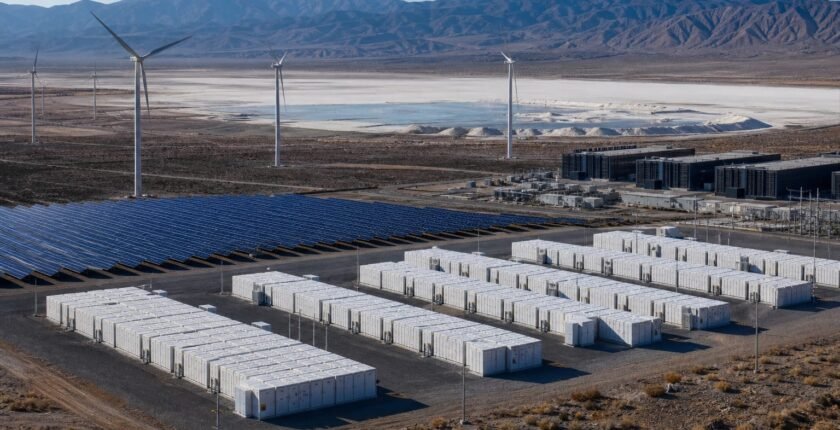
The rapid expansion of AI compute capacity and the data centres that support it increases demand for dependable power systems. Those facilities rely on large-scale battery backup and uninterruptible power systems during outages and for energy management; these stationary battery systems use lithium-based chemistries for energy density and cycling performance.
That creates a separate demand stream from electric vehicles. EVs have dominated headlines as the primary driver of lithium demand, but the growth of server farms, edge compute nodes and associated energy-storage installations means producers and buyers now watch two distinct end markets. Producers such as PLS will consider where to allocate output and which product specifications (battery-grade carbonate, hydroxide or precursor materials) best match each market.
What Dale Henderson told CNBC and why it matters
Henderson framed the opportunity succinctly: he sees the AI and data-centre expansion as offering “really exciting tailwinds” for the lithium industry. That phrasing underlines a shift from a single-market narrative to a multi-use case environment where stationary storage and industrial backup solutions add durable off-take beyond automotive cycles.
He balanced optimism on demand with a conservative capital view. Saying he has “an open mind” about M&A while placing inorganic growth “well down” his priorities signals PLS intends to prioritise internal projects and product-market fit over buying capacity. For markets, that implies PLS expects to meet incremental demand through its own development timeline rather than through rapid portfolio deals.
Why battery storage is emerging as a distinct lithium market
Stationary battery systems have different technical and contractual needs from EV batteries: longer-duration cycling, modular deployment and, in many cases, longer warranty and replacement cycles. These differences influence which lithium compounds and processing routes producers prioritise, and they affect product pricing and negotiation terms with utilities, data-centre operators and independent power providers.
For a miner or converter, the consequence is twofold. First, sales channels and product specifications must diversify. Second, purchasers for stationary storage often sign multi-year supply or service agreements, which can offer producers revenue visibility that contrasts with spot EV demand. Henderson’s emphasis on storage alongside AI points to those commercial dynamics influencing PLS’s planning.
What this means for producers, buyers and markets
If AI and data-centre buildouts continue to expand, miners and processors that can match product specs to stationary storage demand stand to capture incremental volumes without relying solely on the auto sector. Henderson’s reluctance to prioritise M&A suggests PLS expects to convert organic projects into sales rather than accelerate scale by acquisition.
For buyers — utilities, hyperscalers and EPC contractors — the change means more counterparties will offer contracts tailored to grid and data-centre needs, not just automotive cell makers. For traders and investors, the practical takeaway is that demand sources are broadening; that reduces single-market concentration but also complicates forecasting because adoption timelines for large-scale storage projects differ from vehicle deliveries.
| Item | Quoted by | Implication for PLS |
|---|---|---|
| AI and data centres | Dale Henderson | New stationary battery demand stream |
| Battery storage | Dale Henderson | Different specs and contracting versus EVs |
| M&A stance | Dale Henderson | Inorganic growth deprioritised |
Case for and against near-term supply shifts
The case for
- AI and data-centre buildouts create recurring stationary storage demand that can absorb incremental lithium volumes outside EV cycles.
- Longer-term contracts tied to grid and data-centre projects could provide producers like PLS with revenue visibility and justify organic project investment.
The case against
- If those infrastructure projects slow or prefer non-lithium chemistries, the expected tailwinds for lithium could weaken before producers scale supply.
- A strategy that delays acquisitions leaves PLS exposed if competitors secure fast supply through deals or if demand grows faster than its organic development schedule.
What to be careful about
- Demand timing risk: data-centre and storage procurement schedules are multi-year and can shift, which complicates near-term volume forecasting.
- Technology risk: alternative storage chemistries or second-life battery markets could blunt some stationary lithium demand.
- Market concentration risk: relying on a narrower set of large buyers (hyperscalers, utilities) can introduce counterparty negotiation and contract-risk even as overall demand rises.
The bottom line
PLS’s CEO framed AI-related buildouts and battery storage as emerging and meaningful demand drivers for lithium. His comments on CNBC — optimistic about demand but cautious on deal-making — suggest PLS expects to capture new volumes through its own projects rather than rapid acquisitions. For markets, the practical shift is a broader set of end uses for lithium that requires producers to match product specs and sales channels to stationary storage customers as well as automakers. That structural change increases the number of variables analysts must track when forecasting future supply and pricing.
What to watch
- Watch for PLS’s next quarterly results and management commentary; no date has been set.
- Watch for any PLS announcement on project commissioning or capacity increases tied to stationary storage demand; no date has been set.
- Watch for public M&A or partnership announcements from PLS; no date has been set.
Frequently asked questions
Did PLS name specific projects tied to AI or data centres?
No specific projects were named in the CNBC interview; Dale Henderson described AI and the data centre buildout as generating “really exciting tailwinds” but did not attach project names or timelines.
Is PLS planning acquisitions to meet new demand?
Henderson said he has “an open mind” about M&A yet characterised inorganic growth as “well down” his list of priorities, signalling a preference for organic development for now.
How does battery storage demand differ from EV demand for lithium?
Henderson and the article distinguish storage by application and contracting: stationary battery systems for data centres and grid use often require different chemistries, longer service contracts and different delivery schedules than EV cell manufacturers, which affects product choice and commercial terms.
Related reading
This article is information, not financial advice. Anyone acting on it should do their own checks.