
Blog
Nepali Army rescues more than 300 in Rasuwa tunnel
Estimated reading time: 4 minutes · Last updated:
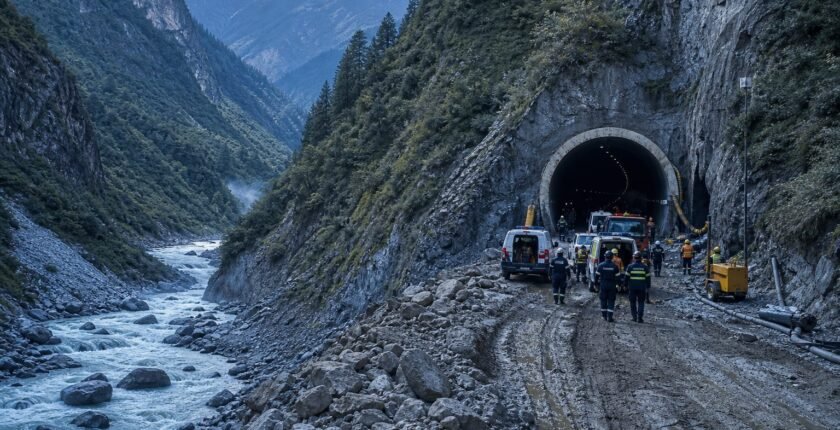
The Rasuwa hydropower tunnel rescue began after flooding hit Rasuwa district and left workers and residents trapped underground. The Nepali Army has rescued more than 300 workers and residents from inside the tunnel, while more than 100 others remain trapped, the social post reports. The trapped people include both project workers and local residents sheltering in the tunnel when floodwaters rose. This account names the Nepali Army and Rasuwa district as the locus of the incident and gives the two central figures—more than 300 rescued and more than 100 still trapped—that define the scale of the emergency.
Key takeaways
- The Nepali Army rescued more than 300 workers and residents from a hydropower tunnel in Rasuwa district.
- More than 100 people remain trapped inside the hydropower tunnel after the flooding in Rasuwa district.
- Flooding in Rasuwa district triggered the incident that trapped people inside the hydropower tunnel.
Table of contents
What happened in Rasuwa district and where the trapped people were found
Flooding in Rasuwa district forced people inside a hydropower tunnel and left them unable to exit. The material names the Nepali Army as the rescuing force and reports that rescue teams removed more than 300 workers and residents from the tunnel. The post also records that more than 100 people remained trapped after that initial evacuation activity. The location given is Rasuwa district and the confined space is a hydropower tunnel; no project name, operator or exact tunnel section is provided in the post.
The account published on the social feed concentrates on the immediate human impact: the numbers of people moved to safety and the number still unaccounted for inside the structure. Because the post links repeatedly to Washington Post reels, the item identifies the outlet visually, but the text itself supplies only the counts, the Nepali Army as rescuer and flooding in Rasuwa district as the cause.
Scale of the rescue and who remains at risk
The surviving figures in the post show a large-scale extraction: more than 300 people removed from the tunnel, and more than 100 still trapped. Combining those two reported figures produces an aggregate of about 400 people directly affected by the incident; that aggregate is derived from the post's two numbers rather than stated there as a single total. The material does not break out whether the counts are workers only, residents only, or a specific mix, beyond saying rescued people included workers and residents.
Missing from the post are official casualty tallies, hospital reports, the names of any hydropower project or operator, and a timeline for the remaining rescue effort. The published counts and the identification of the Nepali Army are the only operational details available in the text, so the scale of the incident is measurable only through those two figures and the district named.
Operational constraints and what the immediate priorities are likely to be
Flooding inside a tunnel creates multiple constraints on rescue teams: rising water, limited access points and the risk of further inundation or structural damage. The post itself records flooding as the trigger and the Nepali Army as the responder, but it gives no procedural detail on how teams are reaching trapped people. Given the environment the priorities implied by the facts are stabilising the site, preventing further water ingress, and moving the remaining people to safety while monitoring their medical condition.
The account does not list timelines, logistics, or the resources committed beyond the army presence, nor does it supply a schedule for when the remaining people might be evacuated. Those absences mean the remaining critical tasks—clearing access routes, pumping water, and accounting for everyone inside the tunnel—are not confirmed in the text and remain the operational unknowns that will determine whether the rescue completes without further casualties.
What could move this either way
The case for
- If Nepali Army rescue teams maintain access and water levels fall, the remaining more than 100 people could be removed without further casualties.
- The presence of a large rescuing force already on site increases the chance that additional trapped people can be reached quickly once access is secured.
The case against
- Continued or renewed flooding could block access routes and delay evacuation, raising the risk to those still inside the tunnel.
- Structural damage inside the tunnel or unexpected collapses could complicate rescue work and increase the danger to both trapped people and rescue teams.
What to be careful about
- Renewed flooding inside the tunnel could strand more people or prevent rescuers from reaching those still trapped.
- Potential structural instability in the tunnel could cause collapse or secondary entrapments during rescue operations.
- Lack of named project operator or site plans in the post limits coordination information available to outside responders and the public.
The bottom line
The social-post account is concise: flooding in Rasuwa district forced people into a hydropower tunnel, the Nepali Army removed more than 300 workers and residents, and more than 100 remain trapped. Key operational details—project name, operator, timelines and official casualty lists—are not provided in the text, which limits what can be confirmed beyond the two headline figures and the army's role. Those figures make clear the incident is large-scale and ongoing; resolving the rescue depends on controlling water inside the tunnel and restoring safe access for evacuation teams.
What to watch
- Watch for the Nepali Army's next update on the rescue operation; no date has been set.
- Watch for Rasuwa district briefings about the number of people still trapped and any declared casualty figures; no date has been set.
Frequently asked questions
How many people were rescued from the tunnel?
The post reports that the Nepali Army rescued more than 300 workers and residents from the hydropower tunnel in Rasuwa district.
How many people remain trapped inside the tunnel?
The post states that more than 100 people remain trapped inside the tunnel after the flooding in Rasuwa district.
What caused the entrapment inside the tunnel?
Flooding in Rasuwa district is named in the post as the trigger that left workers and residents trapped inside the hydropower tunnel.
Related reading