
Blog
Range Rover Electric 118.5kWh, 372-mile WLTP, 900mm wading
Estimated reading time: 5 minutes · Last updated:
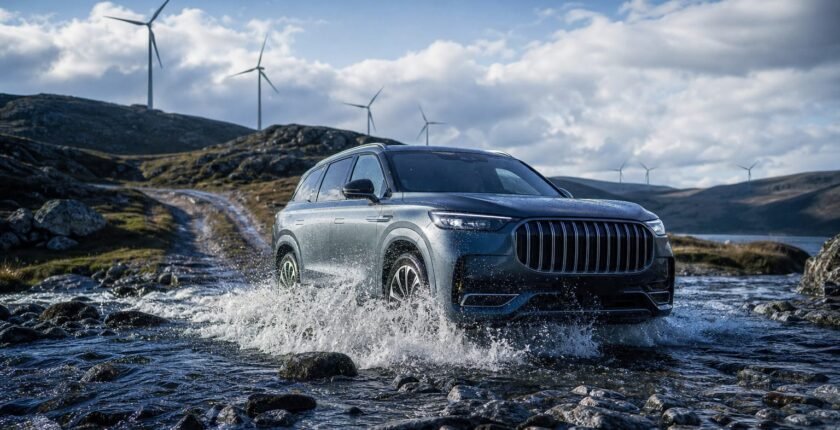
The Range Rover Electric brings a 118.5kWh battery and a WLTP range of 372 miles to Jaguar Land Rover’s luxury SUV line, with a quoted real-world expectation of 300-plus miles. Its twin-motor setup produces 550bhp (each axle motor rated at 326bhp), runs at 800 volts and accepts a 350kW peak charge that JLR says gives a 22-minute 10-80 per cent stop. Packaging on the MLA-Flex aluminium platform keeps cabin and boot space familiar, trims ground clearance by 18mm and still permits 900mm wading; if the suspension senses near-floating it can extend another 60mm.
Key takeaways
- Range Rover Electric has a 118.5kWh battery, WLTP 372 miles and a practical real-world expectation of 300-plus miles.
- The car makes 550bhp combined, with each front and rear motor rated at 326bhp, and does 0-62mph in 4.5 seconds.
- Charging runs at 800 volts with 350kW peak, a 22-minute 10-80 per cent charge, and compatibility with sub-150kW 400V chargers and 22kW three-phase AC.
- Packaging on the MLA-Flex platform reduces ground clearance by 18mm versus combustion models but allows 900mm wading and an extra 60mm extension if the suspension senses buoyancy.
- Pricing begins at £154,070 for the Autobiography specification and moves toward a quarter of a million pounds; the Electric carries roughly an extra 80kg compared with a features-matched PHEV.
Table of contents
Battery, range and charging in plain terms
At the centre is a 118.5kWh cell-to-pack battery under the floor that JLR packages to preserve interior space. The headline WLTP figure is 372 miles; JLR sets a practical expectation at 300-plus miles in everyday use. The pack sits low, which helps the centre of gravity, but the overall floor slab trims ride height by 18mm compared with the combustion equivalent.
Electrical architecture is built around an 800-volt system. Peak DC charging accepts 350kW and, JLR says, achieves a 10-80 per cent replenishment in 22 minutes at that rate. It also supports older sub-150kW 400V chargers through split-pack charging and can take 22kW three-phase AC for slower workplace or destination charging. To suit the split-pack arrangement, the charging sockets are separated between the two sides: one rear quarter houses an AC inlet while the opposite side carries a combined AC/DC connector.
Motors, cooling and why JLR rebuilt the drivetrain
Power comes from twin motors producing 550bhp in total; each front and rear motor is rated at 326bhp. That configuration replaced an earlier plan to pair an induction front motor with a permanent-magnet rear motor after desert testing found the induction unit overheated and lost power. Redesign and re-testing added more than a year to development.
The motors use thin 0.2mm laminated rotors instead of the industry 0.3mm norm, with internal channels carrying cooling lubricant; the oil flow is governed by drive mode so pumping demand falls in gentle driving to save energy. Inverters are silicon-carbide, improving switching speed and allowing smoother traction control. Cell-level telemetry feeds JLR’s analytics lab, which can send over-the-air adjustments to voltage and thermal management.
Off-road packaging, wading and dynamic controls
The MLA-Flex aluminium platform was designed for combustion, plug-in hybrid and electric variants, and all three go down the same Solihull production line. Despite a slight 18mm loss of ground clearance the Electric will wade to 900mm; if the suspension detects near-floating it can extend another 60mm from the normal maximum ride height. Four-wheel steering remains, but JLR removed the active anti-roll system to save weight.
Electric torque control and precise electronic metering enable steep-gradient work: it can sustain climbs of 45 degrees if not brought to a halt, and will manage about 33 degrees for stop-start pullaways. In S transmission position, regeneration is stronger and the brake discs are engaged to halt the vehicle at decelerations up to 0.2g. The Electric is approximately 80kg heavier than a features-matched PHEV, a modest penalty in Range Rover terms.
| Powertrain | Notable hardware | Production |
|---|---|---|
| Combustion | V8 and eight-speed gearbox; higher C of G | Same Solihull line as other variants |
| PHEV | Feature-matched hybrid hardware; baseline for weight comparison | Built on MLA-Flex in Solihull |
| Electric | 118.5kWh pack, twin PM motors, 800V architecture | MLA-Flex line in Solihull shared with other powertrains |
How the Electric could win—and where it may struggle
The case for
- High energy capacity and 800V charging make long trips feasible: 118.5kWh and a 350kW peak charge enable 10-80 per cent in about 22 minutes.
- Low centre of gravity and electric torque control improve off-road composure compared with combustion models, and 900mm wading preserves a core Range Rover capability.
The case against
- Price starts at £154,070 in Autobiography trim and 'heads towards a quarter million', which limits buyer pool even in the luxury segment.
- Weight and the complexity of a large cell-to-pack battery mean repairs are specialist: the whole pack unbolts for service rather than offering simple module swaps.
What to be careful about
- Cell-to-pack construction raises repair complexity and potential long-term maintenance costs because packs unbolt for specialist repair rather than allowing easy module replacement.
- Real-world range depends on conditions; the 372-mile WLTP figure equates to a stated 300-plus miles in everyday use, so buyers relying on WLTP alone may be disappointed.
- Charging infrastructure mismatch: while the car accepts 350kW peak, drivers using sub-150kW 400V public chargers will face much longer stops despite split-pack compatibility.
- Development delays shown by the swapped motor architecture suggest supply-chain or thermal challenges could affect production timing or early reliability.
The bottom line
JLR has aimed to make the Range Rover Electric feel and behave like a Range Rover while exploiting electric advantages: quieter, crisper torque control, high energy capacity and rapid 800V charging. The MLA-Flex architecture keeps production flexible and preserves cabin space, while engineering choices — from 0.2mm motor laminations to cell-to-pack construction with aerogel surrounds — underline the focus on efficiency and protection. Whether the Electric converts enough buyers will come down to price (from £154,070 in Autobiography trim and rising toward a quarter million), perceived value versus combustion and PHEV rivals, and how customers judge repair and charging realities in the years after delivery.
What to watch
- watch for JLR to confirm showroom and delivery dates for the Range Rover Electric; no date has been set.
- watch for official technical bulletins on battery cell supplier and pack repair procedures; no date has been set.
- watch for independent real-world range and charge-speed tests for the model once customer cars arrive; no date has been set.
Frequently asked questions
What range does the Range Rover Electric offer?
Jaguar Land Rover quotes a WLTP range of 372 miles from the 118.5kWh pack and sets driver expectations at about 300-plus miles in everyday use.
How fast can it charge from empty to useful range?
The car uses an 800V electrical architecture with a 350kW peak that JLR says yields a 22-minute 10-80 per cent charge; it also supports sub-150kW 400V chargers and 22kW three-phase AC.
How capable is it off-road and in water?
Packaging cuts ride height by 18mm but the Electric will wade to 900mm; the suspension can extend another 60mm if it senses near-floating, and torque metering helps climbs up to 45-degree slopes when kept moving.
What are the power and performance figures?
Combined output is 550bhp, each front and rear motor is rated at 326bhp, and 0-62mph is quoted at 4.5 seconds.
Related reading