
Blog
Battery Storage Drives Lithium Miner Momentum
Estimated reading time: 4 minutes · Last updated:
Battery storage demand is a key reason lithium miners have recently outperformed. Sprott’s Sprott Lithium Miners ETF (LITP) reported a net asset value increase of 19.62% over the month ending August 31, 2026, and the International Energy Agency (IEA) has described battery storage as the world’s fastest-growing power technology. Those two facts link market moves to a structural shift: lithium is required both for electric vehicles and for battery energy storage systems (BESS) that grid operators are installing to strengthen and secure electricity supply. This piece explains how grid-scale storage demand underpins miner momentum and what that means for investors weighing exposure to lithium via funds such as LITP.
Key takeaways
- ETF performance: Sprott Lithium Miners ETF (LITP) posted a 19.62% NAV gain for the month ending August 31, 2026.
- IEA finding: The International Energy Agency (IEA) identifies battery storage as the world’s fastest-growing power technology.
- Demand channels: Lithium supports both electric vehicle batteries and grid-scale battery energy storage systems (BESS), creating multiple demand pathways for miners.
Table of contents
What the August jump shows
The August price move in lithium and the corresponding rally in miner-focused funds reflected more than short-term trading: market participants are pricing in faster deployment of grid-scale storage and stronger demand from electrification. Sprott’s LITP recorded a 19.62% rise in net asset value for the month ending August 31, 2026, a concrete performance marker that investors can point to when assessing exposure to lithium producers.
That performance does not prove a permanent trend, but it does illustrate how battery demand shocks transmit to equities. When buyers anticipate sustained BESS and EV uptake, capital shifts toward miners expected to supply the raw material input; the result is stronger near-term returns in dedicated funds and junior producers.
Why battery storage matters for miners
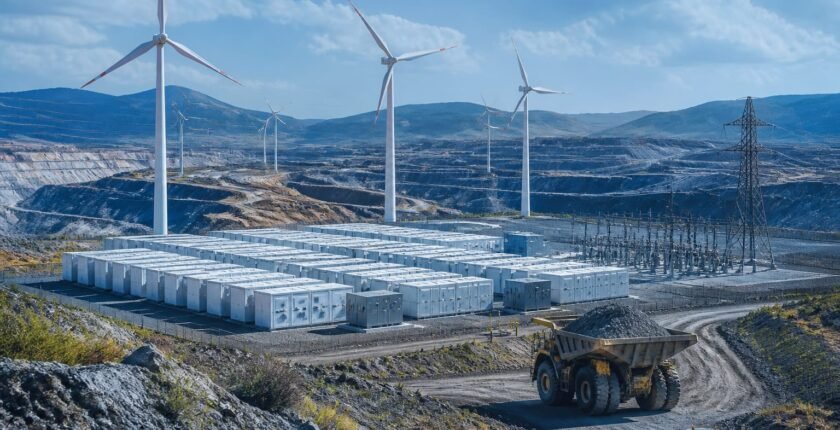
Battery energy storage systems, abbreviated BESS, link renewable generation to grid reliability and are built predominantly with lithium-ion chemistry today. The International Energy Agency (IEA) has described battery storage as the fastest-growing power technology globally, a classification that frames storage as not a niche add-on but a central element of grid planning.
Because lithium is a core input for lithium-ion cells used in both EVs and BESS, rising BESS deployment increases the addressable market for miners. Grid-level storage projects demand multi-megawatt-hour systems, which in aggregate consume tonnes of battery-grade materials; that scale, when sustained, can tighten supply-demand balance and lift pricing power for producers and their shareholders.
Supply constraints and miner positioning
Miners' ability to convert stronger demand into revenue depends on production timelines and project capacity. If lithium supply cannot expand quickly enough to meet concurrent EV and grid-storage orders, prices for battery-grade material rise and mining revenues improve. The article material notes that miners can capture significant sales growth when supply trails demand, an outcome that markets have begun to price into some funds.
Not all miners are equal: established producers with operational capacity and offtake agreements will benefit sooner than early-stage developers. For investors, that divergence matters because a fund such as LITP aggregates a range of companies; fund-level returns will reflect winners and losers across that spectrum rather than a single project's outcome.
How investors should frame exposure
Exposure through an ETF focused on lithium miners concentrates operational, geopolitical and commodity risks into a single instrument. The disclosure on the Sprott product underlines standard ETF cautions: funds concentrating in small- and mid-cap miners typically experience greater price volatility and can carry higher turnover and transaction costs.
At the same time, the structural argument for lithium—driven by EV adoption and BESS deployment noted by the IEA—gives a persistent demand case that can justify selective longer-term allocations. That thesis depends on execution: continued BESS buildout, stable permitting and predictable capital flows into mining projects are required for miners to realise the demand implied by current prices.
Outlook
The case for
- Sustained BESS deployment and EV growth would keep upward pressure on lithium demand and support miner revenues.
- Operational miners with existing capacity and offtake contracts can convert higher commodity prices into cash flow more quickly than juniors.
The case against
- Rapid supply additions, new battery chemistries or faster recycling could relieve pricing pressure and compress miner margins.
- Policy shifts or permitting delays for large mining and processing projects could slow the supply response and increase project-level risk.
What to be careful about
- Concentration risk: funds focused on lithium miners carry higher volatility because they aggregate small- and mid-cap resource companies.
- Commodity-price risk: lithium market prices can swing materially if supply ramps faster than demand or if substitutes gain traction.
- Execution risk: mining projects face permitting, technical and capital challenges that can delay production and revenue.
The bottom line
Battery storage demand is a material structural support for lithium markets because BESS deployment adds a grid-scale consumption channel alongside electric vehicles. The IEA’s categorisation of battery storage as the fastest-growing power technology provides an institutional anchor for that view, while Sprott’s LITP NAV performance for August — a 19.62% gain to August 31, 2026 — shows how investors have begun to price the link. That combination creates opportunities but also concentrates several risks at the fund and project level; investors should weigh operational, policy and commodity-price exposures before increasing allocations to lithium miners.
What to watch
- watch for the IEA’s next battery storage update; no date has been set.
- watch for quarterly results from Sprott Asset Management USA, Inc. that disclose changes to LITP holdings; no date has been set.
Frequently asked questions
How much did a lithium-miner ETF move in August 2026?
Sprott’s Sprott Lithium Miners ETF (LITP) posted a net asset value gain of 19.62% for the month ending August 31, 2026.
What role does battery storage play in lithium demand?
Battery energy storage systems (BESS) use lithium-ion batteries; the International Energy Agency (IEA) has identified battery storage as the world’s fastest-growing power technology, which expands demand beyond electric vehicles into grid-scale procurement.
Does investing via LITP remove miner-specific risk?
No. While LITP offers diversified exposure across producers, the fund still concentrates on the lithium sector and therefore retains commodity-price, project execution and small-/mid-cap volatility risks as described in the fund disclosures.
Related reading
This article is information, not financial advice. Anyone acting on it should do their own checks.