
Blog
Commission opens Europe’s largest industrial CCS in Sluiskil
Estimated reading time: 4 minutes · Last updated:
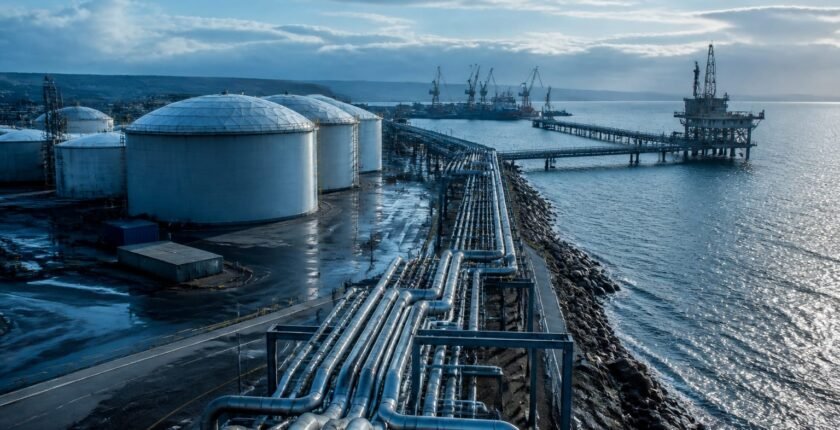
The European Commission formally opened what it calls Europe’s largest industrial carbon capture and storage installation in Sluikil / Sluiskil in the Netherlands, as first reported by energy.ec.europa.eu. The facility is designed to separate CO₂ from process emissions and convert up to 800 000 tons of the gas into liquid form each year, which will then be shipped to the Northern Lights subsea storage in the Norwegian North Sea. The inauguration, organised by the Commission’s Directorate‑General for Energy, was attended by Commissioner Wopke Hoekstra, Norwegian Prime Minister Jonas Gahr Støre, Dutch Prime Minister Rob Jetten and Yara International CEO Svein Tore Holsether. The plant is linked to the EU‑Norway Green Alliance and supported by the Connecting Europe Facility.
Key takeaways
- Annual capture capacity: The Sluikil / Sluiskil ammonia and fertiliser plant is expected to separate and convert up to 800 000 tons of CO₂ into liquid form each year.
- 15‑year store target: Yara expects the project will sequester roughly 12 million tons of CO₂ over the coming 15 years.
- Destination for storage: Captured CO₂ will be shipped to the Northern Lights facility in the Norwegian North Sea.
- Policy and attendance: Commissioner Wopke Hoekstra, Norwegian Prime Minister Jonas Gahr Støre, Dutch Prime Minister Rob Jetten and Yara CEO Svein Tore Holsether attended the inauguration.
Table of contents
How the Sluikil / Sluiskil installation works and who is involved
The installation at the ammonia and fertiliser complex will capture process emissions, convert them into a liquefied stream and load them aboard ships for transport. Ships will convey the liquefied CO₂ to the Northern Lights subsea storage site in the Norwegian North Sea, where it will be injected for permanent underground storage. The project is led by Yara International at its Sluiskil facility, and the European Commission’s Directorate‑General for Energy published the inauguration notice. Funding support comes from the Connecting Europe Facility, and officials frame the work as a cross‑border cooperation under the EU‑Norway Green Alliance signed in 2023.
What the capacity figures mean for industry decarbonisation
At a capacity of up to 800 000 tons of CO₂ per year, the plant is aimed at emissions from energy‑intensive ammonia production. The Commission notice estimates the project will prevent roughly 12 million tons of CO₂ from entering the atmosphere over its 15‑year operating horizon. The same notice states the installation is intended to reduce emissions from fertiliser and ammonia producers while helping maintain industrial competitiveness by allowing production sites to operate with lower net emissions.
Financing, policy links and the cross‑border model
The Commission emphasises that the project combines private investment and public support, and it cites the Connecting Europe Facility as a funding instrument. The inauguration statement links the work to broader EU policy files, including the Clean Industrial Deal and the recent proposal for the EU Emissions Trading System review. The Commission presented the plant as an example of cross‑border cooperation: capture on Dutch soil, transport by ship and long‑term storage under Norway’s sector in the North Sea.
Upside and downside for adoption
The case for
- Directly reduces emissions from an energy‑intensive ammonia and fertiliser installation by capturing up to 800 000 tons of CO₂ per year.
- Demonstrates a cross‑border value chain that pairs capture in the Netherlands with Norwegian subsea storage, which could be replicated for other industrial emitters.
- Links to EU instruments such as the Connecting Europe Facility and policy frameworks like the Clean Industrial Deal, supporting further investment.
The case against
- The project depends on the operational reliability and capacity of the Northern Lights storage and on the logistics of marine transport for liquefied CO₂.
- Long‑term performance hinges on policy outcomes from the EU Emissions Trading System review and sustained public‑private funding.
- Any delay in ship transport schedules, measurement protocols or storage authorisations would slow the expected delivery of the 12 million‑ton target.
What to be careful about
- Dependence on Northern Lights’ storage capacity and ongoing operations for permanence of stored CO₂.
- Potential delays or shortfalls in ship transport logistics for liquefied CO₂ between Sluikil / Sluiskil and Norway.
- Uncertainty in regulatory and market settings pending the EU Emissions Trading System review, which the Commission referenced.
The bottom line
The Commission’s inauguration marks a concrete deployment of industrial CCS in Europe: capture at a Dutch ammonia site, maritime transfer and subsea storage in Norway. The project uses an annual capture capacity of up to 800 000 tons to reach an expected total of around 12 million tons over 15 years and is presented by the Commission as a model of cross‑border industrial decarbonisation. The near‑term tests will be logistical and regulatory — establishing regular ship shipments, monitoring flows to Northern Lights and seeing how EU policy tweaks influence the economics of similar schemes.
What to watch
- Track public reporting on cumulative CO₂ volumes sent from Sluikil / Sluiskil toward the 12 million‑ton target over the next 15 years; no interim reporting dates were specified in the inauguration notice.
- Watch for the first shiploads to Northern Lights; the Commission notice confirms marine transport but gives no dates for initial shipments.
- Monitor the final text and timing of the EU Emissions Trading System review to see whether it introduces measures that affect industrial CCS operations; the Commission referenced the proposal but provided no schedule.
Frequently asked questions
How much CO₂ will the Sluikil / Sluiskil plant capture each year?
The Commission's announcement says the installation is engineered to remove and condense as much as 800 000 tons of CO₂ each year from ammonia and fertiliser production.
Where will the captured CO₂ be stored?
Captured CO₂ will be shipped to the Northern Lights facility in the Norwegian North Sea for permanent underground storage, as stated in the inauguration notice.
Who funded and supported the project?
The project combines private investment led by Yara International with public support including funding from the Connecting Europe Facility and policy backing under the EU‑Norway Green Alliance.
Related reading