
Blog
Switzerland’s Largest Battery Storage Goes Online
Estimated reading time: 4 minutes · Last updated:
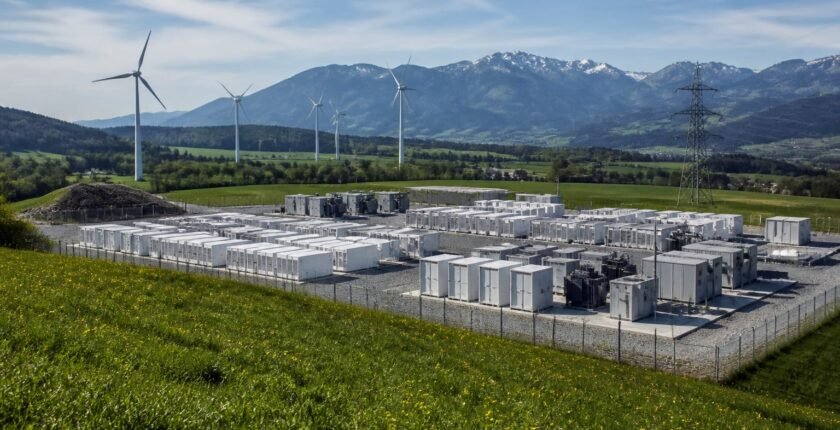
Axpo and Energie Uri have put Switzerland’s largest battery storage facility into operation in Plattischachen, Gurtnellen, combining a 50 MW system and an 8.4 MW system supplied by Fluence to provide two hours of storage. Axpo’s 50 MW array will focus on the national market while Energie Uri’s 8.4 MW system will prioritise cantonal needs. Sandra Enkhardt, as first reported by pv magazine, said the inauguration took place on 09 Sep 2026. The site is intended to capture surplus output from solar and wind and return it to the grid when needed.
Such projects also bring technological know‑how to the canton, generate contracts for local companies in Uri, and secure jobs in the region. Uri benefits from this in ways that go beyond just energy supply.
Hermann Epp, member of the cantonal government and director of construction for the canton of Uri
Key takeaways
- Axpo commissioned a 50 MW battery system in Gurtnellen; Energie Uri added an 8.4 MW system at the same site.
- Fluence supplied the battery systems, which Axpo said would provide two hours of storage when construction began.
- Axpo will operate the 50 MW system primarily for the national market while Energie Uri will run the 8.4 MW system for the canton of Uri.
- Axpo has more than 300 MW of additional battery storage under construction in France, Germany, Italy, Poland and Romania and already operates facilities in Switzerland and Sweden.
Table of contents
How the Gurtnellen site is configured and what it will do
The Gurtnellen installation comprises two battery energy storage systems placed close to one another in Plattischachen. Axpo’s unit delivers 50 MW of power capacity and Energie Uri’s unit delivers 8.4 MW. When construction began, Axpo said its facility would provide two hours of storage; generators such as solar and wind can be absorbed during surplus periods and discharged back to the grid at times of higher demand. Fluence supplied both systems and handled the integration of the battery hardware and control software.
Roles: who serves the national grid and who serves the canton
Axpo has positioned its 50 MW system to support the national balancing market, providing flexibility to system operators across Switzerland. Energie Uri’s 8.4 MW unit will be run with a focus on local needs in the canton of Uri, notably to stabilise supply and to use locally generated renewable output. Hermann Epp, member of the cantonal government and director of construction for Uri, highlighted jobs and local contracts as direct benefits of the project, saying it brings technological know‑how to the canton and supports the regional economy.
Where this fits in Axpo’s European battery roll‑out
Axpo is expanding its battery storage portfolio across Europe. The company already operates facilities in Switzerland and Sweden and has more than 300 MW of battery projects under construction in France, Germany, Italy, Poland and Romania. The firm is also increasingly pairing storage with solar and wind generation to deliver dispatchable flexibility rather than standalone capacity. That pipeline makes Gurtnellen one node in a wider strategy to add short‑duration storage across markets where grid balancing and renewable integration are priorities.
| Owner | Power (MW) | Primary focus | Supplier |
|---|---|---|---|
| Axpo | 50 | National market | Fluence |
| Energie Uri | 8.4 | Canton of Uri | Fluence |
Case for and against wider impact
The case for
- Short‑duration storage at scale will help integrate variable solar and wind by shifting surplus into demand peaks.
- Local economic effects: the cantonal government cited contracts and jobs as concrete benefits, supporting regional acceptance for additional projects.
The case against
- The investment amount for the Gurtnellen project was not disclosed, leaving questions about cost recovery and tariff impacts.
- Two‑hour duration is useful but limited: longer outages or prolonged low renewable output will still require other flexibility sources or longer‑duration storage.
What to be careful about
- Axpo did not initially disclose the investment amount for the Gurtnellen installation, so project economics are not public.
- Real‑world availability and degradation rates will determine whether the systems can reliably deliver two hours of discharge over their lifecycle.
- Grid‑connection constraints or market rules could limit how often the 50 MW system can access national balancing revenues.
The bottom line
The Gurtnellen installation is Switzerland’s largest battery project to date by combined power and marks a deliberate step by Axpo and Energie Uri into short‑duration storage. With Fluence supplying the systems, the site is intended to smooth variable solar and wind output and provide two hours of dispatchable capacity. Missing public details on cost and long‑term performance leave open questions about economics and lifecycle delivery, but the project also foregrounds local industrial and employment benefits in Uri and sits inside a broader Axpo pipeline across Europe.
What to watch
- watch for Axpo’s response to the pv magazine inquiry giving the investment amount for the Gurtnellen site; no date has been set.
- watch for published performance data or grid‑operator reports showing how the systems deliver the declared two hours of storage; no date has been set.
- watch for commissioning or progress updates on Axpo’s more than 300 MW of projects in France, Germany, Italy, Poland and Romania; no date has been set.
Frequently asked questions
What is the combined power and declared duration of the Gurtnellen facility?
The site combines a 50 MW system owned by Axpo and an 8.4 MW system owned by Energie Uri; Axpo said the facility would provide two hours of storage when construction began.
Who supplied the batteries and who will operate them?
Fluence supplied the battery systems; Axpo will operate the 50 MW system primarily for the national market while Energie Uri will operate the 8.4 MW system focused on cantonal needs.
How does Gurtnellen fit into Axpo’s wider plans?
Axpo already operates facilities in Switzerland and Sweden and has more than 300 MW of battery projects under construction in France, Germany, Italy, Poland and Romania as part of a Europe‑wide expansion.
Related reading