
Blog
Massachusetts rolls out smart meters across the state
Estimated reading time: 5 minutes · Last updated:
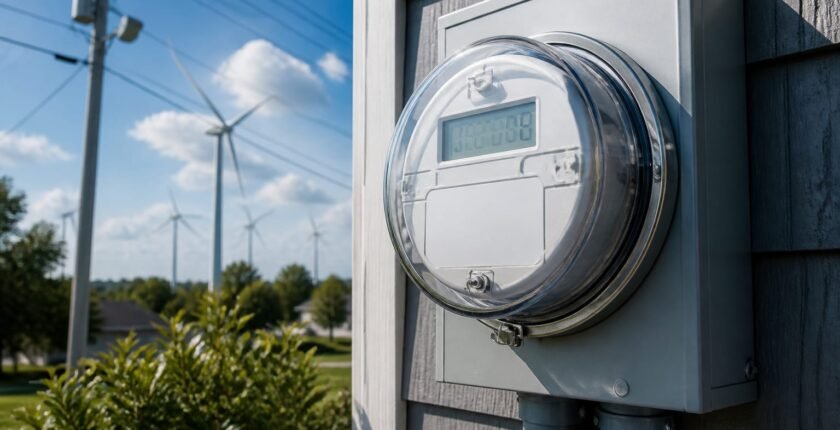
Smart meters are being fitted to homes and businesses across Massachusetts to replace older devices and provide near real‑time usage data. The rollout is under way: by 1 August Eversource had placed roughly 450,000 residential meters and planned about 900,000 more, while National Grid reported roughly 698,000 installed and about 702,000 remaining. The new devices send quarter‑hour readings to the utilities and let customers view finer‑grained consumption online. The installation counts and local reporting on consumer reactions are as first reported by WBUR.
The most exciting thing about smart meters is that the technology capabilities are there now for the utilities to create some really innovative programs and services,
Ann Collier, director of grid strategy at the Smart Electric Power Alliance
Key takeaways
- Installation progress: By 1 August, Eversource had installed about 450,000 residential smart meters and was planning to install about 900,000 more.
- Installation progress — National Grid: As of Aug. 1, National Grid had installed about 698,000 meters and had about 702,000 more to do.
- Data frequency: Utilities say smart meters send readings every 15 minutes and relay them over a secure network to collection points.
- Opt‑out rate: According to the utilities, fewer than 1% of Massachusetts customers have chosen to opt out of smart meter installation.
Table of contents
What the meters do and how the rollout works
The new generation of electric meters replaces the older drive‑by digital devices and delivers more frequent consumption data to both customers and utilities. Technicians remove the legacy unit at the meter socket and fit the white smart meter in its place; once the device boots it begins sending usage readings. Utilities describe the network as a chain in which readings pass from meter to meter until they reach a mounted relay that forwards the data to utility systems.
Customers can view quarter‑hour usage online, receive alerts for sudden spikes, and see short‑term bill projections. Utilities say the faster data stream helps them detect faults and locate outages more quickly than monthly meter reads did. The deployment is large in scale: the two major suppliers named in local reporting — Eversource and National Grid — have each reported hundreds of thousands of installs and comparable backlogs still to complete.
What utilities and advocates highlight as the benefits
Utility staff and industry advocates say the combination of finer data and remote connectivity opens two practical paths: better day‑to‑day customer insight and system operations that can be planned with more precision. Len Beebe, lead analyst at Eversource's smart meter testing lab in Westwood, says, "It gives customers much better information at their fingertips," and that customers can use that information to manage usage and bills.
Eversource executives describe operational wins as well. Jared Lawrence, Eversource's chief customer officer, said the company used meter data to identify an overloaded circuit and "went out and proactively upgraded those circuits before the heat wave hit," which they say averted a potential outage. State analysis cited in local reporting also supports the policy case for more granular pricing: the Massachusetts Department of Energy Resources found that about 10% of hours a year drive roughly 40% of consumer electricity costs, a concentration that time‑of‑use rates are designed to address.
Consumer concerns: billing, privacy and opt‑out
Not all residents welcome the change. Local organizers and residents have raised three linked worries: that bills will rise, that the devices present privacy or health risks, and that errors in installation or billing could cause sudden charges. Elijah DeSousa, a New Bedford resident who runs the Facebook group Citizens Against Eversource +, said, "When I started really digging in to what exactly these smart meters do, I mean, I hated every aspect of it," and that some people told him their usage had doubled after an install.
Eversource and National Grid dispute claims that link meters to billing spikes. Eversource says weather‑driven demand increases explain many billing jumps and that human error is occasionally the cause when a bill changes abruptly; staff investigate and correct those instances. Eversource operations manager Eric Falcone said, "It's very secure," describing encryption and a proprietary network; National Grid emphasized that meters meet federal testing standards. Customers can still decline a smart meter, but both companies say such accounts will be billed a monthly charge intended to compensate for the expense of manual meter reads — and to date fewer than 1% have chosen that option.
| Utility | Installed | Remaining |
|---|---|---|
| Eversource | about 450,000 | 900,000 |
| National Grid | about 698,000 | about 702,000 |
How this could play out
The case for
- Finer consumption data could let utilities detect overloads and outages earlier, reducing repair time and targeted upgrades.
- Time‑of‑use pricing enabled by these meters could shift demand away from peak hours and reduce system costs if rates are carefully designed.
The case against
- If time‑of‑use rates are introduced without protections, some customers may face higher bills for unavoidable daytime usage.
- Persistent privacy or health fears, amplified on social platforms, could drive higher opt‑out rates and increase costs for utilities and remaining customers.
What to be careful about
- Temporary increases in billed consumption coinciding with meter swaps can be misattributed to the device rather than seasonal demand, creating public backlash.
- Billing errors and occasional human mistakes, which utilities acknowledge happen, can produce sudden bill changes that require investigation and correction.
- If opt‑out takeup rises above current levels, the per‑customer cost of manual reading could increase and shift costs to other ratepayers.
- Poorly structured time‑of‑use rates risk shifting costs onto households that cannot move their demand to lower‑cost periods.
The bottom line
The smart meter rollout in Massachusetts is a large operational upgrade: hundreds of thousands of meters are already in place and the state is positioned to use finer data for outage response and potentially for time‑of‑use pricing. The benefits on system planning and customer visibility are concrete, but so are the concerns residents voice about privacy, billing and health. How regulators design rates and how utilities communicate installations and fixes will determine whether the technology reduces costs for most customers or merely redistributes them.
What to watch
- Watch the Massachusetts Department of Public Utilities as it continues its investigation into time‑of‑use rate options; no decision date has been set.
- Watch how Eversource and National Grid propose specific time‑of‑use rate designs to the state and how those proposals treat low‑income or fixed‑load customers; no filing date has been announced.
Frequently asked questions
How often do Massachusetts smart meters send usage data?
Utilities say the meters transmit readings roughly every 15 minutes and that those quarter‑hour data are relayed over a secure network to collection devices and then to utility systems.
How many smart meters have been installed so far in Massachusetts?
As of Aug. 1, Eversource reported about 450,000 residential installs with 900,000 remaining; National Grid reported about 698,000 installed and about 702,000 still to do.
Can I opt out of having a smart meter installed?
Yes. Customers may decline a smart meter, but Eversource and National Grid say accounts that forgo the new device will be billed a monthly charge intended to compensate for the expense of dispatching personnel for manual meter reads; utility filings show fewer than 1% have opted out so far.
Will a smart meter itself make my bill go up?
Utilities maintain that the devices do not cause higher usage, and say weather or rate changes explain many increases; Eversource says human error has caused some sudden bill changes that the company then corrects.
Related reading
This article is information, not financial advice. Anyone acting on it should do their own checks.