
Blog
Egypt’s Wind-Manufacturing Deal Offers Lessons for Africa
Estimated reading time: 6 minutes · Last updated:
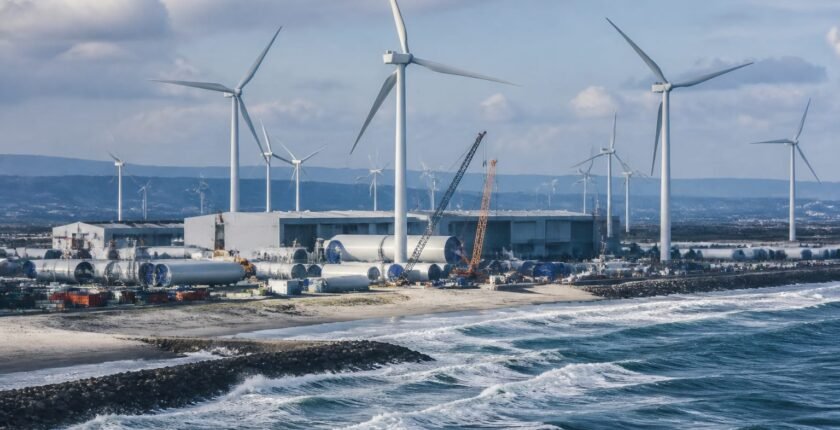
Egypt has paired a 2,000-megawatt Gulf of Suez wind project with its first domestic wind-turbine factory in a deal with China’s SANY Renewable Energy, and the government says the plant will supply local projects and exports across Africa and the Middle East. As first reported by AP News, the project is expected to connect to Egypt’s national grid within 23 months of final agreements. Energy specialists quoted in the reporting contrast that near-term timetable with Nigeria’s Lambar Rimi wind farm, a 10-megawatt project contracted in 2010 that only began producing in September 2025, and they point to scale, finance and explicit technology transfer as the critical differences.
Key takeaways
- Project size and partner: Egypt signed a deal with China’s SANY Renewable Energy for a 2,000-megawatt Gulf of Suez wind project and a domestic turbine factory.
- Timing: The Egyptian project is expected to connect to the national grid within 23 months of final agreements.
- Nigeria’s delay: Nigeria’s Lambar Rimi wind farm in Katsina was contracted to Vergnet in 2010 as a 10-megawatt project and was commissioned in September 2025 after the state added 10 megawatts of solar.
- Financing headwinds: The International Energy Agency says Africa’s cost of capital for utility-scale clean-energy projects is at least two to three times higher than in advanced economies and China.
Table of contents
- Key takeaways
- Why Egypt tied manufacturing to its wind build-out
- What went wrong at Nigeria’s Lambar Rimi and why design matters
- How African countries could use market size and policy to win better terms
- How the case for and against industrialised renewables in Africa looks
- What to be careful about
- Frequently asked questions
Why Egypt tied manufacturing to its wind build-out
Egypt’s plan links a large-scale wind build with onshore production to change how projects are financed and delivered. The deal with SANY Renewable Energy covers a 2,000-megawatt wind installation in the Gulf of Suez alongside Egypt’s first wind turbine manufacturing plant; Egyptian officials say the factory is intended to supply domestic projects and export across Africa and the Middle East. Embedding a factory into a project creates a single proposition for investors: equipment supply, local jobs and an industrial base rather than a simple procurement contract.
Economic scale is the central argument driving that choice. Fadhel Kaboub, an associate professor of economics at Ohio’s Denison University, told reporters the contrast with smaller or delayed projects is clear: larger demand makes local manufacturing commercially viable. The project timetable — expected grid connection within 23 months of final agreements — is presented as evidence that tying manufacturing to construction can shorten delivery when financing and contracts are aligned.
That model is not risk-free. Kaboub and others caution that the value depends on whether the partnership produces genuine technology transfer or merely locates assembly under foreign control. For local manufacturing to raise domestic capability, contracts must specify know-how, training and local management roles rather than only jobs on a factory floor.
What went wrong at Nigeria’s Lambar Rimi and why design matters
The Lambar Rimi project in Katsina state shows how project design can stall delivery even where wind resources exist. Contracted to Vergnet in 2010 and originally scheduled to finish in 2012, the scheme used 37 turbines rated at 275 kilowatts each and was financed by the Japan International Cooperation Agency. The project eventually stalled, moved under Katsina state government control and was only commissioned in September 2025 after the state added 10 megawatts of solar capacity.
Dola Oluteye, founder of the PATNA Initiative and a senior fellow in energy and transport policy at University College London’s Bartlett School of Environment, Energy and Resources, framed the problem in financial terms: 'The cost of capital is the binding constraint, not the resource.' Project design that leaves developers exposed to dollar-denominated debt, unclear ownership or weak feasibility work makes delays and renegotiation likelier.
Oluteye highlighted Egypt’s reported choice to structure the new wind project in local currency as a technical countermeasure to a common failure mode. Local-currency financing reduces currency mismatch where revenues are in local cash but loans are in dollars; that alone can materially change a project’s bankability in markets with volatile exchange rates.
How African countries could use market size and policy to win better terms
Experts in the reporting argue that Africa’s governments could convert collective demand into leverage when negotiating technology partnerships. Rather than each country importing finished turbines, a regional industrial policy or joint procurement could make manufacturing and meaningful technology transfer commercially attractive to suppliers, or win contractual clauses that require local content and training.
Kaboub suggested that a negotiating bloc and joint industrial policy would allow African governments to press for joint ventures and clearer technology-transfer commitments. The International Energy Agency statistic cited in the reporting — that Africa attracts around 2% of global clean-energy spending while accounting for about one-fifth of the world’s population — underlines why pooled demand could matter to suppliers weighing factory investments.
Turning that idea into reality requires practical steps: credible, bankable contracts; predictable policy across election cycles; and financing structures that reduce currency and interest-rate risks. Where these pieces are missing, even technically sound projects can stall, as the Lambar Rimi example shows.
| Project | Capacity | Partner / contractor | Key dates or timing |
|---|---|---|---|
| Egypt Gulf of Suez | 2,000 megawatts | SANY Renewable Energy | Expected grid connection within 23 months of final agreements |
| Lambar Rimi, Katsina (Nigeria) | 10 megawatts | Vergnet | Contracted 2010; commissioned September 2025 after adding 10 MW solar |
How the case for and against industrialised renewables in Africa looks
The case for
- Scale plus a factory can lower unit costs and attract investors by bundling supply and construction into a single, bankable programme.
- Structuring projects in local currency reduces exchange-rate risk for revenues and can materially improve bankability for domestic utilities and governments.
The case against
- If a foreign partner retains technical control and contracts lack enforceable transfer clauses, the factory may become an assembly line rather than a capability-building asset.
- High regional cost of capital — reported by the International Energy Agency as at least two to three times higher than in advanced economies and China — will still limit the pace of projects unless financing is reformed.
What to be careful about
- Technology dependence if the SANY partnership does not include enforceable technology-transfer and local-management provisions.
- Financing exposure remains elevated because Africa’s utility-scale projects face a cost-of-capital premium of two to three times that of advanced economies and China, per the International Energy Agency.
- Political and policy discontinuity could undo industrial gains if contracts, local-content rules and permitting are not guaranteed across administrations.
The bottom line
Egypt’s pairing of a 2,000-megawatt wind build with a domestic turbine factory illustrates a pathway from announcement to execution that other African countries can study. The essential levers are credible, bankable contracts; financing structures that limit currency mismatch; and concrete technology-transfer clauses in supplier deals. Nigeria’s Lambar Rimi shows how delays multiply when those elements are missing. If African governments can aggregate demand, insist on enforceable transfer terms and redesign financing to cut the continent’s cost-of-capital penalty, the reporting suggests industrialised renewables could move from isolated successes to a scalable model.
What to watch
- Watch for announcements that final agreements with SANY Renewable Energy have been signed; no date has been set.
- Watch for an announcement of the turbine factory’s opening or first export contracts; no date has been set.
Frequently asked questions
What exactly did Egypt agree with SANY Renewable Energy?
The reporting says Egypt signed a deal with China’s SANY Renewable Energy to develop a 2,000-megawatt wind project in the Gulf of Suez and to build Egypt’s first wind turbine manufacturing plant; the project is expected to connect to the national grid within 23 months of final agreements.
Why did Nigeria’s Lambar Rimi project take so long to produce power?
Lambar Rimi was contracted to Vergnet in 2010 as a 10-megawatt wind project and faced long delays before the Katsina state government took it over; it was commissioned in September 2025 after the state added 10 megawatts of solar, and experts say high cost of capital and project design were binding constraints.
How does the cost of capital affect African renewable projects?
The International Energy Agency cited in the reporting estimates Africa’s cost of capital for utility-scale clean-energy projects is at least two to three times higher than in advanced economies and China, which raises financing costs and slows deployment even where resources and equipment are available.
Related reading