
Blog
Bangladesh approves 442 MW solar plant with 8-hour storage
Estimated reading time: 5 minutes · Last updated:
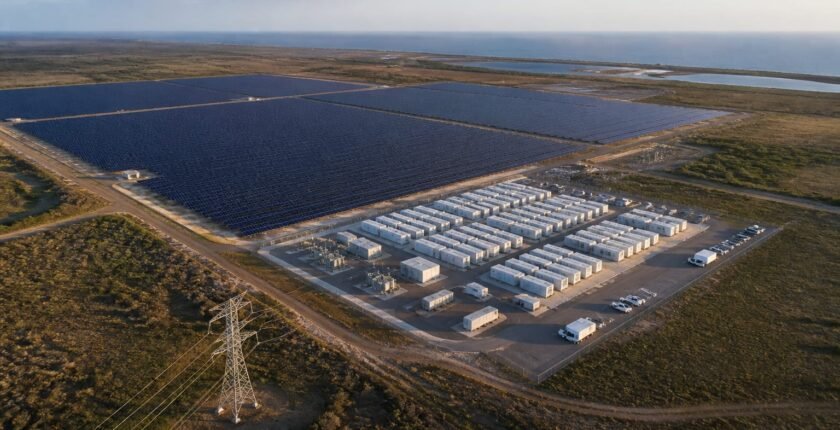
On 8 October 2026 the Executive Committee of the National Economic Council approved a 442 MW grid-connected solar plant with eight hours of battery storage. The Bangladesh Power Development Board will develop the Rampal installation and invest BDT 25 billion ($200 million). The array will occupy about 371.7 hectares that had been earmarked for a second Rampal coal unit beside the existing 1.32 GW Rampal Power Station in Bagerhat district. Implementation is planned to commence in September 2026 and conclude in March 2029, and the project is intended to raise the share of renewables and enable solar output to be dispatched beyond daylight hours.
We want to set up the solar power plant as soon as possible to help meet the power demand,
Zonayed Abdur Rahim Saki, Junior Planning Minister
Key takeaways
- The Executive Committee of the National Economic Council approved the 442 MW plant with eight hours of battery storage on 8 October 2026.
- The Bangladesh Power Development Board will fund and develop the project at a cost of BDT 25 billion ($200 million).
- The facility will be built on about 371.7 hectares next to the 1.32 GW Rampal coal-fired power station in Bagerhat district.
- Bangladesh currently has 1,871 MW of installed renewable capacity, including 1,492 MW of solar; the government targets 20% renewables by 2030 under its Renewable Energy Development Policy 2026–2030.
Table of contents
How the Rampal site is being repurposed
The approved plant will occupy roughly 371.7 hectares that had been set aside for a second unit of the Rampal coal-fired complex. Building the PV facility beside the existing 1.32 GW Rampal Power Station concentrates generation on a site already zoned for power infrastructure in Bagerhat district.
As first reported by pv magazine in April, BPDB was planning the 442 MW solar facility at Rampal; the ECNEC approval on 8 October 2026 confirms the move from planning to execution. The site choice reuses land allocated for coal expansion and replaces fossil‑fuel capacity that had been proposed there.
The decision to place the plant adjacent to existing transmission links is meant to simplify grid connection, but the project still requires site works, interconnection agreements and permitting to start construction under the implementation window from September 2026 to March 2029.
Why eight hours of battery storage matters for the grid
Junior Planning Minister Zonayed Abdur Rahim Saki said the plant will be fitted with battery capacity able to discharge for eight hours — double the period envisaged in the original plan — which enables the facility to retain a larger quantity of solar-generated electricity for use after sunset. A storage span of eight hours can cover many systems' evening peak, shifting the installation from mainly intraday output to one that can supply sustained power in the evening or early morning.
Storage at that duration alters how the output is scheduled: instead of exporting most generation at midday, the BPDB can discharge stored energy later in the day when demand rises. That capability supports the government’s stated aim of reducing dependence on fossil fuel generation and cutting greenhouse gas emissions, because stored solar can displace thermal dispatch during peak windows.
Technical and commercial decisions remain to be finalised — for example the storage technology, round‑trip efficiency, and operational dispatch rules — and those details will determine how much of the 442 MW nameplate can be reliably put to work outside daylight hours.
Policy context, costs and market impact
BPDB will invest BDT 25 billion ($200 million) in the project, making it the country’s largest solar installation on approval. The government has introduced several recent measures to accelerate deployment: the Renewable Energy Development Policy 2026–2030 sets a 20% renewables target for 2030; a $123 million fund for rooftop solar and other renewables was established; and fiscal measures include a temporary cut in import taxes on solar equipment from 17% to 1% for 180 days.
Policy changes also include a BDT 10.50 ($0.086)/kWh tariff for surplus rooftop solar under net‑metering, and a revision of net‑metering rules in 2025 intended to broaden access. The government has reinstated payment guarantees for renewable projects in an effort to improve bankability and attract investors.
If executed on schedule between September 2026 and March 2029, the Rampal plant would add 442 MW to a system that now has 1,871 MW of installed renewables, including 1,492 MW of solar, materially increasing Bangladesh’s daytime and, with storage, dispatchable renewable capacity.
What could move this either way
The case for
- The eight‑hour storage window lets the plant shift significant solar output into evening peaks, improving system flexibility and reducing reliance on thermal plants during those hours.
- Fiscal measures and payment guarantees reduce immediate commercial barriers and may speed procurement and financing for the BDT 25 billion project.
The case against
- The project must meet a tight implementation window from September 2026 to March 2029; delays in procurement, construction or grid works could push completion beyond March 2029.
- Cost pressures or technical choices for eight‑hour storage could increase capital requirements above the BDT 25 billion figure and affect overall project economics.
What to be careful about
- Construction, interconnection and permitting need to be completed within the scheduled September 2026–March 2029 timeframe; slippage in any of those tracks would delay delivery of the 442 MW plant and its eight hours of storage.
- BPDB is the financier and developer at BDT 25 billion; any budget overruns or fiscal reallocations could endanger the timetable or reduce scope.
- The technical performance of the chosen eight‑hour battery system (efficiency, lifetime and dispatch rules) will determine how much of the solar output can be delivered when needed.
The bottom line
The ECNEC approval on 8 October 2026 commits BPDB to a large‑scale, storage‑enabled solar project at Rampal that reallocates about 371.7 hectares from a planned coal expansion to PV plus batteries. At BDT 25 billion ($200 million) and with eight hours of storage, the plant is designed not just to add 442 MW of nameplate solar but to deliver energy during evening peaks. Policy steps — from tax cuts to a $123 million rooftop fund and reinstated payment guarantees — lower near‑term barriers, but the project must clear procurement, construction and technical milestones before the scheduled March 2029 completion to realise those system benefits.
What to watch
- Watch for completion and commissioning of the Rampal solar project in March 2029, the implementation end date given for the plant.
- Watch for progress against Bangladesh’s Renewable Energy Development Policy 2026–2030 target year of 2030, when the government aims for 20% of generation from renewables.
Frequently asked questions
How large is the Rampal solar-plus-storage project?
The approved plant is 442 MW of grid-connected solar paired with eight hours of battery storage, and BPDB will develop it at a cost of BDT 25 billion ($200 million).
When will construction and commissioning take place?
ECNEC's approval was recorded on 8 October 2026; the schedule foresees implementation beginning in September 2026 and running through March 2029.
What effect will this have on Bangladesh’s renewable capacity?
Bangladesh currently has 1,871 MW of installed renewable capacity, including 1,492 MW of solar; the 442 MW Rampal project would become the nation’s largest solar installation on approval and bolster dispatchable renewables via storage.
Related reading