
Blog
1,000 V Alkaline Electrolysis Could Cut Hydrogen Costs
Estimated reading time: 6 minutes · Last updated:
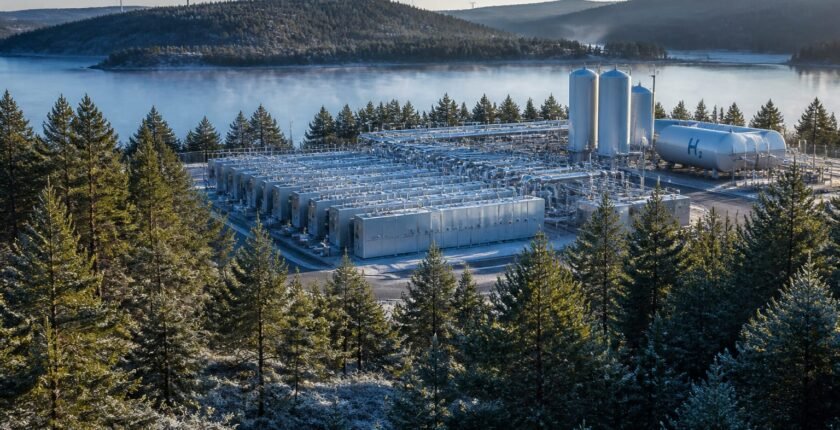
Researchers at Finland's LUT University have run a series-connected alkaline electrolysis system at 1,000 V. Industrial alkaline electrolysers typically work at 200–400 V. The logic is electrical. A higher voltage needs less current to deliver the same power, which cuts losses and shrinks the power supply and power electronics. The LUT team says that equipment accounts for roughly a quarter of what it costs to build a hydrogen plant. Cutting that bill in half could take about 10% to 15% off the whole system's investment. The same week brought three other developments: a binding green ammonia deal between Jera and AM Green, a new European Commission investment platform for the Mediterranean, and a University of Trieste study comparing Omani hydrogen imports with Italian production.
Key takeaways
- 1,000 V test: LUT University ran a series-connected alkaline electrolysis system at 1,000 V using ABB power electronics and Stargate Hydrogen stacks, against an industrial norm of 200–400 V.
- Projected saving: LUT researchers estimate that halving power supply and electronics costs, about a quarter of plant investment, could lower total system investment by around 10% to 15%.
- Ammonia contract: Jera and AM Green signed a binding five-year deal for about 70,000 metric tons a year of green ammonia from Kakinada, India, aimed mainly at ammonia-powered car carriers.
- Import versus domestic: A University of Trieste study puts hydrogen imported from Oman at €7.84/kg against €10.22/kg for Italian production, but the Italian route emits less: 2.26 versus 2.62 kg CO₂ equivalent per kg.
Table of contents
- Key takeaways
- How Higher Voltage Trims the Cost of an Electrolyser
- Jera Signs for Indian Green Ammonia Before the Plant Exists
- Is Hydrogen From Oman Cheaper Than Hydrogen Made in Italy?
- Why Electrolysis Is the Line Item That Matters Most
- What could help or hinder cheaper hydrogen
- What to be careful about
- Frequently asked questions
How Higher Voltage Trims the Cost of an Electrolyser
An electrolyser uses direct current to split water into hydrogen and oxygen. LUT University wired its alkaline stacks in series and pushed the test system to 1,000 V. That is 2.5 to 5 times the usual industrial range of 200–400 V.
Power is voltage multiplied by current, so raising one lets the other fall. Lower current means smaller electrical losses and cheaper conversion hardware. The LUT researchers estimate that the power supply and power electronics make up about a quarter of plant capital cost. That makes this hardware a large target for savings.
ABB supplied the power electronics, and Estonia-based Stargate Hydrogen provided the electrolyser stacks. The team says its next phase covers system design, modelling and the suppression of stray currents. Stray currents are unwanted currents that leak along unintended paths between cells. The 10% to 15% saving remains a projection until that work shows the design holds up at scale.
Jera Signs for Indian Green Ammonia Before the Plant Exists
Japan's Jera and India's AM Green announced a binding agreement on 27 October 2026. It covers about 70,000 metric tons of green ammonia a year for five years, or roughly 350,000 tons in total. Green ammonia is ammonia made from renewable hydrogen.
The fuel will come from a facility AM Green plans to build in Kakinada, Andhra Pradesh. The plant is expected to begin operating in 2028-2029, so the contract commits volumes years ahead of production. The ammonia will be shipped to Japan, where Jera's Hekinan thermal power station in Aichi Prefecture serves as the landing point: facilities close to the plant will receive, store and distribute it.
Jera says the main use will be ammonia-powered car carriers. It is working with shipping lines Kawasaki Kisen Kaisha and Nippon Yusen Kabushiki Kaisha on bunkering infrastructure. Under a separate agreement, seven Japanese companies intend to set up a Chubu-region ammonia supply chain integrated from end to end. They will also build and operate four car carriers fuelled by ammonia. Both the ships and a bunkering vessel dedicated to serving them are scheduled for 2030.
Is Hydrogen From Oman Cheaper Than Hydrogen Made in Italy?
Six researchers at the University of Trieste modelled two renewable hydrogen supply chains for Italy and published the results in the International Journal of Hydrogen Energy. Both chains rely on proton exchange membrane water electrolysis (PEMWE), which splits water across a solid polymer membrane. The model covers every stage: power generation, liquefaction, storage, transport and regasification.
Oman wins on price. The levelized cost of hydrogen is the average cost per kilogram over a project's life. The team puts it at €7.84/kg for imports and €10.22/kg for Italian output, a gap of about €2.38/kg. Maritime shipping makes up around 10% of the imported hydrogen's final cost.
Domestic production wins on carbon. Italian hydrogen carries lifecycle emissions of 2.26 kg of CO₂ equivalent per kilogram, against 2.62 kg for the Omani route, about 0.36 kg lower. Neither chain comes close to zero.
Why Electrolysis Is the Line Item That Matters Most
The University of Trieste analysis found that electrolysis was the largest contributor to both costs and emissions in each chain. Electrolysis makes up 74.4% of the levelized cost and as much as 81% of the carbon footprint. That links the Italian study to the Finnish one. If electrolysis drives nearly three-quarters of the price, hardware savings of the kind LUT is pursuing fall on the biggest line of the budget.
The study also names ports and regional schemes such as the North Adriatic Hydrogen Valley as places where domestic output and imports could be combined.
Policy is moving on the supply side too. The European Commission has launched the T-MED Investment Platform to draw large-scale investment into renewable energy and clean technology around the Mediterranean. The platform is backed by up to €4.5 billion in EU guarantee capacity. Among the projects it has selected is Egypt's Niat and Rasgha Wind Projects, which the Commission says would add 500 MW of onshore wind capacity on the Gulf of Suez. That capacity would support Egypt's future hydrogen output.
| Supply chain | Levelized cost (€/kg) | Lifecycle emissions (kg CO₂e per kg H2) |
|---|---|---|
| Imports from Oman | 7.84 | 2.62 |
| Domestic production in Italy | 10.22 | 2.26 |
What could help or hinder cheaper hydrogen
The case for
- LUT's 1,000 V system lowers current, which its researchers say reduces electrical losses and power-electronics costs.
- Electrolysis accounts for 74.4% of hydrogen cost in the Trieste model, so savings in that hardware have wide reach.
- Binding offtake such as Jera's five-year ammonia contract gives producers committed demand before plants are built.
- The T-MED Investment Platform offers up to €4.5 billion in EU guarantee capacity for Mediterranean renewables.
The case against
- Stray currents still have to be minimised before high-voltage electrolysis can scale, by LUT's own account.
- The 10% to 15% investment saving is an estimate, not a cost measured at a built plant.
- AM Green's Kakinada facility is still planned, with operations expected only in 2028-2029.
- Even the lower-emission Italian chain carries 2.26 kg CO₂ equivalent per kg of hydrogen.
What to be careful about
- LUT's projected 10% to 15% saving depends on halving power supply and electronics costs, which has not yet been shown at scale.
- The Jera supply deal depends on a Kakinada plant that has not begun operating.
- The Trieste cost and emissions figures come from a model of two specific supply chains and may shift with different assumptions.
The bottom line
The 1,000 V result is a milestone for a test system, not a cheaper plant. The 10% to 15% saving is the LUT team's estimate of what halving power-electronics costs could deliver. The stray-current work still ahead will decide whether that estimate survives scale-up. Even so, the target is well chosen. The Trieste study shows electrolysis drives up to 74.4% of hydrogen cost, so savings in that hardware matter wherever the molecules are made: Italy, Oman or Kakinada. The Jera and AM Green contract shows buyers committing to volumes years before plants exist. The open question is whether cost cuts like LUT's arrive before those 2028-2029 start dates.
What to watch
- AM Green's Kakinada ammonia plant is expected to start operating in 2028-2029, and that is when Jera's five-year supply contract can begin delivering.
- Seven Japanese companies are scheduled to complete four ammonia-fuelled car carriers and a dedicated bunkering ship in 2030.
- Watch for results from LUT University's next phase on system design, modelling and stray currents; no date has been set.
Frequently asked questions
What is the EU's T-MED Investment Platform?
The European Commission launched T-MED to draw investment into renewable energy and clean technology across the Mediterranean, with up to €4.5 billion in EU guarantee capacity. Its selected projects include the Niat and Rasgha Wind Projects in Egypt, which the Commission says will add 500 MW of onshore wind on the Gulf of Suez.
What will Jera use green ammonia from India for?
Jera says the fuel is meant mainly for ammonia-powered car carriers. The ammonia will be handled near its Hekinan thermal power station in Aichi Prefecture, and Jera is developing bunkering with Kawasaki Kisen Kaisha and Nippon Yusen Kabushiki Kaisha.
Is imported hydrogen cleaner than hydrogen made in Italy?
Not according to the University of Trieste. Hydrogen imported from Oman is cheaper at €7.84/kg, but it carries 2.62 kg of CO₂ equivalent per kg against 2.26 kg for Italian production, which costs €10.22/kg.
Related reading