
Blog
Revolution Wind Goes Fully Operational for CT and RI
Estimated reading time: 6 minutes · Last updated:
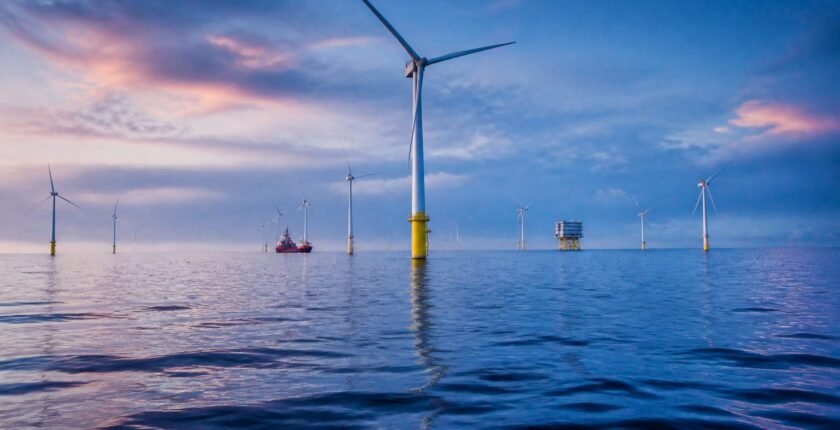
Revolution Wind, the $6.2 billion offshore wind farm that Danish developer Orsted built between Block Island and Martha's Vineyard, is now fully operational, Orsted has announced. Its 65 turbines serve a 20-year contract that sends 400 megawatts to Rhode Island and 304 megawatts to Connecticut. Gov. Ned Lamont said Connecticut's portion will cover roughly 5% of the state's electricity demand. Orsted finished the work in the final days before a contract deadline set for the end of the year, after winning court fights against Trump administration stop work orders. The Revolution Wind price is expected to land near 9.9 cents per kilowatt hour. Eversource, a former partner, still shares the bill for overruns.
This new, reliable source of emission-free power, insulated from geopolitical events that can cause dramatic price fluctuations, is hugely beneficial to our grid and our ratepayers, particularly as we head into the cold winter months.
Emma Cimino, Acting Commissioner, Connecticut Department of Energy and Environmental Protection
Key takeaways
- Full output: Orsted's 65-turbine Revolution Wind farm now runs at full capacity under a 20-year deal splitting 400 megawatts to Rhode Island and 304 megawatts to Connecticut.
- Connecticut share: Gov. Ned Lamont said Connecticut's 304 megawatts will meet about 5% of the state's total electricity demand.
- Price: Revolution Wind power is expected to cost about 9.9 cents per kilowatt hour, and Connecticut's energy department forecasts New England ratepayer savings of hundreds of millions of dollars a year.
- Survived Washington: Orsted overturned Trump administration stop work orders in court in 2025, calling them enterprise-level threats, and completed the $6.2 billion project before its year-end contract deadline.
Table of contents
- Key takeaways
- What Revolution Wind Sends to Connecticut and Rhode Island
- Why Officials Expect Lower Bills From 9.9 Cent Power
- How Orsted Beat Back the Stop Work Orders
- Who Still Pays and Where Connecticut's Offshore Plans Stand
- What could help or hurt Revolution Wind's promise
- What to be careful about
- Frequently asked questions
What Revolution Wind Sends to Connecticut and Rhode Island
The turbines stand about 32 miles southeast of New London, in open water between Block Island and Martha's Vineyard. The two state contracts add up to 704 megawatts. Rhode Island's Office of Energy Resources said the farm will supply electricity to hundreds of thousands of Rhode Island households for decades.
Full operation follows a partial start. Revolution Wind first fed the New England grid on a limited basis in spring 2026, through an onshore link at Quonset Point, Rhode Island. Each turbine added since then has raised that output toward the contracted total.
"Revolution Wind will help to lower utility costs for families and businesses, improve the reliability of our grid, and provide clean electricity," Lamont said. He also congratulated Orsted and the Connecticut workers who built the project.
Connecticut's part went beyond buying power. The state pier in New London was rebuilt at large scale so it could handle the heavy lifting offshore construction demands, and it still serves as the project's supply base. Building the farm created thousands of jobs.
Why Officials Expect Lower Bills From 9.9 Cent Power
Revolution Wind electricity is expected to cost about 9.9 cents per kilowatt hour, as first reported by the Hartford Courant, though the figure may move slightly depending on how output is shared between the states. A kilowatt hour is the unit utilities use to bill household electricity.
Rhode Island's Office of Energy Resources rounded the price to nine cents. "New Englanders need reliable, affordable power now more than ever and that's exactly what Revolution Wind will do," the office said, closing its statement with "Spin baby spin!"
Connecticut's Department of Energy and Environmental Protection, which negotiated the contract with Orsted, predicts savings of "hundreds of millions of dollars a year" for ratepayers in Connecticut and across New England. Acting DEEP Commissioner Emma Cimino stressed that offshore wind is shielded from geopolitical shocks that swing fuel prices, and said that matters most with winter coming.
Those savings remain forecasts from the agencies that signed the deals. The farm has only just reached full output, so no season of billing data yet exists to test them.
How Orsted Beat Back the Stop Work Orders
President Donald Trump has opposed offshore wind turbines for years. He calls them ugly, says they endanger birds and marine life, and argues that finished projects deliver unreliable, overpriced electricity.
In 2025 his administration, which controls federal offshore energy leases, issued stop work orders against Revolution Wind and other offshore projects. The orders produced two legal fights that came close to ending the project, and the administration once marked Revolution Wind for closure.
Orsted won both in court. The developer described the orders as "enterprise-level threats," pointing to the costs that delays would pile onto its power delivery schedule and its ship leasing commitments.
Getting the last turbines working before the end-of-year contract deadline closes that chapter for this farm. It does not settle Washington's broader stance on offshore wind, which has not changed.
Who Still Pays and Where Connecticut's Offshore Plans Stand
Eversource once co-owned Revolution Wind and a second offshore project, Southfork Wind, with Orsted. The utility sold both stakes nearly two years ago to concentrate on electricity distribution. It remains bound, together with Orsted, to cover construction overruns, so it is still paying for the delays.
Connecticut holds no other contract to buy offshore wind power. In late 2024 the state had tentatively joined a three-state purchase agreement with Rhode Island and Massachusetts, but Lamont pulled out at the last moment, saying the deal cost too much. That move effectively ended a project called Vineyard Wind 2.
The result is that one farm now carries Connecticut's entire offshore wind supply. A 5% share of demand is meaningful, but any further growth depends on contracts the state has not signed.
| State | Contracted capacity | Contract term | Official claim | Speaker |
|---|---|---|---|---|
| Rhode Island | 400 MW | 20 years | Power at nine cents per kWh | Office of Energy Resources |
| Connecticut | 304 MW | 20 years | About 5% of state demand | Gov. Ned Lamont |
| Both | 704 MW combined | 20 years | About 9.9 cents per kWh expected | Price estimate |
What could help or hurt Revolution Wind's promise
The case for
- A fixed 20-year contract near 9.9 cents per kilowatt hour sets a stable price for a large block of supply.
- DEEP and Cimino say wind output is insulated from geopolitical fuel price swings, which matters for winter peaks.
- The rebuilt New London state pier continues to supply the project, keeping a working base in Connecticut.
The case against
- Eversource and Orsted still owe construction overruns, a cost legacy of the 2025 delays.
- The Trump administration controls offshore leases and remains opposed to offshore wind.
- Connecticut has no second offshore contract after Lamont's late 2024 exit from the Vineyard Wind 2 deal.
What to be careful about
- Projected savings of hundreds of millions of dollars a year are agency forecasts with no billing record yet behind them.
- The final per-state price may differ slightly from the 9.9 cent estimate depending on how output is allocated.
- Eversource's ongoing overrun obligations leave the scale of delay costs unresolved.
- Continued federal hostility could affect operations or future offshore projects in the region.
The bottom line
Revolution Wind's arrival at full output gives Connecticut and Rhode Island 704 megawatts of offshore power at a price expected near 9.9 cents per kilowatt hour, locked in for 20 years. It also proves a large offshore farm can be finished under open federal hostility, though only after Orsted won in court. The open questions are financial and political. DEEP's forecast of large annual savings has yet to meet a real winter of bills, and Eversource is still covering the cost of delays. For Connecticut, the bigger gap is supply: with Vineyard Wind 2 gone, this single farm and its 5% share are the whole of the state's offshore wind.
What to watch
- Watch how Revolution Wind performs through the winter of 2026 to 2027, the season Cimino singled out as the test of its value to the grid.
- Watch for the size of the construction overruns Eversource and Orsted must still cover; no figure or date has been made public.
- Watch whether Connecticut seeks a second offshore wind contract after leaving the Vineyard Wind 2 deal; no plan or date has been announced.
Frequently asked questions
Where is the Revolution Wind farm located?
Revolution Wind sits between Block Island and Martha's Vineyard, about 32 miles southeast of New London. Its power comes ashore through a connection at Quonset Point, Rhode Island.
Who owns Revolution Wind now?
Danish developer Orsted built and runs the project. Eversource sold its stake nearly two years ago but remains obligated alongside Orsted to pay construction overruns.
Why did Connecticut drop out of Vineyard Wind 2?
In late 2024 Gov. Ned Lamont withdrew from a three-state purchase agreement with Rhode Island and Massachusetts at the last moment, calling it too expensive. The withdrawal effectively ended Vineyard Wind 2.
Related reading