
Blog
Wind Faltered While Solar Propped Up Europe’s Grid
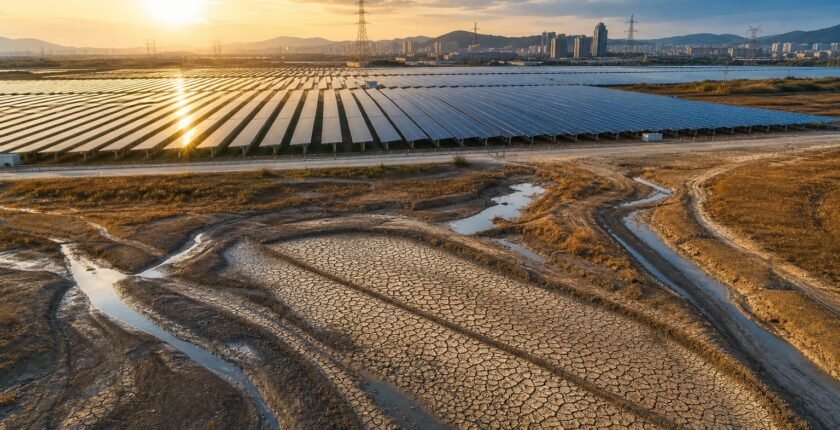
Estimated reading time: 6 minutes · Last updated: 2026-08-21
Wind energy underperformed across Europe during the record heat and drought of summer 2026 as stagnant atmospheric conditions and low river levels cut output for wind, nuclear and hydropower. Solar panels, by contrast, produced 17 percent more power during the heat waves and battery systems helped carry that midday output into evening hours, stabilizing supply as air-conditioning demand rose. Five gas plants in the United Kingdom also cut generation because heat reduced cooling effectiveness, and France lost 18 percent of nuclear capacity to environmental limits on discharged water in mid-July. As first reported by Inside Climate News, these shifts left solar and storage carrying an outsized share of grid reliability this summer and illustrated specific gaps that planners must address for wind energy to remain dependable under extreme-heat conditions.
The next challenge is the evening period. Temperatures often remain high after sunset and AC demand can stay elevated, even as solar production declines.
Walburga Hemetsberger, CEO, SolarPower Europe
Key takeaways
- Ember found Europe’s solar panels produced 17 percent more power during the summer’s heat waves.
- Bloomberg reported that heat-induced low wind speeds halved the United Kingdom’s typical wind farm generation in June.
- Five gas plants in the United Kingdom reduced output by a combined 2.5 gigawatts because heat impaired their cooling systems.
- Ember found France lost 18 percent of its nuclear capacity to “environmental factors” in mid-July.
Table of contents
Why wind stalled during the heat waves
Heat domes and prolonged stable weather produce stagnant air masses that suppress the pressure gradients which normally drive wind turbines. In June and July those conditions forced wind speeds down across wide swathes of Europe, producing much less output than seasonal norms. In the United Kingdom, heat-induced low wind speeds halved the country’s typical wind farm generation in June, a concrete example of how multi-week stagnant episodes can remove a large share of variable output from the system.
That performance drop matters for grid planners because wind is often counted on to meet evening demand swings and seasonal targets. When wind underperforms while demand rises for cooling, system operators face a narrower set of resources to call on. The summer’s pattern shows that wind’s seasonal correlation with heat events is a material reliability consideration, not just a short-term forecasting nuisance.
How solar and batteries carried the grid
Clear skies that accompany many heat events created near-ideal conditions for solar panels, and those panels supplied a disproportionately large share of daytime power during heat waves. Ember quantified that effect: Europe’s solar panels produced 17 percent more power during the summer’s heat waves than they normally do. That extra midday energy lowered grid stress when air-conditioning demand peaked in afternoons.
Crucially, battery systems translated that daytime surplus into evening relief. Industry group SolarPower Europe and market observers point out that storage shifted solar generation into the hours after sunset when temperatures remained high and AC demand stayed elevated. Walburga Hemetsberger, CEO of SolarPower Europe, summed the operational gap succinctly: “The next challenge is the evening period. Temperatures often remain high after sunset and AC demand can stay elevated, even as solar production declines.” Batteries therefore acted as the bridging resource that wind could not provide under those meteorological conditions.
Thermal and hydropower strains: rivers and cooling limits
Hydropower and water-cooled thermal plants were also impaired as Europe’s drought pushed river levels to historic lows. Ember reported that Europe’s hydropower production hit its lowest July level in a decade, and the Danube and other rivers fell to depths that constrained both navigation and power plant cooling. Where intake water was already warm, nuclear and fossil generators had to reduce output to comply with environmental temperature caps on discharged water, squeezing available thermal capacity at the same time wind fell.
France provides a stark example: in mid-July the country lost 18 percent of its nuclear capacity to “environmental factors,” a decorrelation between summer heat and thermal availability that planners must factor into adequacy assessments. Those same hydrological stresses mean river-fed storages and run-of-river hydro can no longer be relied on to buffer large, prolonged heat events without contingency plans or retrofits.
What this summer means for wind energy planning
The operational lesson for wind energy is simple: weather regimes that depress wind can coincide with peak demand for cooling, producing a double hit on system adequacy. That combination raises the value of storage, flexible thermal dispatch and demand-side measures that can shave peaks. Ember and industry voices argue regulators should pursue measures that remove barriers to storage expansion and faster market signals that reward capacity available during evening heat-driven peaks.
Policy responses are already under discussion. Beatrice Petrovich of Ember called extreme price spikes during heatwaves “a blaring signal for regulatory changes that increase power system flexibility.” For wind developers and grid planners this means embedding scenarios where wind is weak for extended periods into adequacy studies, accelerating interconnection and balancing reforms, and co-optimising wind build-out with storage and demand-response so the portfolio is resilient when wind underperforms.
| Source | Summer performance | Primary reason | Notable figure / finding |
|---|---|---|---|
| Solar | Outperformed | Clear, sunny heat-wave conditions | Produced 17 percent more power during heat waves (Ember) |
| Wind | Underperformed | Stagnant air / low wind speeds | Halved typical UK wind farm generation in June (Bloomberg) |
| Nuclear | Curtailments | River water too warm for discharge limits | France lost 18 percent of nuclear capacity in mid-July (Ember) |
| Hydropower | Reduced output | Record low river levels and drought | Lowest July level in a decade (Ember) |
| Gas / thermal | Some plants reduced output | Cooling systems impaired by heat | Five UK gas plants cut 2.5 gigawatts of generation |
What could move this either way
The case for
- More solar plus faster battery deployment can reliably cover daytime peaks and shift supply into evenings, reducing shortfalls when wind underperforms.
- Regulatory reform that removes barriers to storage and incentivises flexibility could make mixed renewables portfolios more resilient to simultaneous heat-and-drought events.
- Planned adaptation investments in thermal and hydro cooling infrastructure (France’s state utility plans over $10 billion) can recover some lost capacity if implemented promptly.
The case against
- Cooling-driven demand growth (air-conditioning adoption is still low in parts of Europe) could outpace storage roll-out and keep evening price spikes frequent.
- Ongoing river depletion and warmer intake waters will periodically force nuclear and hydropower curtailments regardless of generation mix improvements.
- Wind remains exposed to multi-week stagnant regimes; without substantial storage or dispatchable backup, underperformance episodes will recur.
What to be careful about
- Rising evening and overnight cooling demand could outstrip battery deployments if storage permitting and grid reforms lag.
- Long-term hydrological stress may permanently reduce the reliability of river-cooled thermal and run-of-river hydro assets.
- Wind’s correlation with stagnant heat events creates clustered underperformance risk that is not visible in average-capacity forecasts.
The bottom line
This summer’s combination of record heat and drought exposed a specific vulnerability: when atmospheric stagnation suppresses wind and rivers run low, solar plus storage becomes the marginal reliability sink. Solar delivered more daytime energy and batteries smoothed part of the evening demand, but storage and policy reforms must accelerate if wind is to remain a dependable part of European systems under these weather regimes. Planners should now treat prolonged low-wind scenarios and constrained thermal/hydro availability as routine stress tests, and pair wind expansion with concrete storage, demand-response and cooling-adaptation measures to prevent repetition of the summer’s tight margins.
What to watch
- Watch for publication of the French state utility’s rollout plan and timelines for its over $10 billion adaptation spending; no date has been set.
- Watch for EU or national regulatory moves to remove barriers to energy storage and flexibility in response to Ember’s call; no date has been set.
- Watch SolarPower Europe’s next installation update following the 2025 figures; no date has been set.
Frequently asked questions
Why did wind output drop during the heat waves?
Prolonged heat domes produce stagnant air that reduces pressure gradients and local wind speeds; in June heat-induced low wind speeds halved typical wind farm generation in the United Kingdom, illustrating how multi-week calm periods can sharply cut wind output.
How much did solar and batteries reduce grid stress this summer?
Ember found Europe’s solar panels produced 17 percent more power during the heat waves, and battery systems shifted part of that extra daytime generation into the evening hours when air-conditioning demand remained high.
How did water shortages affect thermal and hydro plants?
Drought pushed river levels to historic lows and reduced hydropower; Ember reported hydropower hit its lowest July level in a decade, and France lost 18 percent of its nuclear capacity in mid-July due to environmental limits on discharged cooling water.
Related reading