
Blog
Statkraft picks ABB to upgrade Vikfalli hydropower
Estimated reading time: 5 minutes · Last updated: 2026-08-20
Statkraft has chosen ABB to modernise the Vikfalli hydropower complex, deploying UNITROL 8000 excitation systems and the ABB Ability System 800xA across all five generating units to extend asset life. The three stations — Målset (24MW), Refsdal (92MW) and Hove (68MW) — together produce about 830GWh a year, enough electricity for 53,000 Norwegian homes. The order was booked in the second quarter of 2026 and the announcement appeared on 19 August 2026. Site activities at Målset are scheduled to commence in 2028, with Refsdal and Hove to follow in 2029.
The upgrade of Vikfalli is an important step in strengthening Norway’s renewable energy infrastructure, and we worked closely with ABB from the earliest stage to ensure the solution was optimised.
Inge Hass, power plant manager of group Sogn, Statkraft
Key takeaways
- Contract and supplier: Statkraft selected ABB to modernise control, protection, excitation and electrical infrastructure at the Vikfalli complex.
- Plant output: The three stations together generate 830GWh a year, supplying about 53,000 Norwegian homes.
- Installed units and equipment: The project covers five generating units and will deploy UNITROL 8000 excitation systems and ABB Ability System 800xA.
- Schedule and booking: The order was booked in the second quarter of 2026; Målset work starts in 2028 and Refsdal and Hove in 2029.
Table of contents
What ABB will deliver and why the upgrades matter
ABB’s scope covers a full modernisation of control, protection, excitation and electrical systems across the Vikfalli complex. The contract explicitly includes deploying UNITROL 8000 excitation systems for all five generating units, installing the ABB Ability System 800xA distributed control and monitoring platform, plus advanced cyber-security, low- and medium-voltage electrical systems, vibration monitoring and protection, and cable supply and installation.
Modern excitation and protection systems help generators meet evolving grid codes and strengthen system stability as variable renewables grow. For an operator such as Statkraft, upgrading control and digital monitoring is a way to extend the operational life of long‑duration assets while reducing maintenance risk. The supplier’s delivery of a unified operational environment that integrates with existing third‑party turbine systems is central to the contract: ABB will provide a single control layer over the complex rather than replacing turbine governors or mechanical plant pieces outright.
The announcement states the approach began during early development work, with ABB working alongside Statkraft to define and optimise the technical solution before the main contract was placed. That early involvement is presented as a deliberate procurement choice to reduce risk and improve outcomes on long‑life infrastructure upgrades.
Vikfalli: the asset, its output and the local context
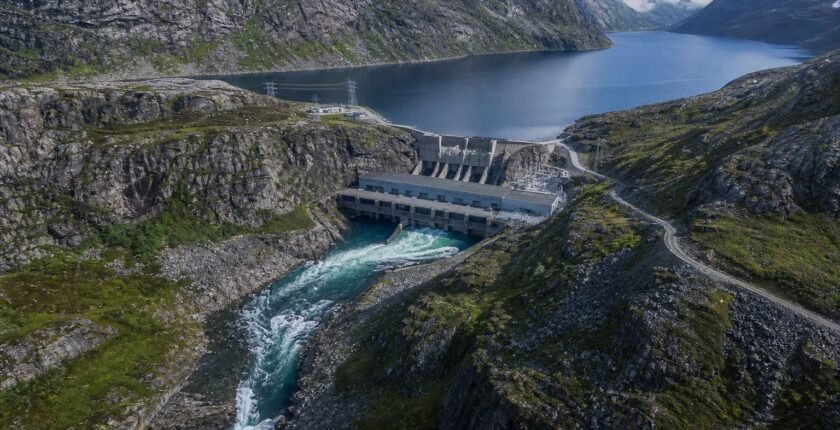
The Vikfalli hydropower complex sits in Vik municipality, 170km northeast of Bergen on Norway’s west coast, and comprises three stations: Målset (24MW), Refsdal (92MW) and Hove (68MW). Together those plants operate five generating units and produce roughly 830GWh a year. Statkraft and the announcement emphasise that this output is equivalent to electricity for about 53,000 Norwegian homes.
Norway uses hydropower as both domestic baseload and an interconnector balancing resource for neighbouring markets. The text notes that hydropower was responsible for almost 90% of electricity produced in June 2026 in Norway, underscoring why owners prioritise modernisation: reliability and grid‑code compliance are operational priorities where hydropower supplies a large share of national demand.
Operational timing is already set out: the order was booked in the second quarter of 2026. Site activities at Målset are scheduled to commence in 2028, with Refsdal and Hove to follow in 2029. The staged schedule spaces civil and electrical works across years to limit disruption to seasonal generation patterns and to allow lessons learned at Målset to be carried to the later sites.
How Vikfalli fits into the wider hydropower picture
The announcement places Vikfalli in a wider sector context. It cites that hydropower is the world’s third‑largest source of electricity, representing 14% of global electricity generated in 2024, and adds that new capacity totalling over 154GW is forecast to come online by the end of the decade. Those global figures frame the upgrade as part of a broader wave of investment and refurbishment rather than a one‑off project.
At country level the material restates that Norway generates 90% of its electricity from hydropower for domestic supply and as a balancing resource for interconnected European markets. For owners such as Statkraft, keeping plants technically current supports both national security of supply and participation in cross‑border balancing markets where dynamic response and grid-code compliance are increasingly rewarded.
Per Erik Holsten, president of ABB’s Energy Industries division, said the priority is ensuring existing assets are equipped for future grid requirements with modern control and digital solutions so they can run “more safely, cleaner and leaner.” That argument underpins the technical choices in the contract: digital monitoring, unified control and upgraded excitation systems are aimed at operational resilience as variable renewables increase on the grid.
| Station | Installed capacity | Generating units | Planned start |
|---|---|---|---|
| Målset | 24MW | part of five units | 2028 |
| Refsdal | 92MW | part of five units | 2029 |
| Hove | 68MW | part of five units | 2029 |
Positive and negative scenarios for the upgrade
The case for
- Upgraded excitation and protection plus centralized control could improve plant availability, reducing forced outages and supporting Norway’s grid at times of tight supply.
- Digital monitoring and vibration protection may lower maintenance costs and extend equipment life, improving whole‑life economics for Statkraft’s ageing fleet.
The case against
- Remote site works and staged implementation create schedule risk; delays at Målset could push later phases in 2029 further out and compress outage windows.
- Integration with existing third‑party turbine systems raises technical risk: mismatches in interfaces or firmware versions could require redesigns that add cost and time.
What to be careful about
- Project schedule slipping due to access, seasonal flow constraints or workforce availability in a remote location.
- Cyber‑security gaps during integration of ABB Ability System 800xA with legacy turbine controls.
- Supply‑chain or component lead times for UNITROL 8000 and medium‑voltage equipment causing phase delays.
- Technical incompatibility between new protection/excitation systems and existing third‑party turbine governors requiring engineering workarounds.
The bottom line
The Vikfalli upgrade is a targeted, multi‑year modernisation that replaces legacy excitation and control systems with ABB’s UNITROL 8000 and System 800xA, while adding digital monitoring and cyber‑security. The three stations together produce about 830GWh a year from 24MW, 92MW and 68MW plants, and staged works beginning in 2028 aim to preserve that capacity while aligning the complex with evolving grid codes. The contract was booked in the second quarter of 2026 and the programme’s success will hinge on execution at Målset in 2028 and the integration of new control systems with existing turbine hardware.
What to watch
- Watch for site activities at Målset to commence in 2028.
- Watch for work to begin at Refsdal and Hove in 2029.
Frequently asked questions
What equipment will ABB install at Vikfalli?
ABB will install UNITROL 8000 excitation systems across all five generating units and deploy the ABB Ability System 800xA distributed control and monitoring platform, together with low‑ and medium‑voltage electrical systems and vibration monitoring.
How much electricity does Vikfalli produce?
The three stations combined generate about 830GWh a year, which the announcement equates to enough electricity for approximately 53,000 Norwegian homes.
When does work start on the upgrades?
The order was booked in the second quarter of 2026; site activities at Målset are scheduled to commence in 2028, with Refsdal and Hove to follow in 2029.
Related reading