
Blog
Iceland’s renewables offer a model for Japan
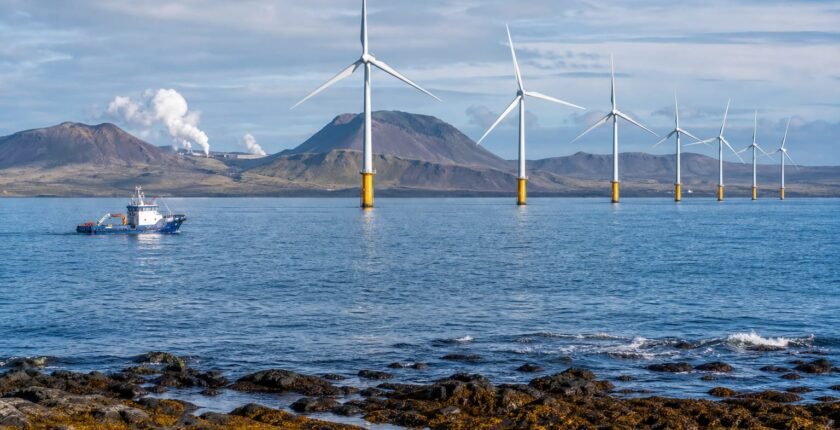
Estimated reading time: 5 minutes · Last updated: 2026-08-19
Iceland’s concentrated renewable system — about 85 percent of energy consumption comes from renewables (excluding transport), with roughly 70 percent from hydropower and the remainder from geothermal — explains why household energy costs remain low despite a high cost of living, as first reported by Kyodo. The country’s district pipelines and plentiful geothermal heat let homes and businesses avoid expensive fossil fuels. Japan, by contrast, imports most of its fuels, has over 20 million kilowatts of estimated geothermal resource but generates only 0.3 percent of its electricity from geothermal, and faces steep legal, geographic and cultural constraints on scaling similar systems.
Low utility bills are a lifesaver for our household budget,
Megumi Nishida, a resident of Reykjavik originally from Japan
Key takeaways
- Renewables share: Iceland sources about 85 percent of its energy consumption from renewables, excluding transport.
- Hydropower share: Hydropower supplies about 70 percent of Iceland’s electricity, with geothermal providing the remainder (about 30 percent by subtraction).
- Household bills: A Reykjavik household quoted in the reporting paid about 21,000 yen in January for electricity and hot water with 24-hour heating.
- Japan’s geothermal potential: Japan is estimated to have over 20 million kilowatts of geothermal resources but geothermal accounts for only 0.3 percent of its electricity generation.
- Japan energy mix (2025): Our World in Data figures cited show Japan’s per capita electricity generation in 2025 was 67 percent fossil fuels, 9.1 percent nuclear and 24 percent renewables.
Table of contents
How Iceland’s system keeps utility bills low
Iceland’s energy model is built on a small population, large local resources and infrastructure that moves heat and power to demand. Pipelines convey geothermal hot water across lava plateaus into urban distribution and directly to buildings; combined with extensive hydropower, that means most household heating and electricity is provided locally rather than by imported fuels.
The reporting notes that renewable supply covers about 85 percent of energy use excluding transport, and that hydropower accounts for roughly 70 percent of electricity with geothermal covering the remainder. Those shares let residents, including the quoted Reykjavik household, maintain lower utility exposure even when other costs such as food are high.
For businesses that are power‑intensive, low wholesale electricity and abundant hot water are a commercial lever. The example of iFarm Iceland—using geothermal heat and LED lighting to run a climate‑controlled vertical farm—shows how consistent, low‑cost energy underpins industrial experiments that would be far costlier where fuel is imported.
Why Japan can’t copy Iceland wholesale
Japan’s resource base and constraints differ sharply. The country has over 20 million kilowatts of geothermal resource on paper, yet geothermal generation contributes only 0.3 percent of electricity today. Much of that potential lies under mountains, national parks or popular hot spring (onsen) areas where drilling is tightly regulated or opposed by stakeholders.
The Fukushima Daiichi crisis in March 2011 pushed Japan toward more LNG and coal imports, raising the base cost of power and increasing reliance on international commodity markets. That makes the idea of switching to local renewables attractive in principle, but the scale problem remains: Iceland meets most household needs for a population of about 380,000; Japan serves over 120 million people across many islands and dense urban centres.
High upfront capital for drilling, the geological uncertainty you only resolve by drilling, and strong opposition from the onsen sector are recurring barriers. The Ministry of Economy, Trade and Industry is nevertheless treating geothermal as a strategic frontier and backing next‑generation approaches such as injecting water into hot bedrock where shallow springs are absent.
Practical lessons Japan can apply and where they stall
Not every element of Iceland’s model is exportable, but parts are transferable. District heating or targeted local heating loops can reduce household exposure to global fuel prices; the Reykjavik example shows how direct geothermal heat distribution cuts reliance on imported fuels for space heating and hot water.
Policy and permitting changes would be needed to unlock even a fraction of Japan’s potential, and developers will have to address onsen concerns with science‑based monitoring and compensation schemes. The reporting highlights enhanced geothermal techniques—injecting water into high‑temperature bedrock—as a technical path that avoids shallow hot‑spring reservoirs and so might ease some local opposition.
Private enterprises already illustrate alternative pathways: a Japanese start‑up, iFarm Iceland, uses geothermal heating and cheap electricity to grow premium strawberries for export, showing that low energy prices change industrial economics and make new business models viable even in a harsh climate.
| Metric | Iceland | Japan |
|---|---|---|
| Population | 380,000 | over 120 million |
| Share of energy from renewables (excl. transport) | about 85% | 24% (per Our World in Data, 2025) |
| Electricity from hydropower | about 70% | — (national mix: 67% fossil fuels, 9.1% nuclear, 24% renewables in 2025) |
| Electricity from geothermal | the remainder (about 30% by subtraction) | 0.3% of electricity generation |
| Estimated geothermal resource | not stated | over 20 million kilowatts |
| Representative household utility bill (example) | about 21,000 yen (January bill for one Reykjavik household) | about 30,000–40,000 yen per month (2025, varying by heating infrastructure) |
Two paths if Japan pursues geothermal and district heat
The case for
- Scaled pilots using non‑spring geothermal methods could unlock pockets of inexpensive heat and power, lowering operating costs for energy‑intensive greenhouses and industry.
- Improved permitting, scientific monitoring and compensation frameworks could reduce local opposition in hot‑spring areas and allow development in less sensitive zones.
The case against
- High upfront drilling and grid‑integration costs combined with geological uncertainty could keep projects uneconomic without substantial public investment or guarantees.
- Strong resistance from the onsen industry and stringent protection of national parks may restrict access to the most promising resources, limiting the achievable scale.
What to be careful about
- Local opposition from the hot springs (onsen) industry that fears groundwater or reservoir impacts.
- Large upfront capital and drilling risk because resource presence cannot be confirmed without exploratory wells.
- Regulatory limits where promising resources lie within national parks or other highly regulated zones.
- Scale mismatch: Japan’s population and dispersed demand make replicating Iceland’s concentrated system costly and complex.
The bottom line
Iceland offers a compact example of how abundant local renewables and heat distribution can shield households and businesses from global fuel swings. The reporting shows clear mechanical lessons—district heat, plentiful hydropower and direct geothermal use—but Japan’s larger population, protected landscapes and entrenched onsen industry make a straight copy impractical. Progress will likely come from targeted pilots, regulatory reforms and technologies such as enhanced geothermal that avoid shallow hot springs; each step must address drilling risk, upfront finance and local stakeholder concerns before the country can convert a fraction of its 20 million kilowatt resource into scaled, low‑cost heat and power.
What to watch
- Watch for Ministry of Economy, Trade and Industry announcements on geothermal pilot programmes; no date has been set.
- Watch for any legal or regulatory decisions on geothermal drilling in protected or onsen areas; no date has been set.
- Watch for published results or scaling plans from private pilots using enhanced geothermal or non‑spring bedrock injection; no date has been set.
Frequently asked questions
How does Iceland keep household energy costs low?
Iceland relies on local hydropower and geothermal heat so that about 85 percent of energy consumption (excluding transport) is renewable, and hydropower supplies roughly 70 percent of electricity. That local supply, combined with district pipelines for hot water, reduces exposure to imported fuel prices.
What stops Japan from building the same geothermal systems?
Japan faces legal and cultural barriers: many promising resources sit in mountains, national parks or under hot spring resorts where drilling is restricted, and the onsen industry resists projects that might affect shallow aquifers. Although the country has over 20 million kilowatts of geothermal resource on paper, geothermal currently provides only 0.3 percent of Japan’s electricity.
Could district heating like Iceland’s work in Japan?
Technically yes in some areas: district pipelines that deliver geothermal hot water can cut heating costs, as seen near Reykjavik, but implementation in Japan is constrained by geographic dispersion and urban density; a cited household example in Reykjavik paid about 21,000 yen in January for electricity and hot water, while typical Japanese utilities in 2025 ran about 30,000–40,000 yen per month depending on heating systems.
Related reading