
Blog
Canada Bets Big on Wind Power and Hydropower
Estimated reading time: 6 minutes · Last updated: 2026-08-19
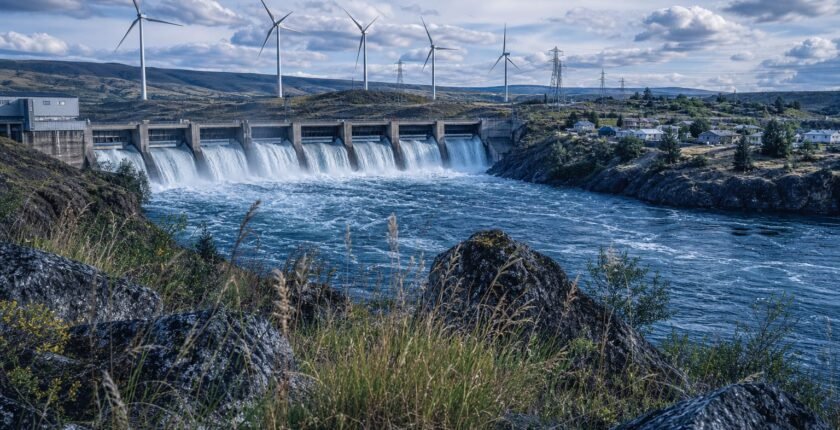
Prime Minister Mark Carney announced a roughly C$70 billion package of hydropower, onshore wind and transmission projects intended to meet domestic electricity needs and to export power to New York and Massachusetts, as first reported by Inside Climate News. The plan centers on upgrades at Churchill Falls, a C$70 billion investment that includes replacing turbines at the 5,428-megawatt Churchill Falls plant to add up to 2,500 megawatts, development of the 2,700-megawatt Gull Island project projected to come online in the mid-2030s, and a target to build 2,000 megawatts of new onshore wind capacity. Carney’s office provided the program figures and export allocations.
The project would “power tomorrow’s economy to strengthen Canada’s place in the world to give ourselves more than any other nation can take away, because when we work together, there is nothing that Canada cannot do.”
Mark Carney, Canadian prime minister
Key takeaways
- Total announced funding: The federal, provincial and company-backed package is about C$70 billion (U.S. $50 billion), the government says.
- Major hydro projects: Churchill Falls is a 5,428-megawatt plant and the plan would replace turbines to add up to 2,500 megawatts; Gull Island is a proposed 2,700-megawatt plant expected in the mid-2030s.
- Wind and transmission targets: The plan targets building 2,000 megawatts of new onshore wind and two new transmission lines to carry power inland and to export markets.
- U.S. offtake allocations: Up to 240 megawatts are available to New York City via the Champlain Hudson Power Express and up to 200 megawatts to Massachusetts via the New England Clean Energy Connect, with an extra 280 megawatts available in spot markets.
- Household relief measure: Households in Newfoundland and Labrador would receive a 15 percent rebate on the first 2,000 kilowatt-hours used each month, a change the plan projects will save about $350 per year per household.
Table of contents
What the C$70 billion package covers
The core of the program is a combination of hydropower upgrades, a large new hydro build, a major onshore wind push and new transmission. Carney’s office set the headline figure at about C$70 billion (U.S. $50 billion) and says the money would come from the federal government, provincial governments and the companies that operate the hydropower plants.
At the centre of the plan is Churchill Falls, the 5,428-megawatt hydropower plant, where the government proposes replacing existing turbines to increase capacity by up to 2,500 megawatts. Separately, Gull Island is listed as a proposed 2,700-megawatt hydropower plant expected to go online in the mid-2030s; the project was already in development but federal financing details are new. On the wind side, the plan sets a target of building 2,000 megawatts of new onshore capacity. The package also includes two new transmission lines intended to move power from new generating capacity into mineral-rich regions and toward export routes.
All items in the plan are subject to ongoing approvals. The announcement frames the investments as both supply-side measures and infrastructure for industrial development, particularly in Newfoundland and Labrador where much of the new generation would sit.
How the plan connects Canadian generation with U.S. buyers
Export arrangements are explicit in the package. Carney’s office assigns up to 240 megawatts to New York City via the Champlain Hudson Power Express and up to 200 megawatts to Massachusetts via the New England Clean Energy Connect. Beyond those allocations, an additional 280 megawatts would be available in spot markets to U.S.-based buyers.
Those allocations rely on cross-border transmission capacity and existing commercial links. The Champlain Hudson Power Express and the New England Clean Energy Connect are named conduits for the exports; their participation fixes an initial set of offtake slots that Canadian authorities are offering to U.S. buyers. The package also calls for two new transmission lines inside Newfoundland and Labrador to tie new generation to inland load centres and to the export corridors.
Observers cited in the government rollout emphasised that transmission is essential to affordability and market access. David Widawsky, U.S. program director for the World Resources Institute, said the transmission projects matter because they allow power to flow more easily across Canada and into the United States, a point the government used to justify the scale of the package.
Politics, Indigenous participation and affordability
Carney presented the plan amid tensions with the United States and new U.S. tariffs; he framed the projects as a way to reduce dependency on an often-uncooperative neighbour. At the same time, the announcement signals continuity with other policy tracks: the government is boosting oil-sands production and pipeline plans even as it expands renewable investment, a tension noted by Chris Bataille of the Columbia University Center on Global Energy Policy and Simon Fraser University.
The package was drafted in consultation with Indigenous leaders and includes an opportunity for the Innu Nation to become partial owners of the wind and transmission projects. Inside Climate News notes this as a shift from prior energy agreements that provided limited financial benefit to provincial governments and tribes. The plan also contains a household affordability measure: households in Newfoundland and Labrador would receive a 15 percent rebate on the first 2,000 kilowatt-hours they use each month, which Carney’s office projects will save about $350 per year per household.
Those political and distributional choices are front-loaded in the announcement: ownership, job creation in mineral-rich areas enabled by transmission, and explicit household rebates. Each of those elements will be determinants in how provincial governments, Indigenous governments and private operators negotiate final terms and timelines.
| Project | Type | Capacity | Timing/Status | Notes |
|---|---|---|---|---|
| Churchill Falls | Hydropower (upgrade) | 5,428 MW (plus up to 2,500 MW) | Planned upgrades | Replace turbines to add up to 2,500 MW; federal financing proposed |
| Gull Island | Hydropower (new) | 2,700 MW | Proposed; mid-2030s | Already in development; new federal financing details |
| Onshore wind target | Wind (new builds) | 2,000 MW | Target set | Program target for new capacity across region |
| Transmission lines | Transmission | Two new lines | Planned | To move power inland and enable exports to U.S. markets |
Case for and against the plan’s execution
The case for
- Federal, provincial and company co-financing could mobilise the capital needed to complete large civil works and turbine upgrades.
- Named export allocations to the Champlain Hudson Power Express and the New England Clean Energy Connect create initial commercial pathways for at least 440 megawatts of contracted offtake to New York City and Massachusetts.
The case against
- All projects remain subject to ongoing approval processes and permitting; federal financing is proposed but not finalised.
- The government is simultaneously supporting oil-sands production and pipelines, a policy mix that could complicate domestic political support and raise trade-offs in permitting and public opinion.
What to be careful about
- Financing and approvals are not guaranteed: the announcement says funding would come from federal and provincial governments and plant operators but leaves detailed splits and approvals unresolved.
- Timelines are lengthy: Gull Island is projected to come online in the mid-2030s, so near-term energy and economic benefits will be limited.
- Export volumes depend on cross-border transmission and U.S. market access, which can be affected by U.S. state or federal policy changes.
- Indigenous participation is proposed but not finalised; past agreements gave limited financial benefit to tribes, so negotiation outcomes could delay projects.
The bottom line
The announcement ties large-scale hydropower and a defined wind target to export pathways and affordability measures, but it leaves key details unresolved. The C$70 billion headline packages specific projects — Churchill Falls upgrades, Gull Island, a 2,000-megawatt wind target and two transmission lines — and it assigns explicit export volumes to named U.S. transmission links. What remains to be settled are the financing splits, regulatory approvals, precise Indigenous ownership terms and construction timelines. Those unresolved elements will determine whether the package delivers the capacity and the cross-border sales the government promises.
What to watch
- Watch for federal and provincial approval decisions and final financing terms; no date has been set.
- Watch for Gull Island to progress toward construction and its stated target to come online in the mid-2030s.
- Watch for formal ownership terms for the Innu Nation’s proposed participation in wind and transmission projects; no date has been set.
Frequently asked questions
How large is the announced investment?
The government announced about C$70 billion, which it presented as roughly U.S. $50 billion.
Which projects are the priority?
The package targets upgrades at Churchill Falls (a 5,428-megawatt plant with up to 2,500 megawatts of added capacity possible), development of the 2,700-megawatt Gull Island project, and a 2,000-megawatt onshore wind build target.
How much power is committed to U.S. buyers?
Carney’s office allocated up to 240 megawatts to New York City via the Champlain Hudson Power Express and up to 200 megawatts to Massachusetts via the New England Clean Energy Connect, plus an additional 280 megawatts available in spot markets.
Related reading