
Blog
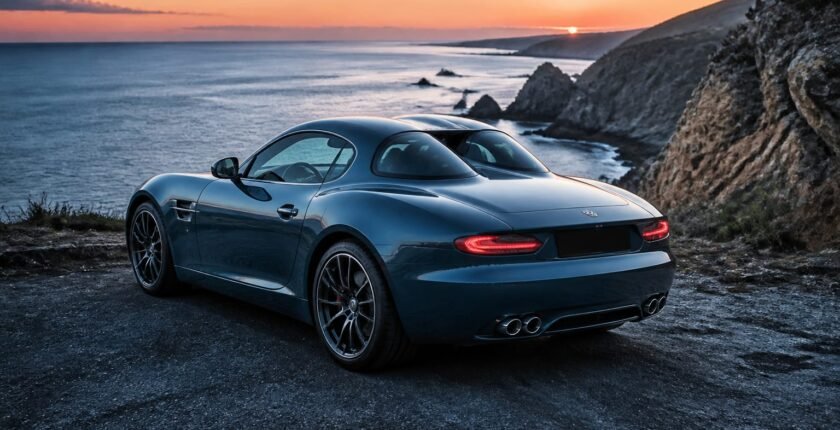
Peugeot RCZ Vision Brings Back Double-Bubble Roof
Estimated reading time: 6 minutes · Last updated:
Peugeot unveiled the RCZ Vision ahead of the 2026 Paris Motor Show as a design-and-technology preview rather than a committed production model. The concept revives the RCZ name and the signature double-bubble roof while pairing a projected 11.5 kWh/100 km energy use with a 110 mm-thick solid-state battery that the company says can support up to 373 miles (600 km) of range and a 10-minute 10–80 percent charge. Peugeot presents the RCZ Vision as a statement of its new "Feline Future" design language and a testbed for features such as Hypersquare steer-by-wire controls, brake-by-wire and next-generation i-Cockpit interfaces.
Key takeaways
- Concept and origin: Peugeot revealed the RCZ Vision concept as a preview of future design, reviving the RCZ badge and Zagato-style double-bubble roof.
- Battery and range: The concept uses a 110 millimeter solid-state battery built with Factorial Energy, claimed to deliver up to 373 miles (600 km) of range and a 10-minute 10–80 percent charge.
- Efficiency and power: Peugeot projects energy use of 11.5 kWh per 100 kilometers and lists peak output of 500 horsepower for the RCZ Vision.
- Cabin tech: The RCZ Vision previews Peugeot’s next i-Cockpit with Hypersquare steering, transparent Micro LED displays and Level 2++ automated driving.
Table of contents
- Key takeaways
- Design revival: the double-bubble roof and materials
- Battery, charging and claimed efficiency
- Powertrain and driver tech: steering, brakes and automation
- Interior, heritage and production prospects
- How this could and could not influence Peugeot's lineup
- What to be careful about
- Frequently asked questions
Design revival: the double-bubble roof and materials
The RCZ Vision reintroduces the signature double-bubble roof as a deliberate link to the original RCZ. Peugeot frames the concept within a new "Feline Future" design language defined by five principles—freedom, courage, elegance, inner force and instinct—and the coupe pairs a low, wide stance with muscular shoulders and a slim glass cabin.
Exterior details aim to balance show-car drama with sustainability cues: Peugeot replaced solid aluminum finishes with paint made from recycled aluminum, and the lighting reworks the brand’s three-claw motif into ultra-slim horizontal signatures. The concept rolls on staggered wheels—21 inches front, 22 inches rear—underscoring its grand-tourer proportions while keeping a low 1.35 meter height.
Those proportions matter because the RCZ Vision measures 4.65 meters long and 1.94 meters wide, larger than the original RCZ and closer in scale to a substantial grand tourer than a compact coupe. Peugeot positions these choices as both aesthetic and aerodynamic decisions to help the car meet the concept’s energy targets.
Battery, charging and claimed efficiency
Peugeot highlights a thin solid-state battery as the RCZ Vision’s central technical claim: the pack is 110 millimeters thick and paired with a 1,000-volt electrical architecture. Peugeot says the arrangement supports up to 373 miles (600 kilometers) of range and a rapid 10-minute charge from 10 to 80 percent, figures the company presents as targets for the concept.
The maker projects the concept’s energy consumption at 11.5 kWh per 100 kilometers (62 miles). That projected efficiency, combined with the thin battery and aerodynamic shape, is the rationale Peugeot gives for achieving the quoted range despite the car’s powerful output.
Peugeot developed the battery work with Factorial Energy. The company describes the battery and the high-voltage architecture as part of the concept’s technical showcase rather than a confirmed production specification, leaving the chemistry, testing standard and production role of Factorial Energy to be clarified.
Powertrain and driver tech: steering, brakes and automation
Performance figures are headline-grabbing: Peugeot lists 500 horsepower for the RCZ Vision but does not state the driven axle layout. The company pairs that output with active aerodynamic elements, including a rear spoiler that stows when stationary and deploys while driving to aid stability.
Inside, Peugeot previews its next-generation i-Cockpit with a Hypersquare steering control, transparent Micro LED displays and a central screen that can be switched off to disappear into the dash. Peugeot says Hypersquare uses a production-ready steering control planned for the next-generation E-208 and combines with steer-by-wire to remove the mechanical link between the steering control and the front wheels.
The RCZ Vision also showcases brake-by-wire, which replaces the hydraulic connection between pedal and brakes with electronic control to improve braking modulation and integrate regenerative braking, and a Level 2++ automated driving package that includes hands-free functionality.
Interior, heritage and production prospects
Peugeot designed the cabin as a four-seat grand-tourer environment using Alcantara, recycled leather and machined aluminum, and it fitted a clock developed with French watchmaker SERICA as a nod to tradition. Rear seats fold to expand luggage space, reinforcing the concept’s touring brief rather than a spartan track focus.
Peugeot is explicit that the RCZ Vision is a preview and not a production promise. The original RCZ was produced between 2009 and 2015 (technically built by Magna Steyr), and the Vision reprises the name as a styling and technology statement rather than as a confirmed new model.
That framing leaves several production questions open: which features will transfer to road cars, whether the 500-horsepower layout is a show-car exaggeration, and how quickly Peugeot will move production-ready solid-state cells into volume models. Peugeot positions many items—battery, Hypersquare steering and Level 2++ features—as technologies it will evaluate rather than certainties.
| Feature | RCZ Vision (concept) | Original RCZ (2009–2015) |
|---|---|---|
| Body and roof | Double-bubble roof; low 1.35 m height | Zagato-inspired coupe roof |
| Battery / powertrain | 110 mm solid-state battery; 1,000 V; 500 hp claimed | Gasoline engines, front-wheel drive layout |
| Range / efficiency | Up to 373 miles (600 km); 11.5 kWh/100 km (projected) | N/A (internal combustion) |
| Key cabin tech | Hypersquare steer-by-wire; Micro LED; Level 2++ | Conventional steering and instrumentation |
How this could and could not influence Peugeot's lineup
The case for
- If Peugeot validates the thin solid-state pack in testing, production models could gain meaningful range or efficiency improvements using a 1,000-volt architecture.
- Hypersquare steering and steer-by-wire transferred to a volume car would free cabin packaging and allow configurable steering ratios for improved low-speed manoeuvres and high-speed stability.
The case against
- Solid-state batteries remain at a development stage and may not deliver the thinness, charge speed or energy density claimed in concept form when scaled for mass production.
- Regulators and customers may resist steer-by-wire and brake-by-wire as primary controls until long-term reliability and fail-safe behaviours are proven in production vehicles.
What to be careful about
- The concept’s 10-minute 10–80 percent charging claim depends on high-power, 1,000-volt charging infrastructure and compatible cooling; those systems are not guaranteed to be widely available.
- Scaling a 110 mm solid-state pack from concept to production may reveal thermal, manufacturing or lifecycle issues that change energy density, range or charge-speed claims.
- Steer-by-wire and brake-by-wire introduction faces regulatory approval and customer acceptance hurdles that could delay or limit their rollout.
The bottom line
The RCZ Vision is a concentrated forecast of where Peugeot wants its coupe design and in-car technology to go: a revived nameplate, a Zagato-inspired double-bubble roof, a thin solid-state battery and steer-by-wire controls. The concept bundles ambitious performance and charging claims—500 horsepower, 373 miles of range and a 10-minute 10–80 percent charge—while Peugeot stresses these are demonstration targets. The technical highlights are credible as engineering directions, but moving them from show car to showroom will depend on validation of the battery chemistry, certification of steer- and brake-by-wire systems, and commercial decisions Peugeot has not yet announced.
What to watch
- watch for Peugeot to confirm whether the RCZ Vision will move into production; no date has been set.
- watch for Factorial Energy or Peugeot to publish technical validation of the 110 mm solid-state battery and its charge-speed tests; no date has been set.
- watch for confirmation that Hypersquare and steer-by-wire will appear on the next-generation E-208 production model; no date has been set.
Frequently asked questions
Is the RCZ Vision a confirmed production car?
No. Peugeot describes the RCZ Vision as a preview of future design and technology rather than a guaranteed production model; the original RCZ was produced from 2009 to 2015 and the Vision reuses the name as a statement.
What battery technology does the RCZ Vision use?
Peugeot says the concept uses a 110 millimeter solid-state battery developed with Factorial Energy, paired with a 1,000-volt electrical architecture and claimed to support up to 373 miles (600 km) of range.
How quickly can the RCZ Vision charge?
Peugeot claims the concept can charge from 10 to 80 percent in 10 minutes, a figure stated alongside the 1,000-volt architecture but not accompanied by testing-standard details.
What driver-assist and cabin technologies are showcased?
The concept previews a next-generation i-Cockpit with Hypersquare steering, transparent Micro LED displays, brake-by-wire and a Level 2++ automated driving package, and Peugeot says Hypersquare uses the production version planned for the next-generation E-208.
Related reading