
Blog
Iceland to Drill Into Magma for Geothermal Power
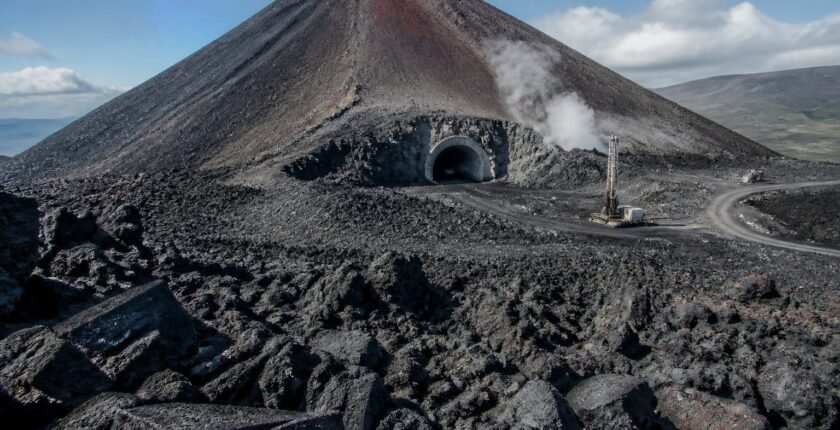
Estimated reading time: 5 minutes · Last updated:
Iceland’s Krafla Magma Testbed (KMT) plans to drill beside molten rock to test magma geothermal energy, aiming to hit superhot conditions above 400°C (752°F) and begin a dedicated well in 2027. The project will place instruments next to magma to study direct heat extraction and the behaviour of supercritical fluids under extreme pressure. KMT frames the work as research and technology development rather than the immediate construction of a commercial power plant, and the team says experiments will test materials, monitoring and methods needed to sustain a borehole beside molten rock.
Key takeaways
- Project and timeline: Krafla Magma Testbed (KMT) aims to drill a dedicated superhot geothermal well in 2027 targeting temperatures above 400°C (752°F).
- Past evidence: A 2009 encounter at Krafla produced more than 100 megawatts of thermal output, showing the scale of heat accessible near magma.
- Technical threshold: Supercritical water conditions cited are temperatures above 374°C (705°F) and pressures above roughly 22 megapascals.
- National context: About 90% of Icelandic homes use geothermal heating and roughly 70% of the country’s energy comes from geothermal sources.
Table of contents
What KMT plans and the project's timetable
Krafla Magma Testbed (KMT) is a dedicated programme to test drilling, instrumentation and materials near a magma body at Krafla. The consortium secured a financing agreement in September 2024 with the Icelandic government, Landsvirkjun and Reykjavík Energy to support development over the following two years, and the project described plans in 2025 to drill a dedicated superhot well in 2027.
KMT plans to drill its first dedicated superhot geothermal well in 2027 and to begin initial experiments with instruments placed near molten rock, but publicly available project information as of 10 October 2026 does not show that a magma-drilling campaign had started. Details about the 2027 drilling target and the revised timeline were summarised, as first reported by ZME Science.
The project leadership describes the immediate objective as research: to create a magma observatory where direct sampling and long-term monitoring are possible, rather than to commission a commercial magma-powered plant on day one.
Why magma could change geothermal output
Conventional geothermal wells extract heat from hot rock and steam at temperatures well below magma, but fluids heated close to magma hold far more energy. When water is heated past 374°C (705°F) and kept at pressures on the order of 22 megapascals, it becomes supercritical — a single phase capable of transporting substantially more heat per unit mass than ordinary steam or liquid.
KMT aims to access these superhot fluids and test whether a single well near magma can deliver energy at rates well above conventional wells. The magma contact at Krafla has been measured at temperatures approaching 900°C (1,650°F) and at shallow depths: magma was encountered about 2.1 kilometres (1.3 miles) beneath the surface in this area, making the target accessible by modern drilling standards.
If extraction can be sustained without rapid degradation of hardware or excessive cooling of the reservoir, individual superhot wells could significantly raise the thermal output available per well compared with today’s geothermal practice.
Technical challenges and the record of accidental encounters
Drilling beside or into magma poses corrosion, temperature and mechanical challenges far beyond those of ordinary geothermal wells. Materials must survive extreme temperatures and corrosive fluids, seals and casing must retain integrity under mechanical stress, and monitoring must detect changes that could threaten infrastructure or science objectives.
There is precedent for magma encounters during drilling. In 2009 the Iceland Deep Drilling Project hit magma at Krafla and later tests of that well recorded more than 100 megawatts of thermal output, evidence that the scale of heat is large. The earlier Puna Geothermal Venture encounter in Hawaii in 2005 is another example of accidental magma exposure during energy drilling.
Those incidents show two things: magma can be reached and it need not trigger an eruption, but accidental contacts also end operations quickly. KMT’s stated task is to turn those accidental encounters into controlled experiments with purpose-built materials and monitoring systems.
What success would mean for Iceland and science
Iceland already derives most of its power and heat from geothermal: roughly 90% of homes are heated with geothermal energy and about 70% of the country’s energy comes from geothermal sources. Demonstrating reliable superhot extraction would expand that resource by enabling much higher outputs from single wells.
Beyond power, KMT offers volcanology a unique observational window. Instrumented boreholes beside molten rock would let scientists sample magma directly and monitor processes that today are inferred indirectly. That could improve eruption forecasting and models of continental formation.
Still, success is not certain. The experiment is explicitly research-focused, and engineers must solve materials, longevity and economic questions before magma-close wells could shift from demonstration to commercial deployment.
| Event | Year | Detail |
|---|---|---|
| Puna Geothermal Venture magma encounter | 2005 | Accidental lava exposure during drilling |
| Iceland Deep Drilling Project magma encounter | 2009 | Tested to more than 100 megawatts of thermal output |
| KMT financing agreement | September 2024 | Funding agreement with Icelandic government, Landsvirkjun and Reykjavík Energy |
| KMT planned drilling target | 2027 | Dedicated superhot well targeting temperatures above 400°C (752°F) |
How KMT could succeed — and how it might stall
The case for
- If materials and casings survive, a single superhot well could deliver far more thermal power than conventional wells, reducing the number of wells needed for large supplies.
- Direct sampling and long-term monitoring beside magma would transform volcanology by providing in-situ data on magma composition and dynamics.
The case against
- High temperatures and corrosive fluids may destroy equipment or force frequent replacement, driving costs above economically viable levels for power generation.
- Even a strong initial thermal output could decline quickly if accessible heat is exhausted or if circulation pathways close, leaving the experiment scientifically valuable but commercially marginal.
What to be careful about
- Material failure from sustained exposure to temperatures near 900°C (1,650°F) and corrosive fluids.
- Rapid thermal drawdown around a borehole that reduces long-run energy yield.
- Mechanical disruption or loss of well integrity at shallow magma depths of about 2.1 kilometres (1.3 miles).
The bottom line
Krafla Magma Testbed is a research-first effort to place instruments and test drilling beside molten rock. The project bundles state backing and utility partners, it builds on accidental magma encounters in 2005 and 2009, and it targets a dedicated superhot well in 2027 aiming for temperatures above 400°C (752°F). The scientific upside — direct sampling of magma and demonstration of supercritical heat extraction — is large, but so are the engineering and economic questions: materials, longevity and reservoir behaviour must be proven before magma-close wells move from experiment to commercial power generation.
What to watch
- Watch for KMT to begin drilling its dedicated superhot geothermal well in 2027; that is the project's publicly stated target.
- Watch for KMT or its partners to publish first instrumented borehole sampling results; no date has been set.
Frequently asked questions
Will drilling into magma make Krafla erupt?
No. Past drilling encounters show that magma contact does not necessarily trigger eruptions: Krafla’s last eruption before modern drilling was in 1984, and a 2009 drilling encounter at Krafla did not cause an eruption but did provide recoverable material for study.
What exactly is 'superhot' or 'supercritical' in this context?
Water reaches its supercritical state once temperatures climb above 374°C (705°F) and pressures approach roughly 22 megapascals; KMT is aiming for reservoir temperatures above 400°C (752°F) so a working fluid could move far more heat than standard steam.
How much heat has been observed near magma before?
Tests after the 2009 Krafla encounter recorded more than 100 megawatts of thermal output from that well, showing the large-scale heat resource accessible near magma.
Related reading