
Blog
Qcells’ Georgia Plant Survives US Solar Policy Whiplash
Estimated reading time: 5 minutes · Last updated: 2026-08-19
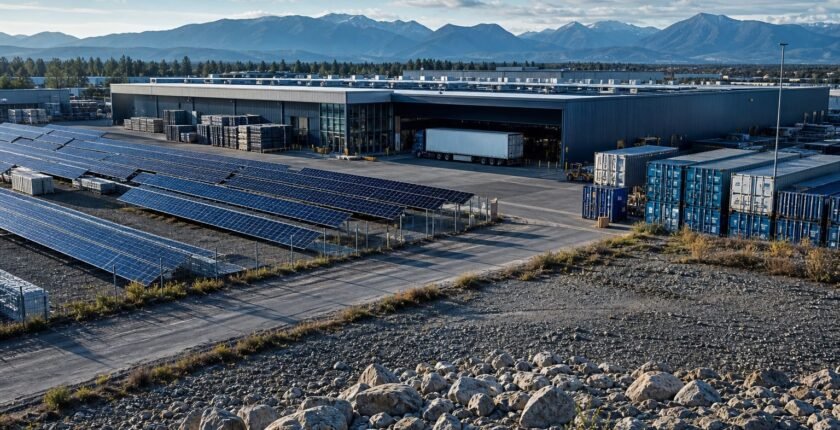
Qcells' Cartersville, Georgia plant moved to full production in June after a multiyear build that Qcells staff described as a $2.5 billion project. The facility, about an hour northwest of Atlanta, uses 3.5 million gallons of water, draws 90 megawatts of power and stores 60 tons of chemicals on-site to turn polysilicon into finished cells. As first reported by Grist, the factory’s expansion arrives as federal policy swings between Inflation Reduction Act incentives (2022) and the One Big Beautiful Bill Act (OBBBA) plus incoming polysilicon tariffs set to take effect in December, creating both opportunity and uncertainty for domestic manufacturers.
The $2.5 billion, the 3.5 million gallons of water, the 90 megawatts of power, the 60 tons of chemicals on-site, and all of the football fields’ worth of infrastructure you’ve seen is to arrive at this,
Scott Bell, Qcells
Key takeaways
- Qcells invested $2.5 billion to expand its Cartersville, Georgia plant to full production and reported the build uses 3.5 million gallons of water, 90 megawatts of power and 60 tons of chemicals on-site.
- The 2022 Inflation Reduction Act offered tax-credit bonuses for projects using U.S.-made panels, a major reason Qcells located the factory in Georgia.
- The Trump administration’s One Big Beautiful Bill Act (OBBBA) revoked many IRA tax credits and made equipment from certain countries ineligible, while new tariffs and minimum import prices on polysilicon take effect in December.
- Industry tracking cited in the reporting found nearly $13 billion in abandoned clean-energy investments in Q1 and about $18 billion in newly announced projects as developers raced to meet expiring credits; solar and storage provided 90% of new U.S. power added that quarter, per SEIA.
Table of contents
What Qcells built in Georgia and why it matters
Qcells, a South Korean firm, completed a multibillion-dollar factory near Cartersville, Georgia that moved from assembling major components to integrating the full panel production process in June. Company staff showed visitors the finished cell and listed the factory’s scale in concrete terms: a $2.5 billion build, 3.5 million gallons of water used on-site, 90 megawatts of power consumption and 60 tons of chemicals stored to process polysilicon into cells.
The plant sits about an hour northwest of Atlanta and represents one of the clearer private bets that U.S. domestic capacity can be rebuilt after decades of Chinese dominance. Bringing the full making of panels under one roof reduces exposure to cross-border supply disruptions, and it shortens logistics chains for developers that want modules sourced from within the United States.
Policy whiplash: IRA carrots, OBBBA sticks and tariffs
Federal policy has swung between incentives and restrictions. The 2022 Inflation Reduction Act (IRA) layered tax-credit bonuses on projects that used U.S.-made panels, a primary incentive Qcells cited for building in Georgia. By contrast, the One Big Beautiful Bill Act (OBBBA) removed most of those credits, barred some equipment from eligibility when it originates from certain countries, and sits alongside new tariffs and minimum import prices for polysilicon.
Experts quoted in the reporting call that oscillation 'whiplash.' Ben Damiani, chief technology officer at Cherry Street Energy, said a domestic supply chain is "critical" and that the changing policy has been a major hindrance. Coco Zhang of ING described the measures as having the same long-term goal but added that short-term reversals raise costs and complexity for manufacturers and developers alike.
How the market is already reacting
The reporting cites industry tracking showing nearly $13 billion in abandoned solar, wind and battery investments in the first quarter of the year, while about $18 billion in new projects were announced as developers rushed to qualify for expiring credits. Those swings reflect how deadline-driven incentives can accelerate near-term activity and then leave a vacuum when the incentives change.
New tariffs and minimum import prices on polysilicon could raise the price of imported inputs and thereby make U.S.-made panels more competitive, but higher upstream costs also risk pushing developers’ project budgets upward. The Solar Energy Industries Association reported that solar and storage accounted for 90% of new power added in the first quarter, underlining that demand remains strong even as policy shifts change supply dynamics.
Why Qcells may survive when others struggle
Qcells entered this policy cycle with deep capital and a nearly completed facility, which the reporting shows gives it more flexibility than smaller firms. Coco Zhang said a large, well-capitalised plant that already committed multibillion-dollar investment is better positioned to absorb the cost swings from tariffs or to reallocate production to meet the new rules that restrict foreign-origin equipment.
But the same reporting warns that firms with thinner balance sheets or worse timing could fail to bridge the gap. Limits on foreign ownership that dig deeper into the supply chain could squeeze availability of certain components, leaving many projects still dependent on imports and therefore exposed to price and permit shocks.
Two-sided case for U.S. panel manufacturing
The case for
- Tariffs and minimum import prices on polysilicon could raise the cost of competing Chinese imports, improving price parity for U.S. factories such as Qcells.
- Existing IRA-era incentives successfully lured factory builds to the U.S.; those policy signals previously accelerated domestic capacity additions and job creation.
The case against
- Higher upstream input costs from polysilicon price controls could increase developers’ project budgets and slow deployments despite stronger domestic manufacturing.
- Policy uncertainty and deeper restrictions on foreign ownership may deter new entrants and raise financing costs for smaller manufacturers that lack Qcells’ capital cushion.
What to be careful about
- Tariffs and minimum import prices on polysilicon could raise module costs for developers even if they help U.S. manufacturers compete.
- Limited U.S. supply of some upstream components means many projects will remain dependent on imports and face higher prices or delays.
- Rapid policy reversals and legal challenges to federal actions can delay permitting and funding, adding costs to projects already in development.
The bottom line
Qcells’ Cartersville factory illustrates both the promise and the fragility of rebuilding U.S. solar manufacturing. The plant’s $2.5 billion scale and integrated production provide a buffer against shocks that smaller firms lack, but shifting federal rules—IRA incentives, OBBBA exclusions and December polysilicon controls—create downstream cost and permitting uncertainty. For developers the result is higher short-term volatility; for manufacturers it is a test of whether policy can provide stable, predictable demand and supply rules that justify further capital investment.
What to watch
- Watch for the new tariffs and minimum import prices on polysilicon to take effect in December; the reporting states the measures go into effect in December.
- Watch for federal court rulings on the recent actions to cancel funding for clean-energy projects and new installation hurdles on federal land; no date has been set.
Frequently asked questions
Will Qcells benefit from the new polysilicon tariffs?
Possibly; the reporting argues that tariffs and minimum import prices could raise the cost of Chinese imports and improve price parity for domestic makers like Qcells, but higher input prices could also increase developers’ project costs and damp demand.
How did the IRA and OBBBA change incentives for U.S. manufacturing?
The 2022 Inflation Reduction Act offered tax-credit bonuses for projects that used U.S.-made panels, a key reason Qcells located its $2.5 billion plant in Georgia; the One Big Beautiful Bill Act revoked most of those credits and made some foreign-origin equipment ineligible, reducing those incentives.
How big is the disruption to projects right now?
The reporting cites industry tracking that found nearly $13 billion in abandoned clean-energy investments in the first quarter, while about $18 billion in new projects were announced as developers rushed to meet expiring credits, showing both near-term acceleration and retreat.
Related reading