
Blog
Vehicle Recycling Market to Hit USD 156.4 Billion by 2035
Estimated reading time: 5 minutes · Last updated: 2026-08-24
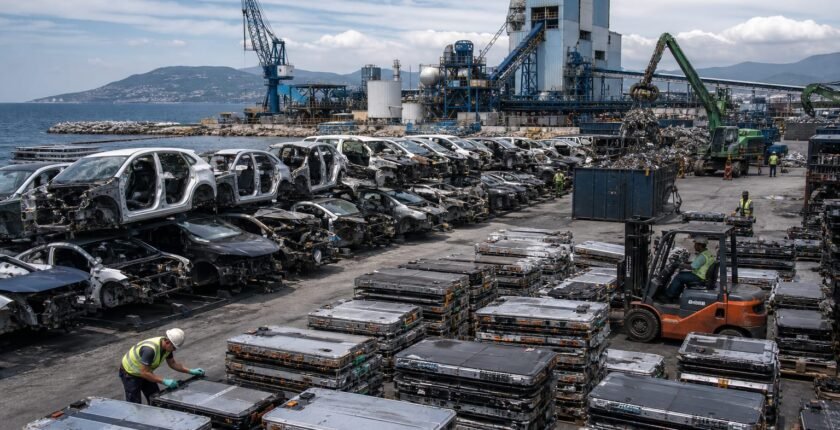
A ResearchAndMarkets.com report projects the global vehicle recycling market at USD 88.8 billion in 2025 and growing at a 6.1% compound annual growth rate to USD 156.4 billion by 2035, as first reported by ResearchAndMarkets.com. The report cites three structural drivers: stricter end-of-life vehicle (ELV) regulations, rising electric vehicle adoption that creates battery-recovery revenue, and stronger demand from manufacturers for recycled ferrous and non‑ferrous metals. It also highlights enduring frictions: informal recyclers undercutting formal operators and the high capital cost of advanced EV battery processing. This article breaks down the report’s figures, the segment splits, competitive moves and practical implications for recyclers and downstream metal users.
Key takeaways
- Market size and growth: The market was valued at USD 88.8 billion in 2025 and is forecast to reach USD 156.4 billion by 2035 at a 6.1% CAGR.
- Largest vehicle segment: The passenger car segment held a 72.4% share, generating USD 64.3 billion in 2025.
- Propulsion split: Internal combustion engine (ICE) vehicles accounted for a 79.7% share in 2025, representing USD 70.8 billion.
- US market: The United States vehicle recycling market reached USD 31.5 billion in 2025.
Table of contents
- Key takeaways
- Why growth is forecast to accelerate through 2035
- How the market is structured today — segments and regional scale
- Who the major players are and where they are investing
- The forecast to 2035 and the main uncertainties
- Case for and against the report’s central forecast
- What to be careful about
- Frequently asked questions
Why growth is forecast to accelerate through 2035
ResearchAndMarkets links the expected expansion to three linked forces. First, regulators are tightening end-of-life vehicle (ELV) rules and recycling targets; the report notes that since 2022 more than 30 policy measures focused on critical mineral recycling have been introduced globally. Second, the rapid rise of electric vehicles creates a new revenue pool from EV battery recovery and repurposing; the report treats battery material recovery as a high-margin stream that raises total recoverable value per unit. Third, steelmakers, battery makers and OEMs are increasing demand for secondary raw materials, which improves pricing and offtake terms for formal recyclers.
Those drivers come with constraints the report emphasises. Informal recyclers continue to capture volumes in many regions by operating with lower compliance costs. In addition, advanced sorting, depollution and EV battery processing require heavy upfront investment, slowing capacity roll-out where capital is scarce. The report’s central forecast (6.1% CAGR to 2035) assumes steady regulatory tightening and continued growth in EV fleets, but also assumes gradual formalisation of informal scrap networks.
How the market is structured today — segments and regional scale
Passenger cars dominate the value pool. The report records the passenger car segment holding a 72.4% share of market value in 2025, producing USD 64.3 billion that year. That position reflects both the absolute number of cars reaching end-of-life and established dismantling and material‑recovery processes for light vehicles that yield consistent throughput and recovery rates.
By propulsion, ICE vehicles represented a 79.7% share in 2025, worth USD 70.8 billion, underlining that conventional powertrains remain the largest supply source for recyclers today. Regionally, the United States accounted for USD 31.5 billion in 2025, supported by a large population of aging passenger vehicles and integrated links between recyclers and metal processors. The report presents separate regional forecasts through 2035, with most growth driven by formal capacity expansion and battery‑recovery adoption in higher-income markets.
Who the major players are and where they are investing
ResearchAndMarkets lists global and regional operators consolidating market positions through capacity expansion and technology investment. Named global players include LKQ Corporation, EMR Group, Stena Recycling, Derichebourg, Sims Limited, Toyota Tsusho, Umicore, Redwood Materials and Glencore Battery Recycling. Regional and emerging firms cited include INDRA Automobile Recycling, Galloo Group, Kuusakoski Group, Keiaisha, ASM Auto Recycling, Fenix Parts and CERO Recycling.
Companies are prioritising automation, digital tracking systems and optimized sorting to lift recovery rates and margins. The report also highlights strategic investments in battery recycling capabilities and partnerships across the automotive value chain to secure end-of-life flows. Those moves aim to capture higher-value streams such as aluminum, copper and the critical minerals recoverable from traction batteries rather than relying solely on low-margin ferrous scrap.
The forecast to 2035 and the main uncertainties
The report’s base-case projects growth from USD 88.8 billion in 2025 to USD 156.4 billion by 2035 at a 6.1% CAGR. That trajectory rests on continued EV adoption, stronger ELV policy and rising secondary-material demand from steel mills and battery makers. ResearchAndMarkets outlines optimistic and pessimistic scenarios driven by macro conditions, policy stringency and technology adoption rates.
Key uncertainties the report flags are the pace at which informal recyclers are formalised, the speed of capital deployment into advanced EV battery processing, and commodity-price swings that affect the economics of recovered metals. Where those variables align in favour of formal players, recovery rates and per‑unit revenue rise sharply; where they do not, the report’s pessimistic scenario shows materially lower returns and slower capacity build-out.
| Item | 2025 value (USD) | 2025 share |
|---|---|---|
| Passenger car segment | USD 64.3 billion | 72.4% |
| ICE vehicle segment | USD 70.8 billion | 79.7% |
| United States market | USD 31.5 billion |
Case for and against the report’s central forecast
The case for
- Stricter ELV rules and more than 30 policy measures since 2022 support formal-sector growth and higher recovery obligations for recyclers.
- EV battery recovery creates new, high-value revenue streams that can lift average recoverable value per vehicle.
- Growing demand from steelmakers, battery makers and OEMs increases offtake options and price support for secondary metals.
The case against
- Informal recyclers supplying cheaper scrap and parts limit market share gains for formal operators in several regions.
- High capital requirements for advanced sorting and EV battery processing can delay capacity roll-out where financing is constrained.
- Regional differences in scrap-collection networks and logistics raise operating costs and slow uniform service expansion.
What to be careful about
- Persistent competition from informal recycling operations that undercut formal recyclers on price.
- High upfront investment required for advanced EV battery processing and automated dismantling systems.
- Fragmented scrap collection networks and regional logistics barriers that limit scalable, centralized recovery.
The bottom line
The ResearchAndMarkets forecast frames vehicle recycling as a steady-growth market driven by policy tightening, EV-related battery recovery and stronger industrial demand for secondary metals. The report’s headline numbers — USD 88.8 billion in 2025 growing at a 6.1% CAGR to USD 156.4 billion by 2035 — rest on formalisation of scrap systems and capital investment in battery processing. Achieving the upside requires financing and regulatory alignment to scale advanced sorting and battery recycling; failure to formalise informal networks or to deploy capital at pace would materially slow growth. For recyclers and metal users, the coming decade is as much about building processing capacity as about capturing existing scrap flows.
What to watch
- watch whether ResearchAndMarkets’ forecast that the market reaches USD 156.4 billion by 2035 materialises; the report’s end date is 2035.
- watch for announcements of major capacity additions or launches of EV battery recovery facilities by the named players through 2035; the report highlights battery recycling as a key growth area in the 2025–2035 forecast window.
- watch for new ELV or critical-mineral recycling measures in key markets; the report notes that since 2022 more than 30 such policy measures have been introduced globally.
Frequently asked questions
How big was the vehicle recycling market in 2025?
ResearchAndMarkets reports the global vehicle recycling market at USD 88.8 billion in 2025.
Which segment generated the most value in 2025?
The passenger car segment held a 72.4% share in 2025 and generated USD 64.3 billion, reflecting the large volume of light vehicles reaching end of life.
What part of the market comes from ICE vehicles?
According to the report, internal combustion engine vehicles represented a 79.7% share in 2025, equal to USD 70.8 billion.
Who are the major global recyclers named in the report?
The report lists global players including LKQ Corporation, EMR Group, Stena Recycling, Derichebourg, Sims Limited, Toyota Tsusho, Umicore, Redwood Materials and Glencore Battery Recycling.
Related reading