
Blog
Hydropower Workers Trapped as Nepal Flood Deaths Top 900
Estimated reading time: 6 minutes · Last updated:
Nepal floods have left 903 people dead in Nepal and thousands missing as rescuers race to reach workers believed trapped inside hydropower tunnels, a bottleneck in relief and recovery. The country’s disaster agency counted 903 deaths and 4,247 people missing in Nepal, and a private-sector power association said at least 900 workers were unaccounted from 12 hydropower projects, with Mohan Kumar Dangi of the Independent Power Producers’ Association, Nepal (IPPAN) estimating about 500 could be inside tunnels. The humanitarian and infrastructure crisis followed a glacial collapse that sent rock and meltwater downstream. As first reported by The Associated Press, rescuers face mud-choked sites, flooded roads and collapsing access routes.
We are working in search and rescue of the stranded people from hills, settlements and river areas.
Brig. Gen. Raja Ram Basnet, Nepal’s army spokesman
Key takeaways
- Confirmed deaths in Nepal: Nepal’s disaster agency counted 903 deaths in Nepal.
- People missing in Nepal: The disaster agency said 4,247 people were missing in Nepal, including 592 foreigners.
- Hydropower workers unaccounted: IPPAN said at least 900 workers were unaccounted for at 12 damaged hydropower projects, with Mohan Kumar Dangi estimating about 500 could be trapped in tunnels.
- Upper Trishuli-1 losses: At the Upper Trishuli-1 Hydropower Project, Dangi said at least 576 people were missing and roughly 300 were believed to be inside the project’s tunnel.
Table of contents
- Key takeaways
- Why hydropower tunnels became life-or-death spaces
- The human and numerical scale of the disaster
- How rescuers are operating and what is slowing them
- Stories from the valleys and the wider regional impact
- How the rescue and recovery could play out
- What to be careful about
- Frequently asked questions
Why hydropower tunnels became life-or-death spaces
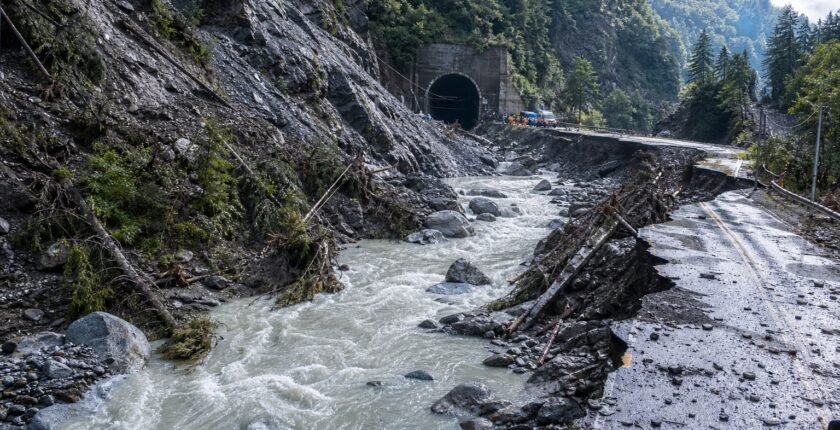
The immediate cause of the crisis was a glacial collapse high in the Himalayas that carried rock and melted ice downstream in a destructive surge. Scientists who studied satellite images said the bedrock under a glacier collapsed and part of the glacier fell, producing a rockfall that registered as a magnitude 5.2 seismic event and then swelled the rivers below. That torrent swept away bridges, buildings and riverside installations in Tibet and Nepal and buried valley infrastructure in mud.
Hydropower stations in the affected valleys rely on engineered tunnels to divert and control river water for turbines. These tunnels are typically large access ways, and rescuers and engineers have treated them as places where workers could shelter. Jakob Steiner, a geoscientist at the University of Graz, said the tunnels are large enough for vehicles and that in at least some locations teams have managed to get oxygen to people inside, which has shaped the rescue effort.
KeyPhrase: hydropower tunnels
The human and numerical scale of the disaster
The numbers published by official agencies and sector representatives underline the scale. Nepal’s disaster agency reported 903 deaths in that country and 4,247 people missing, and it specified that 592 of the missing were foreigners. On the Chinese side, authorities reported 16 deaths and 546 missing; Chinese state media said 261 of those missing were foreigners, including more than a hundred Nepalis.
Power-sector reporting has its own toll: the Independent Power Producers’ Association, Nepal (IPPAN) said at least 900 workers were unaccounted from 12 hydropower projects damaged in Rasuwa and Nuwakot districts. Mohan Kumar Dangi, IPPAN’s president, estimated about 500 of the 900 could be inside tunnels. At the Upper Trishuli-1 Hydropower Project in Rasuwa, Dangi said at least 576 were missing and roughly 300 were believed to be trapped in the project’s tunnel.
These figures are the working totals for rescue coordinators and family members trying to locate loved ones and to prioritise where search teams and equipment are dispatched.
How rescuers are operating and what is slowing them
Rescue teams include military units, private teams and international assistance working under difficult conditions. Brig. Gen. Raja Ram Basnet, Nepal’s army spokesman, said ground and air assets are being used and that crews were descending into damaged tunnels to reach workers. At Trishuli-3 Hydropower Project, Basnet said crews were working to descend about 15 meters (50 feet) into a tunnel to reach people believed trapped inside.
Obstacles are practical and immediate: rivers and access roads have been washed away or remain under water, muddy debris has buried lower works, and heavy rain continues to hamper movement. Chinese state broadcaster CCTV showed efforts to repave the road to Gyirong Port at the China–Nepal border, a worksite now under about 2 to 3 meters (6.6 to 9.8 feet) of water in places and described as just over a kilometre (0.62 miles) from the border. Those conditions limit how quickly heavy rescue machinery and supplies can reach the worst-hit valleys.
KeyPhrase: rescue teams
Stories from the valleys and the wider regional impact
Families have mounted their own searches for missing relatives across morgues, relief centres and damaged villages. Maraval Nagappan, who runs a Chennai travel company, travelled to Nepal to find his son, Sathya Narayan, who was among 49 Indian devotees returning from Mount Kailash and was last seen at an immigration complex swept by floodwaters. Surveillance footage captured people scrambling as water surged through the crossing.
Beyond the immediate human toll, the floods have damaged energy nodes that supply tens of thousands of customers in hill districts: workers cleaning a ravaged station in Dhading told reporters the station supplies power to over 20,000 people in the region. Repairing that infrastructure will be a multi-stage task that depends on restoring road and river access, clearing mud and debris from gates and tunnels, and mapping which sections of tunnels and shafts remain stable.
KeyPhrase: Mount Kailash
| Project | District | Missing | Trapped in tunnel | Notes |
|---|---|---|---|---|
| Upper Trishuli-1 Hydropower Project | Rasuwa | At least 576 | Around 300 | Figures given by Mohan Kumar Dangi of IPPAN |
| Trishuli-3 Hydropower Project | Crews reported descending about 15 meters (50 feet) into a tunnel, Basnet said | |||
| Other damaged projects (total) | Rasuwa and Nuwakot | 12 projects damaged; at least 900 workers unaccounted | IPPAN estimated about 500 of 900 may be in tunnels | Aggregate figure from IPPAN |
How the rescue and recovery could play out
The case for
- Teams have reached some sites and reportedly supplied oxygen to people inside tunnels, a factor that boosts short-term survival odds.
- Deployment of military helicopters and international assistance could move heavy equipment and medical evacuations where roads are impassable.
The case against
- Persistent flooding, mud and roads under 2 to 3 meters of water are restricting heavy equipment and slowing access to tunnels.
- If pockets of air are limited and supplies run out, the chance of finding more survivors diminishes rapidly as days pass.
What to be careful about
- Suffocation for workers trapped in mud-clogged tunnels if oxygen and supplies cannot be maintained.
- Delayed delivery of heavy rescue gear because key roads and the Gyirong Port approach remain under water.
- Further casualties from continuing rain, which can trigger additional slope failures or channel new debris flows into valley works.
The bottom line
The humanitarian emergency from the Himalayan glacial collapse has two linked threads: an urgent search for people trapped in mud-choked hydropower tunnels and a wider recovery challenge of roads, power nodes and river systems. Official tallies — 903 dead in Nepal and thousands missing, plus at least 900 hydropower workers unaccounted from 12 projects — drive immediate priorities for oxygen, extraction and stabilising damaged tunnels. Whether more survivors can be reached will depend on clearing access routes, maintaining air and supply lines into tunnels and whether rain and river flows abate enough to let heavy equipment through.
What to watch
- Watch for updated casualty and missing-person tallies from Nepal’s disaster agency; no date has been set.
- Watch for official confirmation that rescue crews have reached workers inside Upper Trishuli-1 or Trishuli-3 tunnels; no date has been set.
Frequently asked questions
How many people have died and are missing after the Nepal floods?
Nepal’s disaster agency reported 903 deaths in Nepal and said 4,247 people were missing in that country, including 592 foreigners; Chinese authorities reported 16 deaths and 546 missing on the Chinese side.
How many hydropower workers are unaccounted for and where?
The Independent Power Producers’ Association, Nepal (IPPAN) said at least 900 workers were unaccounted at 12 damaged hydropower projects in Rasuwa and Nuwakot, and IPPAN president Mohan Kumar Dangi estimated roughly 500 of those could be inside tunnels.
What caused the floods that overwhelmed valleys and hydropower sites?
Scientists who reviewed satellite images said bedrock beneath a glacier collapsed and part of the glacier fell, producing a rockfall that registered as a magnitude 5.2 seismic event; the resulting rock and meltwater surge swelled rivers and swept structures downstream.
Related reading