
Blog
NatPower Marine backs UK net zero ports delivery
Estimated reading time: 5 minutes · Last updated:
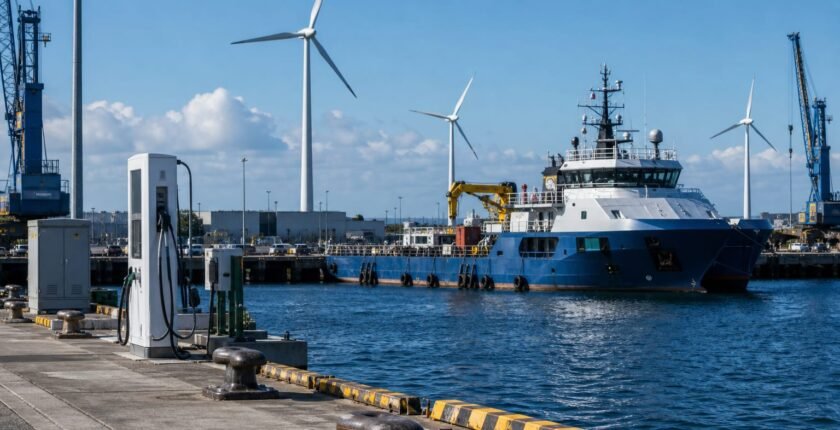
NatPower Marine has offered to invest and deploy energy systems to help UK ports meet the Government’s Net Zero Ports objectives. The company's UK chief executive, Stefano D.M. Sommadossi, says NatPower Marine can underwrite or operate shore-side infrastructure so ports do not bear full cost and risk. The firm proposes a mix of grid upgrades, battery storage, local renewables, private wires and smarter demand management tailored to each port and its vessel mix. The company argues early projects should target ports and routes where shipping operators have committed demand so private capital can convert plans into operating corridors.
NatPower Marine is ready to bring investment and energy expertise to the table.
Stefano D.M. Sommadossi, Founder and UK CEO, NatPower Marine
Key takeaways
- Company offer: NatPower Marine says it can provide capital and energy expertise to build shore power and ship-charging infrastructure at UK ports.
- Leadership quoted: Stefano D.M. Sommadossi, NatPower Marine founder and UK CEO, urged work with government, ports and shipping operators to pilot early projects.
- Delivery approach: NatPower Marine recommends testing delivery models at a limited set of ports and maritime corridors that already have committed customers.
Table of contents
Why UK ports need new power systems now
Ports are shifting from diesel-dependent operations to electric and low-carbon fuels for vessels and equipment, which raises new electricity needs at the quay. That change creates demand for higher-capacity grid connections, on-site storage and arrangements that align charging times with vessel schedules so grid stress is minimised.
Shore power and vessel charging are two distinct technical needs: shore power supplies ships at berth with grid electricity to replace auxiliary engines, while vessel charging supports battery or hybrid propulsion and requires different power-management strategies. Ports will also evaluate local generation and private-wire options where grid upgrade lead times or costs make direct connection impractical.
The practical consequence for port operators is that planning must now join berth allocation, vessel arrival patterns and long-term energy procurement. That coordination determines whether a port invests in a larger grid import, installs batteries to shave peaks, or partners with a third party to finance and operate the assets.
Key trade-offs for ports
A larger grid connection reduces reliance on local storage but can be expensive and slow to secure, while on-site batteries and renewables lower grid dependence but shift capital and operational complexity onto the port or its partner. Each solution must be matched to vessel types and the frequency of calls.
How NatPower Marine proposes to fund and operate port energy
NatPower Marine positions itself as a developer and operator that bundles project investment, clean energy supply and long-term operation. The company says it can take the lead on financing and delivering infrastructure so ports face less upfront exposure, while retaining the ability to tailor ownership and commercial models to a port’s preferences.
Options the company highlights include combining battery storage with local renewables, creating private wires to concentrate supply to port tenants, and applying smarter demand management to match charging with low-carbon generation. The approach relies on securing predictable demand from shipping operators so revenue streams support private capital deployment.
The company’s statement stresses pilots on a limited set of ports and routes, allowing delivery models to be tested and refined before wider roll-out. That staged approach aims to demonstrate operating costs and customer take-up, reducing perceived risk for later projects.
Where pilots could start and what success would show
NatPower Marine recommends targeting ports and shipping routes with committed customer demand so projects have a clear route to operation. A successful pilot would show how a combined solution — grid upgrade or private wire, storage and tailored commercial terms — delivers reliable low-carbon power at viable cost to vessel operators.
Success indicators would include demonstrable reductions in on-site fossil fuel use when ships are at berth, predictable charge availability for scheduled calls, and a replicable commercial model that attracts further private capital. Demonstration projects would also clarify the regulatory, permitting and network-connection steps other ports must plan for.
If pilots prove the concept, the model can scale by sequencing ports along the busiest routes and packaging the corridor-level demand into bankable contracts, enabling further roll-out without ports carrying the entire delivery risk themselves.
How the plan could succeed or stall
The case for
- Pilots on routes with existing operator commitments would produce early revenue streams, proving investor appetite for port energy assets.
- Demonstrated operating models that combine storage, private wires and demand-side management could lower total system cost and speed adoption across similar ports.
The case against
- Slow or uncertain commitments from shipping operators would make projects harder to finance and delay pilots.
- Long electricity network connection lead times or contested permitting could raise costs and curtail the number of projects that reach operation within a useful planning window.
What to be careful about
- Insufficient contracted demand from shipping operators, leaving assets underutilised and returns below investor expectations.
- Grid connection delays or capacity constraints that force expensive interim solutions or limit the scale of projects.
- Regulatory or charging-standards uncertainty that complicates commercial agreements between ports, operators and energy suppliers.
- Mismatch between project timelines and ports’ capital planning cycles that discourages partnership models.
The bottom line
NatPower Marine has positioned itself as a private developer and operator that could reduce upfront cost and delivery risk for UK ports pursuing net zero goals. Its proposal hinges on securing committed demand from shipping operators and on resolving grid or permitting constraints at candidate ports. If early pilots on selected routes succeed, they would provide practical templates for wider roll-out and attract further private capital; if demand or network access proves weak, many projects will remain on paper. The next six months of industry events and port announcements will show whether pilots emerge and which delivery models win backing.
What to watch
- Attend the IANA International Expo on 14 September 2026 for panel sessions and supplier showcases that may reveal NatPower Marine pilot partners; the event is on 14 September 2026.
- Watch the Canadian Ferry Association conference from 20–22 September 2026 for demonstrations and route-focused discussions that could be relevant to corridor-based ship-charging pilots.
- Look for presentations or procurement announcements around the AAPA Annual Convention on 28–30 September 2026 that may disclose port-level plans or partner selections.
Frequently asked questions
What exactly is NatPower Marine offering UK ports?
NatPower Marine says it will combine project investment, clean energy supply and long-term operation to finance and run shore-power and ship-charging infrastructure for ports.
Who from NatPower Marine commented on the plans?
Stefano D.M. Sommadossi, founder and UK chief executive of NatPower Marine, made the public statements about pilot projects and partnership offers.
How will pilots be selected under the company's proposal?
The company advises concentrating trials at a few ports and sea lanes with existing customer commitments so projects can move toward practical operation.
Related reading