
Blog
Wind farm planned near Flow Country World Heritage Site
Estimated reading time: 4 minutes · Last updated:
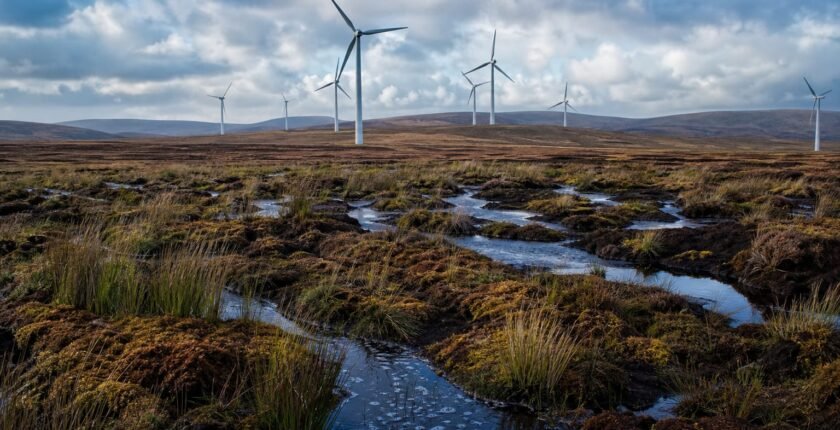
Low Carbon has lodged a planning application for the Forsinain Forest Wind Farm, proposing up to 12 turbines on land about 2 miles (3 km) north of Forsinard. The developer says the scheme would restore 383 acres of non-native plantation to peatbog and would produce enough electricity each year to serve more than 98,000 homes. Low Carbon also projects a community benefit fund of about £432,000 per year and roughly £1 million a year in business rates for Highland Council. The site sits adjacent to the Flow Country, an Unesco-designated blanket bog area that covers almost 469,500 acres.
Forsinain Forest is a key part of our growing pipeline of onshore wind in Scotland, which if approved, will support Scottish climate targets, help accelerate the UK's transition to clean energy and bolster energy security by reducing our reliance on fossil fuels.
Andy Sloan, project development director at Low Carbon
Key takeaways
- Low Carbon has applied to the Scottish government for Forsinain Forest Wind Farm proposing up to 12 turbines on land 2 miles (3 km) north of Forsinard.
- The developer says the project would restore 383 acres of non-native forest to peatbog and could power more than 98,000 homes each year.
- The Flow Country is Unesco-designated and covers almost 469,500 acres; conservation groups including RSPB Scotland have expressed concern about proposals near this sensitive habitat.
Table of contents
What Low Carbon has applied for and the numbers behind it
Low Carbon's submission covers a reduced scheme compared with earlier plans: the company previously envisaged up to 19 turbines but says a series of design refinements led it to propose a maximum of 12. The application places the proposed turbine cluster roughly 2 miles (3 km) north of Forsinard and, according to the developer, the wind farm could generate enough electricity to supply more than 98,000 homes each year.
The planning documents named a set of local benefits alongside generation estimates. Low Carbon sets the annual community benefit at about £432,000 and describes an anticipated contribution of roughly £1m a year in business rates to Highland Council. The company also proposes ecological work on site, specifying the conversion of 383 acres of non-native plantation back to peatbog.
Why conservation groups and local interests have raised objections
The Flow Country is a globally significant blanket bog complex and achieved Unesco World Heritage status in July 2024 after an almost 40-year campaign; it spans almost 469,500 acres. That habitat supports characteristic sphagnum mosses, other wetland plants, insects and breeding and overwintering birds cited in local conservation material, including greenshank, golden plover, dunlin and hen harrier.
RSPB Scotland, which manages a reserve at Forsinard, said it had been consulted on the full application and will assess the plans, adding it has "significant concerns" about a wind farm sited at this sensitive location adjacent to nationally and internationally protected sites and to RSPB's Forsinard Flows Nature Reserve. The Flow Country Partnership has been contacted for comment, according to the planning coverage.
How the developer frames restoration and local benefit
Low Carbon places its pitch on pairing clean energy with habitat restoration and local income. In its public statement the company says Forsinain Forest would be "fully outwith" the Unesco-designated site and that restoration of non-native forest to peatbog is integral to the proposal.
The developer's public remarks link the project to Scotland's climate targets, energy security and local economic value, emphasising combined outcomes from generation, peat restoration and payments to local bodies. Those claims are among the factors Highland Council's planning authority and its consultees will weigh against the ecological sensitivity of the location.
| Item | Figure in material | Who gave it |
|---|---|---|
| Maximum turbines | up to 12 (reduced from 19) | Low Carbon |
| Distance from Forsinard | 2 miles (3 km) north | planning filing (developer) |
| Peat restoration area | 383 acres | Low Carbon |
| Estimated homes powered | more than 98,000 homes | Low Carbon |
| Community fund | about £432,000 per year | Low Carbon |
| Estimated business rates | about £1m per year | Low Carbon |
Case for and case against approval
The case for
- The scheme offers large-scale renewable generation that the developer says could power more than 98,000 homes, supporting Scotland's stated climate targets if built (developer claim).
- Low Carbon proposes ecological mitigation by restoring 383 acres of non-native plantation to peatbog, which the company presents as a nature-restoration benefit tied to the project.
The case against
- The proposal sits next to the Unesco-designated Flow Country and adjacent protected sites; RSPB Scotland has stated it has "significant concerns", which may weigh heavily in the planning assessment.
- Local and international conservation priorities for peatland habitat and sensitive bird species create a high threshold for consent; proximity to internationally important blanket bog increases scrutiny and the likelihood of objections.
What to be careful about
- Formal objections or extensive consultee concern from RSPB Scotland and other conservation interests could delay or block consent; RSPB has already recorded significant concerns.
- The project's proximity to the Unesco-designated Flow Country may trigger additional environmental assessment and stricter conditions or mitigation requirements in any consent.
The bottom line
The Forsinain Forest planning application brings a compact set of figures and claims: up to 12 turbines, 383 acres of proposed peatbog restoration and quantifiable local payments. Those developer commitments will be tested in the planning process against the conservation status of the adjacent Flow Country, a Unesco-designated blanket bog that conservation bodies say is highly sensitive. The deciding balance will rest on whether planning authorities judge the project's generation and restoration benefits sufficient to offset the ecological risks flagged by consultees such as RSPB Scotland.
What to watch
- Watch for the Scottish government's decision on the Forsinain Forest planning application; no decision date has been set.
- Watch for any formal objection or consultation response from RSPB Scotland or the Flow Country Partnership; no date has been given.
Frequently asked questions
How many turbines does the Forsinain Forest proposal include?
The application proposes up to 12 turbines; Low Carbon previously planned up to 19 but reduced the number after design refinements.
How large is the Flow Country and why does it matter?
The Flow Country covers almost 469,500 acres and is a Unesco-designated blanket bog; its designation in July 2024 followed an almost 40-year campaign because of its global peatland value.
What local financial benefits does the developer cite?
Low Carbon estimates the community benefit fund at about £432,000 per year and says Highland Council would receive roughly £1 million a year in business rates.
Related reading