
Blog
Egypt Wind Farms Get $145M EBRD Loans at Ras Ghareb
Estimated reading time: 5 minutes · Last updated:
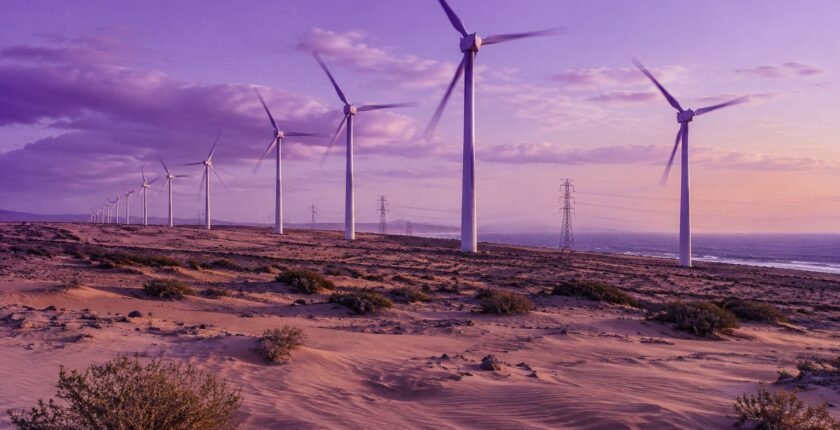
The European Bank for Reconstruction and Development (EBRD) is lending up to USD 145 million to build two wind farms in Egypt, each rated at 250 MW, near Ras Ghareb, on Egypt's Red Sea coast. Together the Egypt wind farms add 500 MW of capacity and are expected to cut greenhouse gas emissions by about 979,700 tonnes of carbon dioxide equivalent every year. The money is split between two project companies owned by Alcazar Energy Partners II, a clean energy investment fund. Both plants are scheduled to reach commercial operation by the end of 2028, with Siemens Gamesa Renewable Energy returning to Egypt to supply the turbines.
Key takeaways
- The loans: The EBRD is providing up to USD 75 million to Niat for Wind Energy and up to USD 70 million to Alcazar Rasgha Energy, a combined USD 145 million.
- The capacity: Each project near Ras Ghareb is a 250 MW wind farm, giving Egypt 500 MW of new renewable capacity targeted for commercial operation by the end of 2028.
- The co-lenders: The European Investment Bank and Germany's DEG are also lending, backed by European Union guarantees intended to attract private investment.
- The emissions case: The two plants are projected to avoid about 979,700 tonnes of carbon dioxide equivalent a year once running.
- The supplier: Siemens Gamesa Renewable Energy returns to the Egyptian market as turbine supplier and operations and maintenance contractor for both farms.
Table of contents
How the USD 145 Million Is Split Between Two Projects
The EBRD package is two separate loans rather than one cheque. Niat for Wind Energy can draw up to USD 75 million, and Alcazar Rasgha Energy up to USD 70 million. Each borrower is developing a 250 MW wind farm, so the plants are the same size but carry slightly different amounts of EBRD debt.
Both companies sit under one owner, Alcazar Energy Partners II, a fund that invests in clean energy. That shared ownership means a single sponsor holds 500 MW of wind at one location. It simplifies coordination on turbines and maintenance, but it also concentrates the commercial bet in one set of hands.
Spread across the combined capacity, the EBRD's maximum commitment works out to roughly USD 290,000 per megawatt. That figure describes the bank's share only. No total project cost was given, and other lenders are involved, so the full cost of each megawatt is higher than the EBRD slice alone suggests.
Who Else Is Lending, and What the EU Guarantees Do
The EBRD is not financing the plants alone. The European Investment Bank and DEG, Germany's development finance institution, are providing further loans. No figures were given for their portions, which leaves the overall debt stack for the two projects unclear.
European Union guarantees back the package. A guarantee of this kind lets a public body absorb part of a lender's potential loss, lowering the risk that private money has to carry. The stated aim here is to pull private investors into renewable power in Egypt, with development banks taking early risk so that a private fund such as Alcazar Energy Partners II can own the assets.
The deal sits inside the EU-Egypt Strategic and Comprehensive Partnership, an agreement that places renewable energy and sustainable infrastructure near the top of its priorities. Egypt is a long-standing market for the EBRD, which has invested more than EUR 16 billion in the country, spread over 238 projects. The USD 145 million for these wind farms is a modest addition to that total.
Why Ras Ghareb Wind Matters for Egypt's Power Mix
Ras Ghareb lies on the Red Sea coast, and both farms will be built near the town. The projects have three stated purposes: broaden the range of sources Egypt uses to make electricity, strengthen energy security, and cut the country's dependence on fossil fuels it has to import.
The climate case rests on an estimate. The two plants are expected to avoid about 979,700 tonnes of carbon dioxide equivalent each year, or close to one million tonnes. Carbon dioxide equivalent is a unit that expresses different greenhouse gases as the amount of carbon dioxide with the same warming effect, so they can be added together. For plants that are not yet built, the number is a projection, not a measured result.
The projects also bring Siemens Gamesa Renewable Energy back into Egypt. The company will supply the turbines and act as operations and maintenance contractor. Another turbine maker in the Egyptian market is meant to widen competition among equipment suppliers, though how far that shifts terms for future projects remains open.
| Project company | EBRD loan (up to) | Capacity | Owner | Target operation |
|---|---|---|---|---|
| Niat for Wind Energy | USD 75 million | 250 MW | Alcazar Energy Partners II | End of 2028 |
| Alcazar Rasgha Energy | USD 70 million | 250 MW | Alcazar Energy Partners II | End of 2028 |
What could help or hold back the Ras Ghareb projects
The case for
- Debt from three development lenders, the EBRD, the European Investment Bank and DEG, spreads financing risk across institutions.
- European Union guarantees reduce the downside for lenders and are designed to make private ownership of the plants viable.
- A single owner and a single turbine and maintenance contractor across both farms simplifies procurement and operation.
- The projects fit the stated priorities of the EU-Egypt Strategic and Comprehensive Partnership, giving them political backing on both sides.
The case against
- Commercial operation is not expected until the end of 2028, leaving two years for construction delays.
- The European Investment Bank and DEG loan amounts were not given, so the full financing picture is incomplete.
- Both farms depend on one sponsor, Alcazar Energy Partners II, concentrating ownership risk.
- The emissions saving of about 979,700 tonnes a year is an estimate that depends on the plants being built and performing as planned.
What to be careful about
- Construction or turbine delivery slippage could push the plants past the end-of-2028 target for commercial operation.
- The undisclosed size of the European Investment Bank and DEG loans means the total debt and project cost cannot yet be assessed.
- Both 250 MW farms rely on the same owner and the same turbine and maintenance contractor, so a problem with either affects the full 500 MW.
The bottom line
The EBRD's USD 145 million is a firm commitment, but it is only one layer of financing for two 250 MW wind farms scheduled to start commercial operation by the end of 2028. The projected saving of about 979,700 tonnes of carbon dioxide equivalent a year depends on that timetable holding. What is settled is the structure: loans of up to USD 75 million and USD 70 million, a single private owner in Alcazar Energy Partners II, co-lending from the European Investment Bank and DEG, and EU guarantees meant to draw in private money. What remains open is the total project cost, the size of the other loans, and how smoothly Siemens Gamesa delivers at Ras Ghareb.
What to watch
- Watch whether both 250 MW farms near Ras Ghareb reach commercial operation by the end of 2028, the target set for the projects.
- Watch for the European Investment Bank and DEG to put figures on their loans to the two projects; no date has been set.
- Watch for Siemens Gamesa Renewable Energy to begin turbine deliveries for its return to the Egyptian market; no schedule has been given.
Frequently asked questions
Who owns the two new wind farms at Ras Ghareb?
Both project companies, Niat for Wind Energy and Alcazar Rasgha Energy, are owned by Alcazar Energy Partners II, a clean energy investment fund. The EBRD is a lender, not an owner, providing up to USD 75 million and USD 70 million respectively.
When will the Ras Ghareb wind farms start producing power?
Both 250 MW plants are expected to begin commercial operation by the end of 2028. Until then, the projected saving of about 979,700 tonnes of carbon dioxide equivalent a year remains an estimate.
Which company is supplying turbines for the Egyptian wind farms?
Siemens Gamesa Renewable Energy will supply the turbines and serve as operations and maintenance contractor for both farms. The contract marks the company's return to the Egyptian market.
Related reading