
Blog
Chiyoda and Sage to study next-generation geothermal EGS
Estimated reading time: 4 minutes · Last updated:
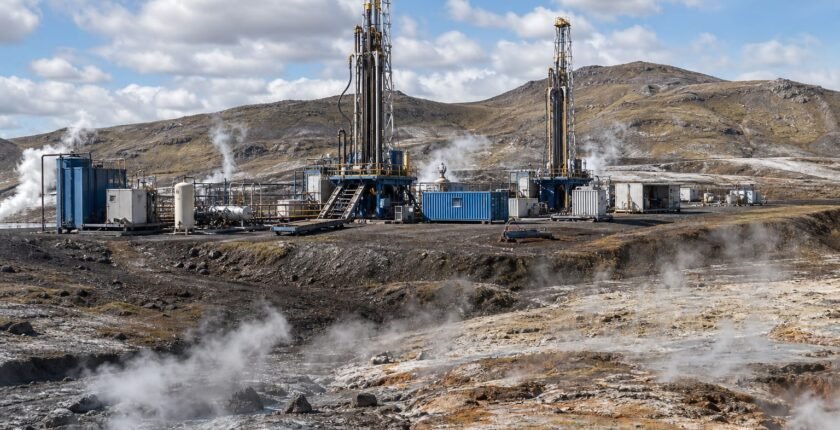
Chiyoda Corp. and Sage Geosystems have signed an MoU to carry out a technical and commercial feasibility study of high-pressure surface facilities required to turn Sage's enhanced geothermal systems into commercial power plants. The study, announced in Summer 2026, will assess equipment layouts, power and energy balances, indicative capital and operating costs, and projected power-generation cost for systems that recover high-temperature, high-pressure fluid from wells. The primary focus is Sage's next-generation geothermal EGS approach, which combines subsurface heat with stored reservoir pressure to deliver steady, low-carbon baseload power and a route to long-duration energy storage.
Key takeaways
- Parties: Chiyoda Corp. and Sage Geosystems signed an MoU to study high-pressure surface facilities for commercial-scale geothermal power.
- Study scope: Chiyoda will evaluate equipment configuration, power and energy balances, indicative capital, operating costs and power generation cost based on data provided by Sage.
- Public support: The initiative has been selected for support under the Tokyo Metropolitan Government's TIB CATAPULT programme.
- Sage's aim: Sage Geosystems is developing EGS in the US for baseload geothermal power and to explore long-duration energy storage using stored reservoir pressure.
Table of contents
- Key takeaways
- What Chiyoda and Sage will test in the feasibility study
- How Sage's enhanced geothermal systems work and their storage potential
- Why surface facilities matter for scaling EGS
- Policy and cluster support shaping the project’s next steps
- Cases for and against rapid commercialisation
- What to be careful about
- Frequently asked questions
What Chiyoda and Sage will test in the feasibility study
The memorandum of understanding sets out a joint technical and commercial feasibility study focused on the above-ground facilities that interface with Sage's wells. Using the wellhead pressure, temperature and fluid character supplied by Sage, Chiyoda will model how surface plant and piping must be arranged to handle high-pressure, high-temperature flows and to convert that energy into electricity reliably.
The engineering work will cover power and energy balances, which track heat and pressure into and out of the system, and produce indicative capital and operating cost estimates. Those cost outputs are intended to feed a power-generation cost metric that project developers and potential offtakers can use when comparing EGS to alternative options.
How Sage's enhanced geothermal systems work and their storage potential
Sage's enhanced geothermal systems rely on creating or managing an engineered reservoir in hot rock, then circulating water through it to pick up heat. The company captures not only thermal energy but also the pressure energy stored in the reservoir so that fluid returns to the surface with both heat and pressure available for power production.
That ability to retain reservoir pressure is central to the company's case that EGS can deliver steady baseload electricity rather than the intermittent output typical of wind or solar. Sage is also advancing the same subsurface methods to store surplus grid electricity by increasing reservoir pressure for later recovery, a route to long-duration energy storage.
Why surface facilities matter for scaling EGS
Surface infrastructure for high-pressure geothermal is not the same as a conventional binary geothermal plant. Handling hot, pressurised fluid requires specialized compressors, separators, pressure-relief and safety equipment and bespoke piping and heat-exchange arrangements. Chiyoda's work will identify major equipment configurations that meet those demands while also feeding performance and safety metrics into cost estimates.
The study's engineering outputs will determine whether the economics support larger deployments and which equipment choices most affect plant efficiency and lifecycle costs. For developers and potential customers such as data centres or industrial sites, those results will clarify whether EGS can compete as a dependable, low-carbon baseload option.
Policy and cluster support shaping the project’s next steps
Tokyo Metropolitan Government has selected this initiative for backing under its TIB CATAPULT cluster, promoted by Plug and Play Japan as the TIB cluster representative. That selection links the study to Tokyo's Zero Emission Tokyo Strategy and signals public-sector interest in next-generation geothermal technologies.
Chiyoda and Sage say they will continue to evaluate technical and business aspects of deploying the technology at commercial scale. The combination of corporate engineering capacity and local cluster support is intended to accelerate development, but further decisions on pilot locations, permitting and commercial partners will be required to move from study to deployment.
Cases for and against rapid commercialisation
The case for
- Combining Chiyoda's engineering experience in high-pressure facilities with Sage's subsurface method could shorten the engineering-to-pilot timeline and clarify equipment choices that enable cost reductions.
- If the study shows favourable power-generation cost and reliable performance, EGS could supply steady baseload electricity to data centres, industrial facilities and microgrids that need continuous power.
The case against
- Surface plant for high-pressure geothermal carries specialised safety and design demands; unexpectedly high equipment or operating costs would weaken commercial economics.
- Scaling to commercial deployments depends on site selection, permitting and offtake agreements; absent firm pilot sites or contracts, study results may not translate into near-term builds.
What to be careful about
- Surface engineering reveals higher-than-expected capital or operating costs, undermining projected power-generation cost.
- Permitting and local approvals for pilot sites delay any move from study to construction.
- Uncertainty over identified offtakers or long-term contracts leaves commercial revenue models unresolved.
The bottom line
The MoU between Chiyoda and Sage moves the focus from subsurface proof-of-concept toward the surface engineering choices that make commercial EGS possible. By modelling equipment configuration, energy balances and cost outcomes, the study will show whether the technology can meet developer and offtaker requirements. Public backing through TIB CATAPULT links the effort to Tokyo's decarbonisation goals, but pilot sites, permits and firm commercial partners will be needed before design work yields built plants.
What to watch
- watch for publication of the feasibility study results; no date has been set.
- watch for announcements of any pilot site selection by Chiyoda and Sage; no date has been set.
- watch for further Tokyo Metropolitan Government updates on TIB CATAPULT-backed projects; no date has been set.
Frequently asked questions
What is Sage's enhanced geothermal systems approach?
Sage's EGS method creates an engineered reservoir in hot rock, circulates water through it to extract heat and uses the reservoir's stored pressure to support power generation. The company is developing this approach in the US for baseload geothermal power and to enable long-duration energy storage.
What will Chiyoda evaluate in the feasibility study?
Chiyoda will use Sage's wellhead pressure, temperature and fluid data to model surface plant arrangements, power and energy balances, and to produce indicative capital and operating cost estimates and a power-generation cost metric.
What public support does the project have?
The initiative has been selected for support under the Tokyo Metropolitan Government's TIB CATAPULT programme, which aligns with Tokyo's Zero Emission Tokyo Strategy.
Related reading