
Blog
Why North Dakotans Are Turning Against Wind Power
Estimated reading time: 6 minutes · Last updated:
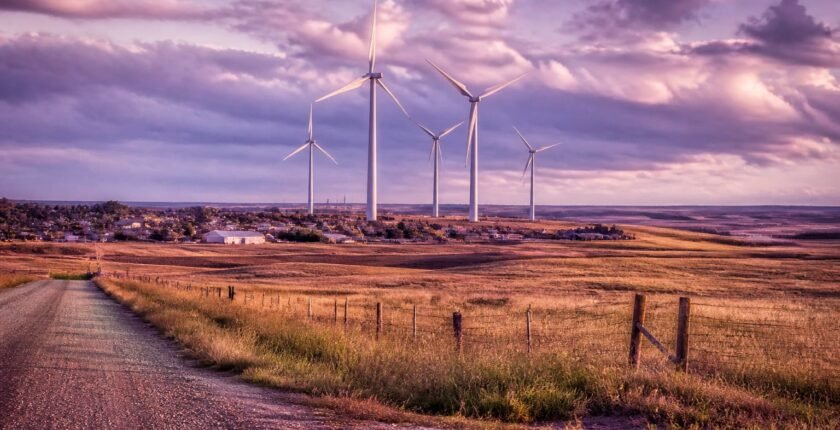
North Dakota wind power has delivered clear cash flows to farmers and counties but also sparked sharp local resentment. Ørsted’s Badger Wind Farm is a 92-turbine, 250-MW project that came online in January, and McIntosh County expects roughly $1.3 million a year in wind-generation taxes from the development, as first reported by motherjones.com. Lease payments reach individual landowners: one farmer said he received about $5,000 per turbine in his first quarterly check. Yet residents in Wishek and surrounding townships say the turbines’ proximity to homes, absentee landowners signing leases and politics that cast wind as a threat to coal have turned many who welcomed turbines two decades ago into opponents.
Key takeaways
- Ørsted developed the 92-turbine, 250-MW Badger Wind Farm, which came online in January.
- At least one landowner reported about $5,000 per turbine in a single quarter, which would translate to roughly $20,000 per turbine annually if those quarterly payments continued.
- Between 2005 and 2020, North Dakota added 38 wind farms; since 2020 the state has completed only four projects, reflecting a slowdown in development.
Table of contents
- Key takeaways
- How Badger changed Wishek’s balance of costs and benefits
- Why many residents say the project was mishandled
- Why North Dakota’s wind boom has slowed
- What the local backlash means for energy and coal politics
- Two cases for where development goes next
- What to be careful about
- Frequently asked questions
How Badger changed Wishek’s balance of costs and benefits
Badger Wind Farm changed the local finances quickly: its 92 turbines and the developer’s goodwill payments financed a new firehouse, a pool and repairs to the community center, and the county auditor estimates about $1.3 million a year in wind-generation taxes to support roads, schools and health services across a county of roughly 2,500 people. For some landowners the math is straightforward: one fourth-generation farmer said he received about $5,000 per turbine in his first quarterly check, a single-quarter payment that, if multiplied by four, implies roughly $20,000 per turbine annually.
But the distribution of those benefits is uneven. Lease recipients sit on the same landscape as households that did not sign agreements, and county-level revenues do not erase the sense among some residents that the turbines dominate the town’s appearance and daily life. The local former mayor framed the change as a loss of open country; another longtime resident described her new house as overlooked by turbines she never expected to see.
Why many residents say the project was mishandled
Opposition in Wishek and adjacent townships focuses on siting and local control. The town had no formal siting authority for Badger, and several residents told the reporter they would have preferred stronger setbacks from nonparticipating homes. Local leaders and residents point to absentee landowners who signed leases—receiving what one interviewee called a quick payment while neighbors must live with turbines in sight—as a major grievance.
Community anger also extends to perceptions of how decisions were made. Ørsted offered direct donations to the city and declined a site visit or interview for the reporting; the company’s $150,000 in goodwill payments to Wishek is recorded in the city auditor’s files, but that type of payment did not satisfy residents who wanted zoning or planning protections. The dispute over process—cash in exchange for a landscape change without local siting power—goes to the heart of why financial gains have not translated into social acceptance.
Why North Dakota’s wind boom has slowed
After a period of rapid growth, the pace of new wind projects in North Dakota has faltered: the state added 38 wind farms from 2005 through 2020, but only four projects have been completed since 2020, including Badger. The Public Service Commission is considering just one other project—the 67-turbine Homestead Wind Farm in Williams County—while the Longspur project north of Bismarck received approval on 12 August as the only other recent sign of new capacity.
Political dynamics have tipped in favor of restraint. The PSC’s chair has voiced concern that more wind facilitates a policy agenda that would close legacy coal plants, and state lawmakers and the lone House member cited in the reporting have pushed to curb federal incentives for wind and solar. Those positions, combined with local moratoria such as McIntosh County’s one-year pause on new projects, have made new large-scale siting proposals rarer than in the prior boom era.
What the local backlash means for energy and coal politics
Opposition in places like Wishek is being folded into statewide debates about coal and export-oriented renewables. The reporting notes that about 76 percent of electricity consumed in North Dakota comes from five in‑state coal plants; much of the state’s wind output is exported to neighboring states that need clean power to meet decarbonization goals. That split—local economies receiving lease checks while most wind generation serves out-of-state demand—feeds arguments by some lawmakers that wind growth is not serving North Dakota’s interests.
That framing has policy consequences. Federal tax-credit changes in 2025 are already reshaping incentives, and state officials who once welcomed an "all of the above" energy policy are now asking whether the state has a carrying capacity for turbines. If political pressure yields further curbs on siting or state-level incentives, developers may target other states where permitting and local buy-in are easier, reducing opportunities for farmers who relied on lease revenue during the last boom.
| Project | Developer | Turbines | Capacity / cost | Status / note |
|---|---|---|---|---|
| Badger Wind Farm | Ørsted | 92 | 250 MW | Brought online in January |
| Merricourt Wind Farm | — | Went online in 2020 | ||
| Homestead Wind Farm | — | 67 | Under consideration by the Public Service Commission (Williams County) | |
| Longspur | Minnesota Power | nearly $800 million | Approved by PSC on August 12 |
Two cases for where development goes next
The case for
- Local and county revenues (McIntosh County’s estimated $1.3 million a year) show turbines can fund infrastructure and services, which can create political space for carefully sited projects.
- Developers and utilities still have demand from neighboring states; projects with clearer local benefits and stronger siting safeguards (and durable transmission plans) can win approvals and proceed.
The case against
- Local moratoria and a wary Public Service Commission, coupled with vocal lawmakers who link wind expansion to coal plant closures, will keep new projects rarer and raise permitting costs.
- Social fracture over absentee leases and landscape impacts could make counties and townships adopt restrictive rules, deterring developers and shifting investment away from North Dakota.
What to be careful about
- Moral‑hazard perception: concentrated lease payments to absentee landowners can deepen local divisions and erode trust in county decision-making.
- Policy reversal risk: state-level resistance or further restrictions by the Public Service Commission could reduce future development and associated local revenues.
- Economic mismatch: most wind generation is exported while local electricity still relies mainly on in‑state lignite plants, which fuels political opposition framed as an externalized benefit.
The bottom line
The story from Wishek is a familiar one: turbines produce measurable public revenues and private lease income, but those financial gains coexist with visible landscape change and contentious local politics. In North Dakota that friction has intersected with a broader political push to defend coal and question whether exported wind power serves in‑state interests. Whether future projects proceed will depend on whether counties and the state can reconcile monetary benefits with stronger local siting rules and clearer community consent — or whether political and procedural pushback keeps the next generation of wind farms away.
What to watch
- Watch for the North Dakota Public Service Commission’s final decision on the Homestead Wind Farm; no date has been set.
- Watch whether McIntosh County votes to extend or end its one-year moratorium on new wind projects; no date has been set.
- Watch for hearings of the Legislative Assembly’s Energy Development and Transmission Committee on state wind-siting rules; no date has been set.
Frequently asked questions
How much will Badger Wind Farm pay McIntosh County each year?
The county auditor’s office estimates Badger Wind Farm will yield roughly $1.3 million a year in wind generation taxes to McIntosh County.
Who developed Badger Wind Farm and how large is it?
Ørsted developed Badger Wind Farm; the reporting describes it as a 92-turbine project with 250 MW of capacity brought online in January.
How much have landowners received from wind leases in recent years?
State tax records and land-lease payment data indicate landowners have netted between $25 million and $30 million annually since 2020; one landowner reported about $5,000 per turbine in his first quarterly check.
Related reading