
Blog
OQAE and Asyad sign green hydrogen term sheet
Estimated reading time: 5 minutes · Last updated:
OQ Alternative Energy (OQAE) and Asyad Group have agreed an offtake term sheet to pilot green hydrogen for mobility in Al Duqm. The plan links local production with low-carbon transport, placing a facility inside the Special Economic Zone at Duqm that targets production of 400 kilogrammes of green hydrogen a day and will trial refuelling and logistics applications. Oman Observer first reported the development and included remarks from Salim al Kamyani, OQAE chief executive, and Ahmed al Bulushi of Asyad Drydock & Infrastructure Services. OQAE and Asyad said the work will create operational experience and a pathway to wider commercial deployment.
The next phase of Oman’s hydrogen journey is about moving from potential to practical application.
Salim al Kamyani, CEO of OQ Alternative Energy
Key takeaways
- OQ Alternative Energy and Asyad Group signed an offtake term sheet on 5 September 2026 to trial green hydrogen for mobility in Al Duqm.
- OQAE describes the pilot as its first end-to-end deployment; the planned plant is expected to produce 400 kilogrammes of green hydrogen each day.
- The facility sits inside the Special Economic Zone at Duqm and includes renewable power integration, hydrogen production and handling for mobility uses.
- Asyad will explore hydrogen use across logistics and mobility operations to build refuelling, safety and commercial experience for Oman’s hydrogen sector.
Table of contents
What the deal covers and the Al Duqm pilot
OQAE and Asyad have signed a non-binding offtake term sheet to test green hydrogen in mobility and logistics operations based at Al Duqm. The pilot is intended to be an end-to-end demonstration that spans renewable power input, electrolytic production, on-site handling, certification and commercial testing with end users. Project materials cite a target output of 400 kilogrammes of green hydrogen per day, with scope to add a dedicated hydrogen refuelling station on site.
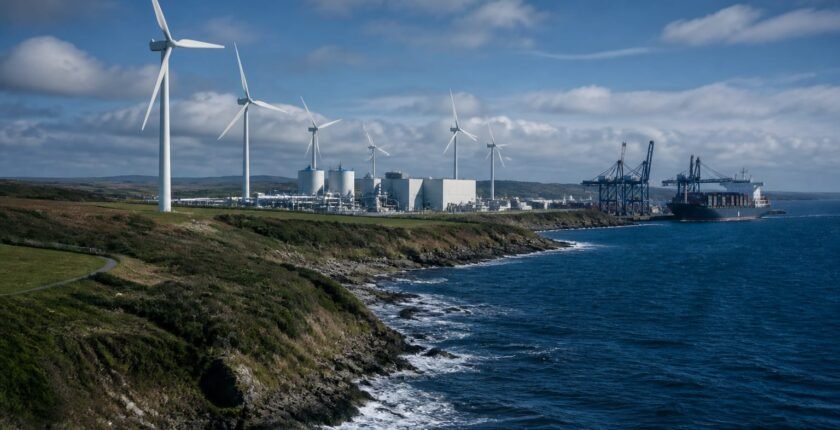
The site choice — inside the Special Economic Zone at Duqm — places production, storage and potential refuelling close to ports, industrial yards and logistics services. That co-location reduces short-haul distribution needs for early deployments and lets the partners trial safety, certification and operations within a single industrial ecosystem. OQAE describes the pilot as its first full-stack deployment intended to generate practical operational data and to validate business models for future scale-up.
Why mobility and logistics are the first use case
Both parties frame mobility as a practical, contained use case that can absorb early volumes and build operator know-how. Asyad Group, through its Drydock & Infrastructure Services unit, is exploring hydrogen to lower emissions across port operations, terminal vehicles and heavy logistics equipment. The partnership is presented as an opportunity to test supply chains, refuelling procedures and safety protocols before attempting exports or larger industrial applications.
OQAE emphasises that demonstrating local demand is a precursor to scaling an export-oriented hydrogen industry. Officials quoted in the announcement link the pilot to Oman’s broader economic strategy and to national net-zero ambitions, saying a domestic market will help build the commercial and regulatory foundations needed for larger projects. The collaboration thus combines a producer (OQAE) and a logistics operator (Asyad) to cover both supply and end-use sides of the chain.
Next steps, scale potential and practical limits
After signing, the immediate task is to convert the term sheet into a deployment framework that sets out responsibilities, schedules, certification requirements and commercial terms. The public announcement gives no firm commissioning date, contract duration, confirmed offtake quantities beyond the pilot target, or budget figures. OQAE and Asyad said the pilot will produce data on operations, demand and safety to guide any decisions on expansion.
The announcement notes potential scale-up routes including a dedicated refuelling station at Duqm and expanded electrolyser capacity. At the pilot rate cited, production would be modest compared with industrial hydrogen projects; it is intended as a learning facility rather than a large-scale supply plant. The practical constraints the partners must resolve include grid connection for renewables, refuelling standards, and the commercial viability of locally supplied hydrogen for heavy transport.
How the pilot could succeed or stall
The case for
- If the pilot validates safe, reliable refuelling and handling, it will provide operators with procedures and confidence that reduce barriers to repeat projects.
- Co-location at the Duqm Special Economic Zone could cut early logistics costs and allow integrated testing of production, storage and end use in one industrial cluster.
The case against
- Without clear commissioning dates or commercial terms, the initiative risks remaining a demonstration without a path to firm offtake or scale.
- Technical hurdles such as grid availability for renewables, certification timelines and hydrogen refuelling standards could slow operational roll-out and add costs.
What to be careful about
- No commissioning schedule or firm offtake volumes were disclosed, leaving timing and revenue exposure uncertain for partners and potential investors.
- Integration of renewables at the site may require grid or storage upgrades not accounted for in the term sheet announcement.
- Safety and certification processes for a refuelling station remain to be agreed with regulators and could extend project timelines.
- The pilot’s modest output means it may not materially reduce emissions at scale unless larger investments follow the demonstration.
The bottom line
The OQAE–Asyad term sheet is an early, practical step toward a local hydrogen economy in Oman: a modest pilot designed to build technical know-how and to trial refuelling and logistics use cases rather than to supply large industrial customers or export markets. The partners frame the project as a learning platform — one that must still answer questions on timing, certification and commercial terms before it can scale. How the deployment framework addresses those questions will determine whether the pilot becomes the first module of a larger green hydrogen strategy or remains a limited demonstration.
What to watch
- watch for publication of a deployment framework from OQAE and Asyad; no date has been set.
- watch for confirmation of a hydrogen refuelling station at Duqm and any announced commissioning date; no date has been set.
- watch for regulatory or certification milestones from Omani authorities around hydrogen handling and refuelling; no date has been set.
Frequently asked questions
How much hydrogen will the Al Duqm pilot produce?
The announcement sets a target of 400 kilogrammes of green hydrogen per day, equivalent to roughly 146 tonnes per year if run continuously.
What will Asyad use the hydrogen for?
Asyad will explore mobility and logistics applications, testing refuelling and operational use across port and terminal equipment as part of its Drydock & Infrastructure Services activities.
Where is the project located and why that site?
The pilot is sited within the Special Economic Zone at Duqm to keep production, storage and end use close together and to leverage the zone’s industrial and logistics infrastructure.
Related reading