
Blog
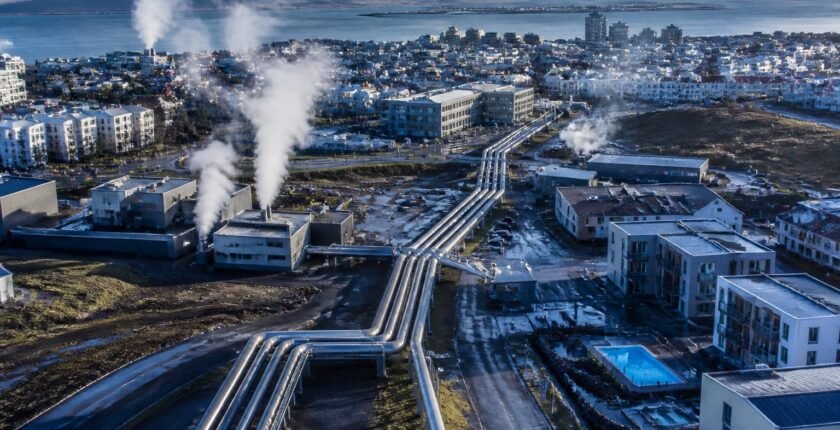
How Reykjavík Heats Homes with Rainwater Underground
Estimated reading time: 5 minutes · Last updated:
Orkustofnun reports that roughly 90% of the energy Icelanders use to heat their homes comes from geothermal sources that begin as rain and snowmelt seeping kilometres into fractured basalt. Those meteoric fluids circulate down from the highlands, warm against hot rock, and return to cities like Reykjavík to feed radiators, swimming pools and street‑deicing loops without full treatment. The low‑temperature fields beneath the city produce temperatures near 160°C at about 3,000 metres, and district heating utilities reach 95% of the population, as first reported by Science Blog, a synthesis that draws on Jökull, Reykjavík Energy and recent reservoir work from the University of Iceland.
It’s quite simple, when you’ve already installed it,
Eirikur Hjalmarsson, Reykjavík Energy (to CBC)
Key takeaways
- Share of heating: Orkustofnun says geothermal supplies roughly 90% of Icelanders' domestic heating and district systems reach 95% of the population.
- Deep temperatures: Temperature logs under Laugarnes show readings near 160°C at about 3,000 metres, below the regional gradient of roughly 120°C per kilometre.
- Scale of surface uses: Direct geothermal snow‑melting has an installed capacity of 215 MW and yields about 378 GWh annually, slightly more than the 361 GWh used for bathing and swimming.
- Field stability example: A study by the University of Iceland in 2025 reported that Laugarnes has produced about 160 litres per second for roughly fifty years, while water levels and temperatures have remained steady.
Table of contents
How meteoric water becomes district heat
Stefán Arnórsson, Guðni Axelsson and Kristján Sæmundsson interpret Iceland’s low‑temperature geothermal systems as being replenished mainly by rain and melting snow, with some coastal fields containing a seawater mix; that water soaks into fractured basalt and moves downward toward the warmer basement. In Jökull they describe groundwater travelling from the highlands through open fractures or dykes to depths of a few kilometres before rising again because heated water is less dense.
The circulation does more than move heat: flowing water extracts heat from the rock at the base of the loop, cooling and contracting the basement and causing the fracture to creep downward year after year. That self‑deepening explains why temperature logs under Laugarnes arrive at nearly 160°C at 3,000 metres, a value the Jökull review contrasts with a regional gradient of about 120°C per kilometre.
From laundry springs to an urban network
People in Reykjavík have used geothermal pools for generations; the valley Laugardalur, whose name means 'hot spring valley', was once a local laundry site. Piping began in 1928–1930, and Orkustofnun dates the first public district scheme to 1930 when a three‑kilometre pipe carried hot water from local springs to Austurbæjarskóli primary school.
That early pipework shrank the natural springs but seeded a network that has expanded over decades into the city’s district heating infrastructure. Reykjavík Energy and historical accounts assembled for the World Geothermal Congress record an 85‑year arc in which deeper wells and larger rigs were introduced as demand rose, leaving the city with widely distributed pipework and direct use in buildings.
Where the heat goes and why it is used directly
Direct uses span homes, pools and streets. Visit Reykjavík counts 18 geothermal swimming pools inside the city, most outdoors and used year‑round, and the Jökull review breaks down direct geothermal applications: snow melting uses 215 MW of installed capacity and about 378 GWh a year, slightly ahead of the 361 GWh going to bathing and swimming.
A practical reason for running well water straight into radiators is its chemistry. Low‑temperature fluids that pass through basalt contain few dissolved solids and little chloride, so they resist corrosion and scaling; that keeps pipes clean and removes the need for heat exchangers in many domestic connections. By contrast, high‑temperature volcanic fluids carry hydrogen sulphide and silica that force plants such as Nesjavellir to use heat exchangers and secondary circuits.
Reservoir behaviour and long‑term supply questions
Historic overpumping in the late 1950s forced Reykjavík to deepen and multiply wells; engineers recorded falling water levels until a new balance was found. Reykjavík Energy’s history for the World Geothermal Congress notes the period when a large drill rig and deeper wells were needed, and today the pattern is one of managed extraction and recharge.
A paper presented at Stanford’s geothermal reservoir engineering workshop in 2025 by Adolph Bravo Jr and colleagues at the University of Iceland reports that Laugarnes has produced around 160 litres per second for five decades with stable levels and temperatures, which the authors interpret as evidence that cold recharge picks up heat in shallow formations as it descends. That stability in one field refines the conceptual model but does not by itself guarantee every low‑temperature system will behave the same way.
| Use | Installed capacity | Annual energy (GWh) |
|---|---|---|
| Snow melting (streets and pavements) | 215 MW | 378 GWh |
| Bathing and swimming | — | 361 GWh |
How the case for and against sustained direct use stacks up
The case for
- If cold meteoric recharge continues, field stability like Laugarnes’s (about 160 litres per second over five decades) supports long‑term direct use, as argued by Adolph Bravo Jr et al. (2025).
- Low dissolved solids in basalt‑fed, low‑temperature fluids let many systems run without heat exchangers, reducing plant complexity and operating cost compared with high‑temperature fields such as those serving Nesjavellir.
The case against
- The Jökull review describes fracture creep and gradual rock cooling as an intrinsic consequence of extracting heat, which over long timescales can deepen the system and reduce local rock temperatures.
- Historical overpumping in the late 1950s required major drilling and brought water levels down, demonstrating that demand can outpace recharge if extraction is not managed.
What to be careful about
- Over‑extraction: past pumping in the late 1950s caused broad declines in water levels until deeper wells and reduced draw resolved the imbalance.
- Thermal depletion: circulating water removes heat from the rock and fractures can creep downward, a process the Jökull review links to gradual cooling of reservoir basement.
- Chemical constraints: high‑temperature volcanic fluids carry hydrogen sulphide and silica that prevent direct use and require heat‑exchanger plants such as Nesjavellir.
The bottom line
Reykjavík’s heating system is a functioning example of distributed, low‑temperature geothermal use fed by meteoric recharge. The city’s network grew from early 20th‑century piping into an infrastructure that runs radiators, 18 public pools and street‑deicing loops and is supported by temperature logs and recent reservoir studies. That combination — favourable water chemistry, established pipe networks and evidence of recharge at fields such as Laugarnes — explains why direct use is practical there. At the same time, fracture creep and the history of mid‑century overpumping show the system requires ongoing monitoring and management to remain reliable over the long term.
What to watch
- watch for Reykjavík Energy’s next public reservoir monitoring update; no date has been set.
- watch for Orkustofnun’s next national energy statistics release on district heating penetration; no date has been set.
- watch for follow‑up publications from the University of Iceland on Laugarnes recharge mechanisms; no date has been set.
Frequently asked questions
Why can Reykjavík run well water straight into radiators?
Low‑temperature fluids that flow through basalt hold few dissolved solids and little chloride, which keeps pipes free of scale and corrosion; the Jökull review explains this chemistry is why many systems can feed buildings directly without full treatment.
How much of Iceland’s heating is geothermal?
Orkustofnun reports that geothermal supplies roughly 90% of domestic heating, and district heating utilities reach about 95% of the population, making geothermal the dominant source for space and water heating nationwide.
Are Reykjavík’s geothermal fields stable over decades?
Field behaviour varies, but a University of Iceland paper presented at Stanford in 2025 notes Laugarnes has delivered about 160 litres per second for around fifty years with stable levels and temperatures; the paper links this persistence to ongoing cold recharge.
Can all geothermal sources be used directly like Reykjavík’s?
No: high‑temperature volcanic fluids often contain hydrogen sulphide and silica that precipitates; those chemistries force plants such as Nesjavellir to use heat exchangers and secondary water circuits rather than direct feed.
Related reading