
Blog
East Hampton toxic plume blamed on suppression system
Estimated reading time: 5 minutes · Last updated:
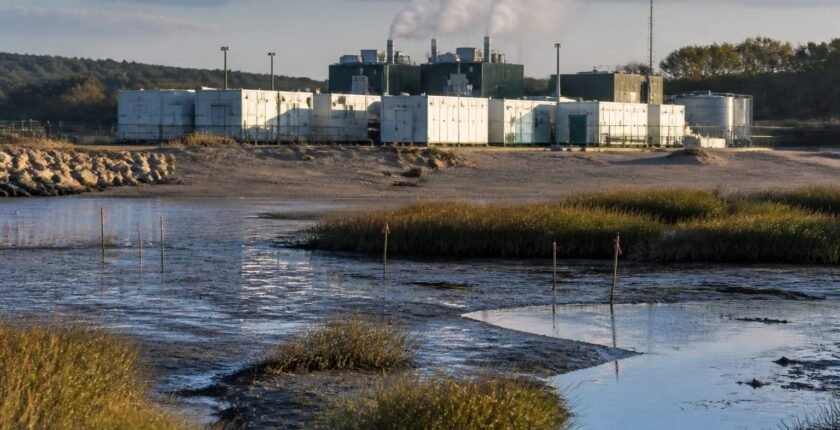
New York’s Department of Environmental Conservation says a fire‑suppression system used during the May 31, 2023 lithium‑ion battery plant fire on Cove Hollow Road produced a toxic PFPrA groundwater plume that reached public wells. In its preliminary sampling, the DEC located PFPrA concentrations reaching 10,000 parts per billion immediately south of the site, far above the Department of Health screening value of 3 parts per billion. DEC said NextEra, a co‑owner of the battery facility, informed the agency that roughly 5,000 pounds of NOVEC 1230 suppression gas and between 1.4 million and 2.2 million gallons of water were used during firefighting. As first reported by Newsday, DEC said it expects a final report in the fall.
The big lesson learned here is this isn’t about batteries, but a fire-suppression system that is not unique to batteries.
Amanda Lefton, DEC Commissioner
Key takeaways
- DEC’s preliminary testing detected PFPrA levels reaching 10,000 parts per billion in groundwater south of the East Hampton battery plant.
- Suffolk County tests earlier this year recorded PFPrA at 1,170 parts per billion in the area.
- New York State Department of Health’s screening level for the chemical is 3 parts per billion.
- DEC said NextEra told it that roughly 5,000 pounds of NOVEC 1230 gas were used to suppress the May 31, 2023 fire.
- DEC reports 1.4 million to 2.2 million gallons of water were used alongside NOVEC 1230 during firefighting.
Table of contents
What DEC’s preliminary findings say
The New York State Department of Environmental Conservation has concluded in preliminary findings that the firefighting response to the May 31, 2023 thermal runaway at the East Hampton battery‑energy storage facility produced PFPrA contamination in nearby groundwater. DEC’s sampling found PFPrA concentrations of up to 10,000 parts per billion immediately south of the plant, a level that far exceeds the Department of Health screening threshold of 3 parts per billion, which the state is using to assess immediate concern for public exposure.
DEC told the reporter it was informed by battery co‑owner NextEra that about 5,000 pounds of the NOVEC 1230 suppression gas were deployed inside the facility, together with the site’s internal sprinklers and large volumes of external firefighting water. The agency says the combination of NOVEC 1230 and between 1.4 million and 2.2 million gallons of water is the primary mechanism that created PFPrA in soil and groundwater, according to its preliminary technical review.
How a suppression agent and water can form PFPrA
NOVEC 1230 is a halogenated ketone‑based gaseous suppression agent used to extinguish fires without leaving the kinds of oily residues older foams did. DEC’s preliminary report links the agent’s use inside the battery enclosures with very large amounts of water applied during external and internal firefighting. The agency says chemical reactions between the suppression agent and water under fire conditions generated PFPrA, a perfluoroalkyl substance that is persistent in groundwater.
Regulators and local officials now face two technical tasks: tracing the subsurface spread of PFPrA and identifying where the reaction products concentrated. The preliminary finding names the suppression system and the firefighting water volumes as the proximate cause; it does not assign liability or outline remediation steps. DEC has said it will complete its investigation and issue a final report in the fall.
Local exposure: wells, distances and immediate actions
DEC’s sampling showed the plume reached public water wells as far as 2,500 feet from the plant, prompting local health and water authorities to test and restrict affected supplies. Suffolk County sampling earlier in 2026 found PFPrA at 1,170 parts per billion in the broader area, a figure regulators cited when arranging additional testing and voluntary health screenings for nearby residents.
Because the Department of Health’s screening level is 3 parts per billion, the concentrations reported to date are many multiples above the state benchmark. Local officials have closed or provided alternatives for impacted wells while the DEC continues mapping the plume and the DOH reviews screening and clinical follow‑up options for residents.
Regulatory and industry implications
DEC Commissioner Amanda Lefton framed the finding as a systems issue rather than a battery‑only failure. In an interview, she said, "The big lesson learned here is this isn’t about batteries, but a fire‑suppression system that is not unique to batteries." That framing directs attention at how suppression agents are specified, stored and integrated with sprinkler systems across multiple kinds of facilities.
If the final DEC report keeps the preliminary causal link, states and localities may revisit allowable suppression agents, emergency response protocols and water‑use practices at sites with fluorinated chemistries. The industry will also be watching whether regulators require retrofits, new containment measures, or limits on how suppression agents and water may be combined during an incident.
How this could play out
The case for
- DEC’s final report could provide a concrete remediation roadmap, enabling targeted well replacements and containment because the agency has already identified PFPrA concentrations and likely formation mechanism.
- Regulatory clarification on suppression agents and firefighting water practices could prompt manufacturers and site operators to adopt less reactive systems or engineered controls that limit PFAS formation.
The case against
- If PFPrA has migrated beyond mapped zones, additional wells and private supplies may be affected, expanding testing and cleanup needs and prolonging exposure for residents.
- A determination that standard suppression setups pose systemic PFAS risks could force costly retrofits or restrictions at many facilities, creating lengthy compliance and legal disputes.
What to be careful about
- Contamination of additional public and private wells as the plume migrates beyond the currently tested radius.
- Elevated PFPrA concentrations relative to the DOH screening level of 3 parts per billion, requiring prolonged monitoring and potential medical surveillance.
- Regulatory actions that could mandate expensive remediation, containment or design changes for sites using similar suppression systems.
The bottom line
DEC’s preliminary findings identify a fire‑suppression response—NOVEC 1230 used inside the facility together with very large volumes of water—as the proximate cause of a high‑concentration PFPrA groundwater plume. The concentrations reported so far, including a peak of 10,000 parts per billion, exceed the Department of Health screening level of 3 parts per billion by orders of magnitude and have already affected wells within roughly 2,500 feet. The final DEC report, due in the fall, will determine the next regulatory and remediation steps; in the meantime, local testing and interim water protections remain key for residents.
What to watch
- Watch for DEC’s final report in the fall; no specific date has been set.
- Watch for any New York State Department of Health advisories or expanded screening guidance following DEC’s final report; no date has been set.
Frequently asked questions
What is PFPrA and why does its concentration matter?
PFPrA is a perfluoroalkyl substance that, according to the New York State Department of Environmental Conservation, formed during this incident when NOVEC 1230 reacted with large volumes of firefighting water; DEC's testing detected PFPrA levels up to 10,000 parts per billion, compared with the New York State Department of Health screening level of 3 parts per billion.
How far did the contamination travel from the battery plant?
DEC’s preliminary testing shows the plume reached public wells as far as 2,500 feet from the Cove Hollow Road facility, prompting additional testing and temporary restrictions on affected supplies.
Who provided the information about how much suppression agent and water were used?
DEC said battery co‑owner NextEra told the agency that roughly 5,000 pounds of NOVEC 1230 were used inside the facility, and that between 1.4 million and 2.2 million gallons of water were applied during firefighting.
Related reading
This article is information, not medical advice. Anyone acting on it should speak to a qualified professional.