
Blog
Why Brazil’s wind farms aren’t benefiting local communities
Estimated reading time: 6 minutes · Last updated:
Brazil wind farms now supply roughly 35GW of onshore capacity, the fifth-largest national fleet worldwide, concentrated in the north-east where “the best winds” and the worst social indicators meet. That scale has not translated into clear local gains: residents around Serra do Mel say one-hectare contracts (2.5 acres) and 50-year leases have left families unable to farm parts of their 50-hectare plots, while payments are calculated as 1.55% of turnover and hard to audit. A public civil lawsuit filed in May 2025 and Sisab health data pointing to rising complaints since 2022 expose how rapid expansion can sideline nearby communities.
If I’d known it would be like this – that I’d be prevented from planting and harvesting – I wouldn’t have signed that contract with them.
Antonio de Souza
Key takeaways
- Scale: About 35GW of onshore wind capacity is operating commercially in Brazil, a total that ranks the country fifth worldwide.
- Local contracts: Many land agreements run for 50 years and set payments at 1.55% of turnover rather than fixed rents.
- Health and legal action: Sisab data show a rise in anxiety, sleep and hearing complaints from 2022 as Serra do Mel’s 36 windfarms began operating, and a civil class action was filed in May 2025.
- Grid and industry: In 2025 Brazil curtailed 20.6% of possible wind and solar generation, a loss estimated at more than 6bn reais.
- Offshore shift: Ibama issued Brazil’s first preliminary offshore licence in June 2025; more than 100 offshore applications are waiting.
Table of contents
- Key takeaways
- How large-scale wind growth looks on paper and on the ground
- Contracts, compensation and community impact in Serra do Mel
- Health data, safety incidents and the unanswered questions
- Grid limits, curtailed clean power and the offshore pivot
- Case for and against better local outcomes
- What to be careful about
- Frequently asked questions
How large-scale wind growth looks on paper and on the ground
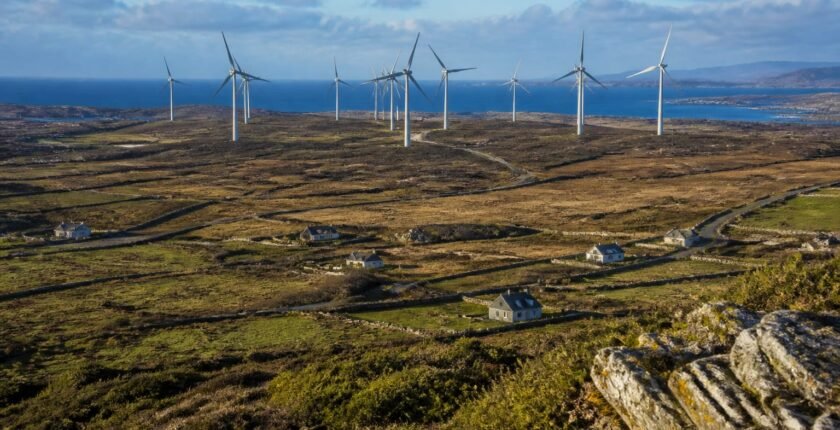
Brazil’s onshore fleet reached about 35GW in commercial operation, placing it fifth globally. That capacity is highly concentrated: nine in 10 turbines sit in the north-east, drawn to consistently strong coastal winds and favourable sites that engineers often call among the best in the world.
The industry marked an early milestone when the country passed 10GW in 2016. Expansion since then has been rapid: in one municipality, 36 windfarms came online and transformed local land use, even as basic services such as paved streets and mains water remained incomplete.
The result is juxtaposition: national-scale success measured in gigawatts, and local strains measured in hectares, restricted livelihoods and growing disputes over who benefits and who bears costs.
Contracts, compensation and community impact in Serra do Mel
Land agreements described to neighbours often allocate a single hectare (2.5 acres) to infrastructure, but farmers report that up to four hectares can become unusable within a 50-hectare holding because of access and safety rules. Many contracts are 50-year leases, a timespan that communities say effectively transfers long-term control of plots granted by the state decades earlier.
The typical promise has been stable monthly payments: residents recalled offers of 3,000 to 5,000 reais per month, equivalent to roughly £430–£720, adjusted annually. The formal company formula, however, sets payments at 1.55% of turnover, and 17 of the local power stations sell all their electricity into the open market, at prices negotiated with large consumers far from the towns.
Restrictions are practical as well as legal: farmers say cultivation is forbidden within 50 metres of each pylon, and some people live as close as 250 metres to turbines—France, by contrast, requires at least 500 metres from houses. Complaints escalated at a packed meeting in July 2024 and culminated in a civil class action lodged in May 2025 seeking compensation, relocation, corrective impact assessment and contract reviews.
Health data, safety incidents and the unanswered questions
Primary healthcare records, compiled by the Lavoro Institute from Sisab, indicate that from 2022 — the year most of Serra do Mel’s 36 windfarms became operational — there were rises in diagnoses for panic and anxiety disorders, in sleep-related conditions, and in reported hearing problems. By contrast, a neighbouring municipality with similar social indicators but no turbines showed the opposite trend.
Residents also recount safety incidents: one older local, Edvaldo Bessa, was reported as having received an electric shock when a metering tower lacked insulation, and others say cattle and tractors cannot use areas near lines without risk. Those clauses and experiences weigh on claims that families can no longer work their land and therefore may lose their status as ‘special insured persons’ under social security rules if they transfer more than 50% of their plots.
Voltalia, the developer named by several residents, has said it complies with Brazilian law and maintains community channels including an ombudsman, while denying its projects cause damage. The disagreement over facts and remedies is now in court.
Grid limits, curtailed clean power and the offshore pivot
The industry’s national challenge is systemic: in 2025 operators curtailed 20.6% of the wind and solar generation they could have used, an estimated loss of more than 6bn reais. Curtailment arises when transmission cannot carry generation to demand centres and when market arrangements send power to large contracted consumers rather than local grids.
At the same time Brazil has moved toward offshore projects. Ibama granted the first preliminary licence for an offshore site in June 2025 near Areia Branca, about 18 miles (30km) from Serra do Mel, where Senai-RN will test turbines with the energy supplying the port under a 2025 law. Activists and fishers warn that more than 100 offshore licence applications remain pending at Ibama and that licensing practice will set precedents.
The interplay matters: curtailment and long-distance commercial contracts send revenue away from host towns, while rapid licensing—onshore and offshore—raises the stakes for how contracts, distances and impact assessments are enforced.
| Location | Turbines / project | Closest reported home distance | Notable figures or facts |
|---|---|---|---|
| Serra do Mel | 36 onshore windfarms | as close as 250 metres | Payments set at 1.55% of turnover; 17 stations sell fully on open market; 50-year leases |
| Poço Branco | no comparable turbine build-out | not applicable | Health complaint trends moved the opposite way to Serra do Mel in Sisab data |
| Areia Branca | first licensed offshore site | offshore site ~18 miles (30km) from Serra do Mel | Ibama preliminary licence June 2025; Senai-RN developer; 100+ offshore applications pending |
Case for and against better local outcomes
The case for
- The May 2025 class action and public-prosecutor interest could force contract reviews, corrective environmental impact assessments and negotiated relocations.
- Resolving grid bottlenecks would reduce the 20.6% curtailment seen in 2025 and could increase local value capture if new market mechanisms route benefits to host regions.
The case against
- Current market structures send most output from many plants to large consumers in other regions, and 17 local stations already sell entirely on the open market, limiting direct local revenue gains.
- Rapid licensing—more than 100 offshore applications pending—risks repeating onshore patterns unless licences require stronger distance rules, auditing of 1.55% turnover payments and community participation.
What to be careful about
- Documented rise in anxiety, sleep and hearing complaints in Sisab data from 2022 in Serra do Mel linked to the arrival of 36 windfarms.
- Legal exposure and injunctions from the May 2025 civil class action could delay construction and trigger compensation liabilities.
- Financial loss to the sector and host communities from the 2025 curtailment of 20.6% of wind and solar, estimated at more than 6bn reais.
- Offshore licensing without clear fisheries agreements risks conflict and disruption to fishers who say planned towers overlap traditional fishing grounds.
The bottom line
Brazil’s wind build-out delivers large public goods in low-carbon electricity—about 35GW onshore and continued momentum into offshore—but the distribution of benefits remains contested. Contracts that tie payments to 1.55% of turnover, 50-year leases and market sales that route most output to distant large consumers have left host communities in places such as Serra do Mel arguing they lost farmland, jobs and quiet. The May 2025 class action, Sisab health trends from 2022 and the 2025 finding that 20.6% of renewables were curtailed (costing more than 6bn reais) make clear that technical success alone does not equate to social justice. Policy choices on distances, auditing of payments and how grid value is shared will determine whether Brazil’s wind boom becomes broadly redistributive or simply accumulates value elsewhere.
What to watch
- watch for Ibama’s final decision on the Areia Branca offshore licence; no date has been set.
- watch for schedule and rulings in the Serra do Mel civil class action that was filed in May 2025; dates remain pending in court records.
- watch for any Aneel or grid-operator proposals to cut curtailment after the 2025 finding that 20.6% of wind and solar generation was curtailed.
Frequently asked questions
How big is Brazil’s onshore wind fleet?
The Brazilian Association of Wind Energy and New Technologies says roughly 35GW of onshore wind capacity is in commercial operation in Brazil, placing the country fifth on the global list.
What do land agreements typically pay and for how long?
Residents reported monthly payments of 3,000 to 5,000 reais, while contractual formulas cited by local groups calculate compensation as 1.55% of turnover; many agreements run for 50 years.
Is there evidence of health impacts near turbines?
Health records compiled by the Lavoro Institute from Sisab show a rise in anxiety, sleep and hearing complaints from 2022 after around 36 windfarms began operating in the municipality.
What regulatory steps have been taken for offshore wind?
Ibama issued Brazil’s first preliminary offshore licence in June 2025 for a site near Areia Branca, Senai-RN is the developer named for that test project, and more than 100 offshore licence applications remain pending at Ibama.
Related reading