
Blog
Toyota Hilux swaps V6 for hydrogen fuel cells
Estimated reading time: 4 minutes · Last updated:
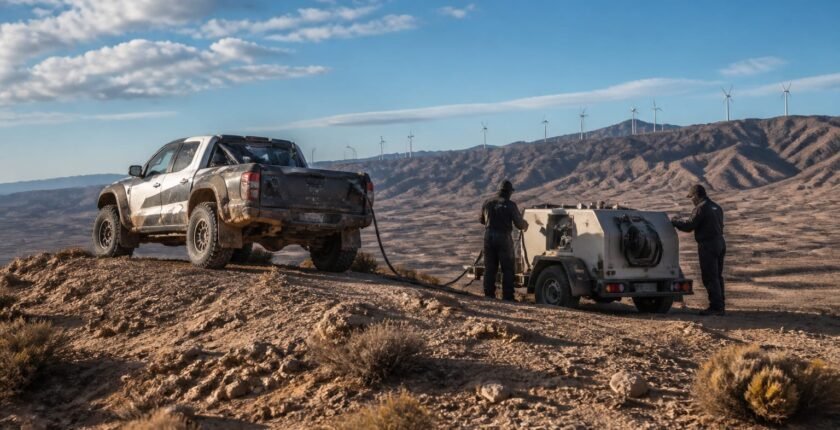
Toyota Gazoo Racing has unveiled the DKR GR FC Hilux, a one-off Hilux prototype that replaces its twin-turbo petrol V6 with a "2.5-generation" hydrogen fuel‑cell powertrain. The vehicle was revealed on September 18, 2026 and will contest the Dakar Rally's Future Mission 1000 class from January 1–15, 2027, covering 621 miles (1,000 km) of actual Dakar stages. The programme is a partnership with Jameel Motorsport and suppliers DENSO, Toyo Tires and IAV, and the truck is being developed and tested at Toyota's European R&D facility in Zaventem, Belgium.
Key takeaways
- Prototype revealed: Toyota Gazoo Racing and partners DENSO, Toyo Tires, IAV and Jameel Motorsport revealed the DKR GR FC Hilux, a hydrogen fuel-cell Hilux prototype.
- Dakar entry: The truck is entered in the Dakar Future Mission 1000 category, which runs 621 miles (1,000 km) of Dakar stages from January 1–15, 2027.
- Technical approach: Toyota calls the system a "2.5-generation" fuel-cell architecture that bridges the Mirai's second-generation cells and Toyota's forthcoming third-generation heavy-duty components.
- Commercial goal: Toyota aims to use data from the 13-day Dakar test and validate a road-going Hilux Fuel Cell pickup by 2028.
Table of contents
Why Toyota chose hydrogen for Dakar
Toyota has converted a Hilux platform into the DKR GR FC Hilux by removing the twin-turbo petrol V6 and fitting a hybrid-generation hydrogen fuel‑cell powertrain. The team describes the package as a "2.5-generation" system: a step that sits between the second-generation fuel cells used in the Mirai, which has been on sale since 2014, and the third-generation components Toyota plans for heavy-duty vehicles.
Dakar presents a unique validation opportunity. The rally's combination of long distance, extreme ambient heat and constant dust creates a worst-case durability environment for powertrains. Toyota's logic is simple: if a fuel-cell stack and its ancillaries survive 13 days and 621 miles (1,000 km) of Dakar stages from January 1–15, 2027, the same hardware should tolerate far less hostile real‑world use.
Engineering the Hilux to survive desert extremes
The engineering challenge at Dakar is mainly thermal and particulate management. Fuel cells are vulnerable to fine silt and to overheating, so Toyota and IAV have designed a multi-stage filtration and cooling system to protect the cell stack while keeping operating temperatures within safe limits even when ambient temperatures soar.
Hydrogen storage is another engineering focus: the Hilux carries custom tanks rated to withstand extreme impacts encountered on corrugated tracks and hard landings. The one-off truck is being assembled and tested at Toyota's European Research and Development facility in Zaventem, Belgium, where engineers are fine-tuning the filtration, cooling and crash‑resistant storage before the January 1–15, 2027 rally.
What Toyota expects to prove and the path to a production pickup
Toyota is not entering the DKR GR FC Hilux to win the overall Dakar crown; it is entered in the Dakar Future Mission 1000 class specifically to stress-test alternative powertrains over 621 miles (1,000 km) of competitive stages. That measured exposure allows engineers to collect operational data on vibration, dust ingress, temperature cycling and hydrogen system behaviour under continuous heavy load.
If the 2.5-generation architecture survives the rally's 13 days of punishment, Toyota plans to use the lessons to validate a road-going Hilux Fuel Cell pickup by 2028. The project brings together Jameel Motorsport for regional expertise and suppliers DENSO, Toyo Tires and IAV for components and engineering; Toyota hopes the factory-backed programme will accelerate rugged, zero-emission utility vehicles into mainstream markets.
| Vehicle | Powertrain | Backing | Notable feature |
|---|---|---|---|
| DKR GR FC Hilux | Hydrogen fuel cell ("2.5-generation") | Toyota Gazoo Racing with DENSO, Toyo Tires, IAV, Jameel Motorsport | Entered in Dakar Future Mission 1000; tested at Zaventem, Belgium |
| Gaussin H2 Racing Truck | Hydrogen (fuel-cell) racing truck | Gaussin | Earlier hydrogen truck pioneer at off-road events |
| HySE-X1 Buggy | Hydrogen combustion (supercharged H2) | Developer listed in coverage | Uses hydrogen in an internal combustion configuration |
How the Dakar test could play out
The case for
- Dakar's extreme conditions provide a concentrated durability test: 621 miles (1,000 km) of stages and 13 days of continuous stress can expose durability weaknesses quickly, accelerating engineering fixes.
- Toyota's supplier network—DENSO, IAV and Toyo Tires—gives the programme component expertise that could shorten the lead time to a commercial Hilux Fuel Cell targeted for 2028.
The case against
- Fuel-cell stacks' sensitivity to dust and overheating means the filtration and cooling systems must perform flawlessly; a single failure there could force retirement and delay validation.
- Hydrogen storage and impact resilience introduce mechanical and safety tolerances that are harder to scale from a one-off racer to mass-produced pickups without further validation.
What to be careful about
- Fine desert silt can breach filtration systems and damage the fuel-cell stack if multi-stage filtration fails.
- Hydrogen storage tanks must withstand extreme impacts; structural failure would compromise safety and end the test early.
- Thermal management failure in sustained high ambient temperatures could overheat the cell stack and cause degradation or shutdown.
The bottom line
Toyota's DKR GR FC Hilux represents a deliberate test of hydrogen fuel-cell durability under extreme conditions. By replacing a twin-turbo V6 with a 2.5-generation fuel-cell system and running 621 miles (1,000 km) of Dakar stages from January 1–15, 2027, Toyota seeks data on dust ingress, thermal performance and storage resilience that it says will inform a road-going Hilux Fuel Cell target for 2028. Success would demonstrate that fuel cells can be engineered for rugged utility roles; failure would highlight the specific filtration, cooling and tank-design challenges that still need resolution.
What to watch
- Watch the Dakar Rally Future Mission 1000 running January 1–15, 2027, when the DKR GR FC Hilux will be tested over 621 miles (1,000 km) of stages.
- Watch for Toyota's validation update on a road-going Hilux Fuel Cell, which Toyota targets to validate in 2028; no month has been specified.
Frequently asked questions
How long and when is the Dakar entry for the Hilux?
The DKR GR FC Hilux is entered in the Dakar Future Mission 1000 class, which runs 621 miles (1,000 km) of competitive stages from January 1–15, 2027.
Who is working with Toyota on the hydrogen Hilux project?
Toyota Gazoo Racing is running the programme with Jameel Motorsport and suppliers DENSO, Toyo Tires and German engineering specialist IAV; development and testing are taking place at Toyota's European R&D facility in Zaventem, Belgium.
What does "2.5-generation" fuel-cell mean?
"2.5-generation" describes a hybrid-generation fuel-cell architecture that Toyota positions between the Mirai's second-generation cells (the Mirai has been on sale since 2014) and the third-generation components Toyota plans to deploy in heavy-duty vehicles.
Related reading