
Blog
California’s 1,000 MWh battery can deliver 250 MW
Estimated reading time: 5 minutes · Last updated:
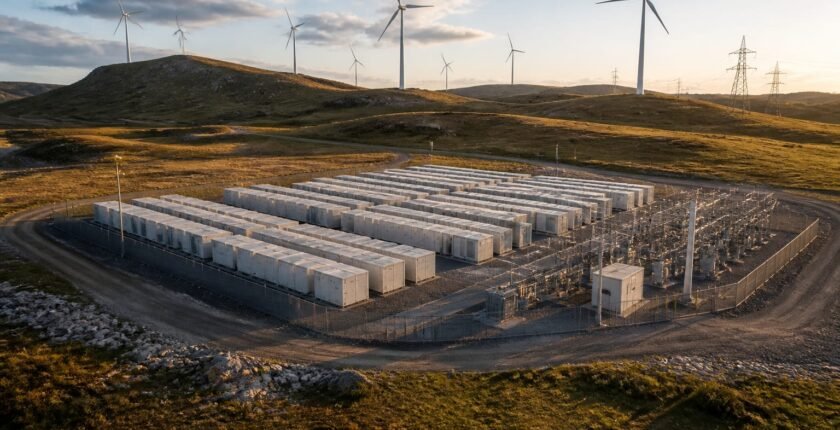
Arevon Energy is building the Cormorant Energy Storage Project in Daly City: a 1,000 MWh lithium iron phosphate (LFP) battery sized to provide sustained output of 250 MW across a four-hour discharge window. Construction began in March 2026 and the company expects commercial operation in 2027; the project has progressed to a notable construction milestone, as first reported by Interesting Engineering. Arevon says the facility could power about 321,000 homes for up to four hours, and the system was expanded from an original 188 MW/752 MWh design to its current 250 MW/1,000 MWh capacity.
Cormorant represents the kind of critical energy infrastructure California needs to meet growing electricity demand while strengthening grid reliability,
Johnson
Key takeaways
- Size and output: Cormorant is a 250 MW / 1,000 MWh lithium iron phosphate battery in Daly City capable of sustained 250 MW dispatch for four hours.
- Homes powered: Arevon says the project can supply about 321,000 homes for up to four hours.
- Schedule and start: Construction began in March 2026 and the facility is expected to enter commercial operation in 2027.
- Local benefits: Arevon estimates more than $73 million in property tax revenue over the project lifetime and says the facility will save over 4.2 billion gallons of water and avoid about 174,000 metric tons of CO2 annually.
- Offtake and partners: MCE has signed a long-term offtake for the project and Arevon is developing Cormorant with Primoris Services Corporation’s Renewables group.
Table of contents
- Key takeaways
- What Cormorant will do for California’s grid
- Partners, contracts and the expansion that made it bigger
- Technology, community benefits and environmental claims
- Schedule, construction and operational risks to watch
- Case for and against the project’s benefits
- What to be careful about
- Frequently asked questions
What Cormorant will do for California’s grid
Cormorant is built to cover late-afternoon and evening shortfalls when solar output drops and demand remains high. With 1,000 MWh of installed energy capacity and the ability to put out 250 MW continuously for four hours, the facility converts surplus generation or market purchases into scheduled dispatchable supply. Arevon positions that output as enough to serve roughly 321,000 homes for up to four hours at a stretch. The design choice of lithium iron phosphate (LFP) chemistry reflects a priority on long operating life and safety characteristics for utility-scale storage.
The California Public Utilities Commission frames that storage as a core part of the reliability solution: Molly Sterkel, a director in the Energy Division of the CPUC, said “The CPUC expects over 20 gigawatts of new clean resources to come online by 2032 to meet our reliability requirements. Battery storage is a critical part of that effort, providing reliability when solar generation declines and demand remains high.” Cormorant is one project within that wider deployment plan.
Partners, contracts and the expansion that made it bigger
The site in Daly City was scaled up during development: Cormorant began as a 188 MW / 752 MWh design and was expanded to 250 MW / 1,000 MWh when MCE contracted for the additional capacity. MCE, an electricity provider serving more than 1.8 million residents and businesses across several California counties, has signed the long-term offtake agreement that underpins the project’s revenue assumptions.
Arevon is developing, owning and operating the facility in partnership with Primoris Services Corporation’s Renewables group. The company already operates other California battery projects, including the 300 MW Nighthawk Energy Storage Project and the 200 MW Peregrine Energy Storage Project, giving it an operating footprint in the state that Cormorant will add to once it begins commercial service in 2027.
Technology, community benefits and environmental claims
Arevon chose lithium iron phosphate chemistry for Cormorant; in utility-scale deployments LFP is commonly selected for its cycle life and safety profile compared with some other lithium chemistries. The company states the project will generate more than $73 million in property tax revenue over its lifetime, funds that Arevon says will support local schools, infrastructure and public services.
Arevon also reports that the facility will save more than 4.2 billion gallons of water and avoid about 174,000 metric tons of carbon dioxide emissions each year, and that MCE will distribute more than $500,000 for local community programs under their agreement. Around 175 workers are expected to be employed at peak construction, the company adds.
Schedule, construction and operational risks to watch
Construction began in March 2026 and Arevon has reported a significant construction milestone; the company expects commercial operation in 2027. That is an aggressive timetable for a large battery farm, and meeting it requires timely completion of interconnection works, commissioning and any local permitting conditions.
The project’s business case rests on the MCE offtake and the expanded scope from 188 MW/752 MWh to 250 MW/1,000 MWh. Any changes to that contract, delays in grid connection or unexpected site costs could affect the schedule and the local benefits Arevon cites. Those are the exposures to watch as the facility moves from construction into commissioning.
| Project | Power (MW) | Energy (MWh) | Status |
|---|---|---|---|
| Cormorant Energy Storage Project | 250 | 1,000 | Under construction; expected 2027 |
| Nighthawk Energy Storage Project | 300 | Operational (Arevon portfolio) | |
| Peregrine Energy Storage Project | 200 | Operational (Arevon portfolio) |
Case for and against the project’s benefits
The case for
- Cormorant adds four-hour dispatch capability (250 MW for four hours), directly addressing evening demand when solar output falls.
- The LFP chemistry chosen is widely used for safety and long cycle life in large-scale systems, supporting predictable operations over many years.
- A long-term offtake from MCE and the expanded capacity improve the project's revenue visibility compared with the original 188 MW / 752 MWh design.
The case against
- The accelerated schedule from a March 2026 start to 2027 commercial operation creates execution risk around interconnection, commissioning and permitting.
- Project economics and local benefit claims depend on the MCE offtake remaining in place and on construction costs staying within planned budgets.
- Reported environmental and water-saving figures are company estimates and will depend on the project’s dispatch profile and the grid mix it displaces.
What to be careful about
- Schedule and interconnection risk tied to a March 2026 start and a 2027 commercial target.
- Revenue concentration because the long-term offtake is with a single provider, MCE.
- Local benefit figures (property tax, water saved, CO2 avoided) are company estimates and may change with operational patterns.
The bottom line
Cormorant is a materially larger storage project than its initial design, scaled to 250 MW / 1,000 MWh to meet late-day demand in California’s evolving grid. The project combines Arevon’s operational footprint in the state with an MCE offtake and a Primoris Renewables partnership; Arevon cites local fiscal and environmental benefits alongside employment during construction. The core uncertainties are execution and contract continuity as the site moves from the March 2026 construction start toward a 2027 commercial target. Those are the practical milestones that will determine whether the claimed tax, water and emissions benefits are realised.
What to watch
- Watch for Cormorant to enter commercial operation in 2027; the company has set 2027 as its start year.
- Watch for MCE to begin distributing the more than $500,000 in local community program funds tied to the project; no distribution date has been set.
- Monitor CPUC progress toward the over 20 gigawatts of new clean resources expected by 2032 and how that affects demand for four-hour storage.
Frequently asked questions
What is Cormorant’s capacity and discharge duration?
Cormorant is designed as a 250 MW / 1,000 MWh battery, sized to provide sustained 250 MW output for up to four hours.
When will the facility start operating?
Construction began in March 2026 and Arevon expects Cormorant to enter commercial operation in 2027.
Who is contracted to buy the project’s output?
MCE has signed a long-term offtake agreement for the project; MCE serves more than 1.8 million residents and businesses in several California counties.
Related reading