
Blog
50 Wind Turbines Provide Half a Kansas Rancher’s Income
Estimated reading time: 4 minutes · Last updated:
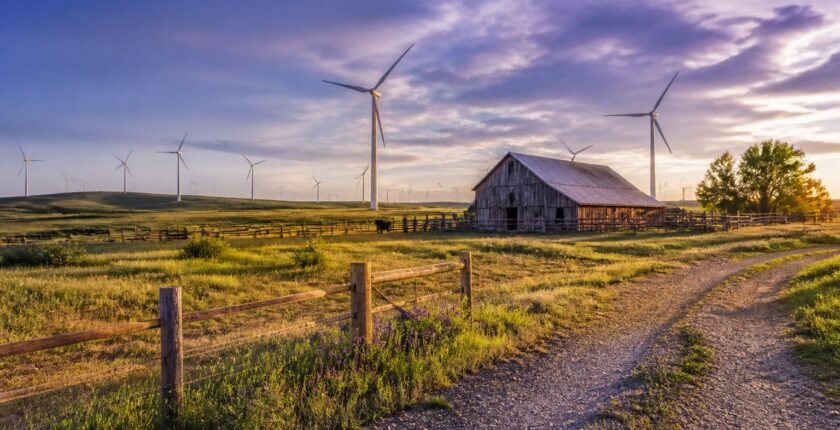
Peter Ferrell, a fourth‑generation rancher in the Flint Hills of Kansas, says 50 wind turbines placed on his land since 2006 now supply about half his income and have kept the family ranch intact. The turbines sit within the Elk River Wind Power project, developed after Greenlight Energy Resources took the lead, and the project is described as powering 60,000 homes. Ferrell credits the additional revenue with stabilising a business model where cattle receipts swing widely from year to year and with making it financially possible for his children and grandchildren to remain on the land.
My family has been here since 1888, and that weighs heavily on my decision to engage in practices that can be carried on generation after generation without depleting the resources.
Peter Ferrell, fourth-generation rancher
Key takeaways
- Since 2006, 50 turbines on Peter Ferrell’s ranch have supplied about half his income.
- The Elk River Wind Power project, developed after Greenlight Energy Resources took on the effort, is described as powering 60,000 homes.
- Ferrell, whose family settled the land in 1888, says the turbines helped preserve the ranch for his two grown children and four grandchildren.
- Wind leases let landowners keep using their property for grazing while adding a second, dependable revenue stream.
Table of contents
- Key takeaways
- How turbines changed one ranch’s economics
- What a working‑lands wind project looks like on the ground
- Local economic effects beyond the lease payments
- Why other landowners call Ferrell for advice
- How this model could expand — and what could limit it
- What to be careful about
- Frequently asked questions
How turbines changed one ranch’s economics
Ferrell says the 50 turbines installed on his property since 2006 supply about half his household income, shifting the ranch’s revenue mix away from a single dependence on cattle receipts. Cattle operations remain, but wind payments act as a counterweight to years when weather, debt or low prices push ranch returns down.
That steadier cash flow matters for multi‑generation holdings. Ferrell frames his decision in stewardship terms, saying the extra revenue allows the family to retain the land rather than sell, and that the arrangement leaves grazing and most ranching activities intact.
What a working‑lands wind project looks like on the ground
The lease arrangement on Ferrell’s ranch exemplifies a working‑lands model: turbines occupy part of the acreage while cattle continue to graze the remainder. Ferrell says the prairie remains intact and that prairie chickens continue to nest on the site, showing that farming, ranching and wildlife coexist with the turbines on this property.
Ferrell called the turbines “easy neighbors” in a statement and emphasised stewardship as a motivation, saying, “My family has been here since 1888, and that weighs heavily on my decision to engage in practices that can be carried on generation after generation without depleting the resources.”
Local economic effects beyond the lease payments
Beyond the landowner royalties Ferrell receives, Greenlight Energy Resources says Elk River Wind Power generates enough electricity to power 60,000 homes and highlights wider community benefits such as jobs during construction and maintenance and a stronger local tax base. Greenlight cites those effects as the primary economic rationale when seeking rural hosts for turbines.
The piece cites other local examples to show scale: in Howard County, Iowa, wind development generated nearly $3 million for the county’s small farm community, a concrete figure used to illustrate how projects can move money into rural economies.
Why other landowners call Ferrell for advice
Ferrell reports that after the wind farm was built “my phone rang off the hook,” with farmers and ranchers asking how they could arrange similar deals. That incoming interest reflects how visible examples change local attitudes: what begins as scepticism about landscape or wildlife impacts can shift once neighbours see steady lease revenue alongside ongoing agriculture.
Neighbors view Ferrell as an informal reference point for peers weighing turbines, and they describe his choice as an option families can use to preserve continuity across generations rather than as a replacement for farming.
| Item | Figure | Source or example |
|---|---|---|
| Turbines on Ferrell’s ranch | 50 | Peter Ferrell |
| Project’s reported household coverage | 60,000 homes | Elk River Wind Power |
| Howard County wind revenue example | nearly $3 million | Howard County, Iowa example |
How this model could expand — and what could limit it
The case for
- More landowners may accept turbines once local examples show grazing and wildlife persisting alongside arrays and lease payments stabilising household income.
- Developers like Greenlight Energy Resources can scale working‑lands projects, increasing local tax revenues and construction jobs if permitting and grid access are available.
The case against
- Local opposition on landscape or species grounds can slow or block new projects; those concerns were the initial objections Ferrell weighed before agreeing.
- Not every landowner will secure the same lease terms, so demonstrated benefits on one ranch do not guarantee comparable financial outcomes elsewhere.
What to be careful about
- Community concern about visual impacts and wildlife (prairie chickens were initially raised as a potential problem).
- Ranch finances still face the boom‑and‑bust cycle of cattle markets; wind income supplements but does not eliminate that exposure.
- Benefits depend on the specific lease and project terms negotiated with a developer, which can vary by property and company.
The bottom line
Ferrell’s experience shows how a wind lease can function as a generational resilience tool: 50 turbines installed since 2006 now supply about half his income and, he says, make it feasible to keep the family ranch in stable hands. The Elk River Wind Power project is presented as supplying power for 60,000 homes and, in this case, has combined developer involvement with ongoing ranching and nesting prairie habitat. For other landowners, the example highlights both the potential financial relief of a second revenue stream and the practical need to weigh landscape and wildlife concerns before agreeing to a project.
What to watch
- Watch for new working‑lands lease offers from Greenlight Energy Resources to other Flint Hills landowners; no date has been set.
- Watch for local county reports detailing wind farm tax and royalty receipts in counties near the Elk River Wind Power project; no date has been set.
- Watch for decisions by neighbouring ranchers in the Flint Hills considering wind projects; no date has been set.
Frequently asked questions
How much of Ferrell’s income comes from the turbines?
Since 2006, according to Ferrell, roughly half of his income has come from the 50 turbines on his ranch.
Who developed the wind project on the ranch?
After Greenlight Energy Resources took on the development the project was named Elk River Wind Power; Greenlight says it powers 60,000 homes.
Do cattle and wildlife still use the land?
Yes; Ferrell says cattle continue to graze the land, the prairie remains intact, and prairie chickens still nest on the ranch after the turbines were installed.
Related reading