
Blog
Abandoned Oil Wells Offer Ready-Made Geothermal Heat Network
Estimated reading time: 6 minutes · Last updated:
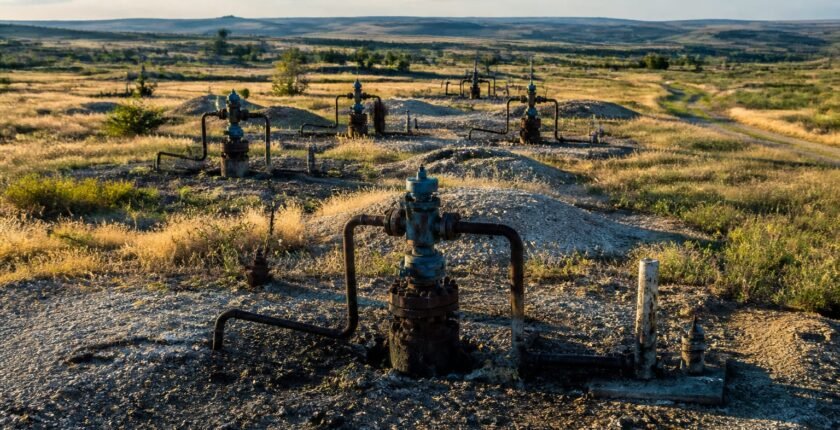
States including Oklahoma and New Mexico are testing whether roughly 3.7 million abandoned oil wells across the United States can be repurposed to extract geothermal heat for buildings and storage. The concept uses existing steel-cased bores: after safety repairs operators pump water down the casing, let it warm against the surrounding rock, and return the fluid to deliver useful heat. The EPA estimates about 3.7 million abandoned wells exist nationally and that 58 percent of them are not plugged; federal plugging costs are typically quoted between $35,000 and $200,000 per well. The pilot work aims to turn a liability — leaking methane and costly plugging backlogs — into a local heat or energy-storage asset.
Key takeaways
- Scale: The EPA estimates roughly 3.7 million abandoned and orphaned oil and gas wells exist in the United States, and 58 percent of those are not plugged.
- Cost dynamic: Federal estimates place the cost to plug a single well between $35,000 and $200,000, which states contrast with the avoided drilling costs of conversion.
- Where pilots are: Oklahoma, New Mexico, Alabama, Colorado and North Dakota have launched studies or proposed pathways to test converting idle wells for geothermal uses.
- Technical limit: Wells drilled to about 4,000 feet in cool sedimentary basins may yield rock temperatures near 100–120°F, typically below conventional turbine thresholds but useful for direct heating.
Table of contents
How a drilled oil bore becomes a heat loop
Repurposing an abandoned oil well for geothermal heat relies on a simple hydraulic loop rather than new drilling. Operators inspect and repair casing and seals, then circulate water down the existing pipe so it warms against the surrounding rock formation and returns to the surface carrying heat. At that point the warmed fluid can drive a small thermoelectric generator or supply direct-use heat to a building, greenhouse or industrial process.
A related route, co-production, applies where a well still produces hydrocarbons alongside hot water: the thermal energy in produced fluids is captured for power or heat while the well continues normal oil or gas operations. Both approaches avoid the largest upfront cost for new geothermal projects—the drill rig and bore—because the pipe is already in the ground and historical well logs and core data reduce exploration risk.
The practical boundary is temperature and flow. Many abandoned wells sit in cool sedimentary basins; a bore drilled to about 4,000 feet may tap rock at roughly 100 to 120 degrees Fahrenheit, enough for heating but generally insufficient for a conventional power turbine. Engineers therefore prioritise direct-use heating and local storage over large-scale electricity generation when assessing candidate wells.
Where pilots, programmes and actors are testing conversion
State-led pilots and federal programmes are the first proving ground. Oklahoma, New Mexico, Alabama, Colorado and North Dakota have launched studies or proposed rules to assess conversions; the Department of Energy’s Wells of Opportunity program is backing conversion models in states including Oklahoma and Pennsylvania. Saeed Salehi, who directed Oklahoma’s pilot before joining an engineering faculty in 2024, has highlighted the advantage of avoiding new-drilling costs when a well is already deep enough.
Geography matters: a deep well in the Permian basin or West Texas carries more geothermal potential than a shallow bore in the Appalachian foothills. The article’s reporting notes an aerial survey in Pennsylvania that found many likely sites where state paperwork exists for only a fraction of the locations, underscoring data gaps pilots must fill before scaling.
Pilots will also clarify operational questions: whether an old hydrocarbon well will hold steady pressure when circulated with water, what remediation and retrofitting costs are typical, and how state rules should define a hybrid category that is neither a standard oil producer nor a conventional geothermal bore.
Limits, costs and who stands to gain
The economics pivot on three facts preserved in state records: many wells lack an owner, federal plugging costs range from $35,000 to $200,000 per site, and a large share of abandoned bores are too cool for turbine-scale power. Where temperatures fall into the 100–120°F band, direct-use heating for a school, greenhouse or district system can be cost effective because it replaces new heating fuel or long-run electric demand without the expense of a new bore.
Workforce continuity is a political selling point: drillers, well-servicing crews and geothermal installers share equipment and skills, which makes the concept attractive across party lines in several states. For landowners and communities, a converted well that heats a local facility changes the asset calculus compared with a leaking, unclaimed pipe that otherwise awaits a plugging budget.
Regulatory and commercial complexity remains. States must draft new rules for hybrid wells, operators must prove long-term integrity for circulating water, and many candidate wells will simply fail a technical screen for temperature or flow. Early pilots will therefore determine whether conversion is a patchwork of local projects or a repeatable, scaleable retrofit model.
| Item | Typical depth | Typical temperature range | Primary use under study |
|---|---|---|---|
| Shallow Appalachian abandoned bore | under 4,000 ft | around 100–120°F | direct-use heating |
| Permian basin deep well | deeper than 4,000 ft | higher than 120°F (site dependent) | potential for higher-grade heat; co-production |
| Active well with hot water (co-production) | varies | site dependent | heat capture plus oil/gas production |
What could move this either way
The case for
- Repurposing avoids major drilling costs when an existing well is already deep enough, lowering upfront capital compared with new geothermal borings.
- Pilots in multiple states and the DOE’s Wells of Opportunity programme provide operational data that can standardise retrofit practices and speed regulatory change.
The case against
- Most abandoned bores lack sufficient temperature or flow for electricity generation, constraining the model to local direct-use applications rather than large-scale power plants.
- Legal and regulatory gaps — who owns an unclaimed well and what rules apply to circulating water in a former hydrocarbon casing — could slow deployment and raise project costs.
What to be careful about
- Many abandoned wells are actively leaking methane or contaminating groundwater; converting without full remediation could leave environmental liabilities intact or increase risks.
- A significant share of wells are too cool or too low-flow for useful heat recovery, so pilots may find a low hit rate among candidate sites.
- Regulatory uncertainty over a hybrid well category could delay projects and add compliance costs if states cannot agree on permitting and liability frameworks.
The bottom line
Repurposing abandoned oil and gas wells is an engineering- and policy-first approach to a long-standing environmental and fiscal problem: the country holds roughly 3.7 million idle bores, many unplgged and leaking methane, and converting suitable ones could supply local heat without new drilling. Early pilots, supported by the Department of Energy’s Wells of Opportunity initiative and state programmes in places such as Oklahoma and New Mexico, will determine whether enough wells meet the temperature, flow and integrity tests to make conversions repeatable. The most likely near-term wins are direct-use heating and local storage rather than utility-scale power, and success will depend as much on regulatory clarity and measured pilot performance as on the geology beneath each site.
What to watch
- Watch for published results from Oklahoma’s pilot conversion projects; no date has been set.
- Watch for any state rulemaking that defines a hybrid well category for heat extraction; no date has been set.
Frequently asked questions
Can an abandoned oil well generate electricity?
Most abandoned wells are not hot enough for conventional electricity generation. Wells drilled to about 4,000 feet in cool sedimentary basins commonly reach roughly 100–120°F, which is useful for direct heating but below the temperature a conventional power turbine typically requires.
How do plugging costs compare with conversion economics?
Federal figures cited in the coverage place the cost to plug a single well between $35,000 and $200,000. Conversion can avoid the cost of drilling a new geothermal bore; Saeed Salehi, who directed Oklahoma’s pilot before joining an engineering faculty in 2024, notes that avoiding new drilling is a core economic advantage, though per-site retrofit costs still need to be documented.
Who must change rules so converted wells can operate?
State regulators must write a hybrid category because existing oil-production rules were not designed for circulating water as a steady thermal loop. The coverage says states are already proposing pathways, but specific rule texts and timelines have not been provided.
Related reading