
Blog
K3 hydrogen tank resembles B-21 stealth bomber
Estimated reading time: 5 minutes · Last updated:
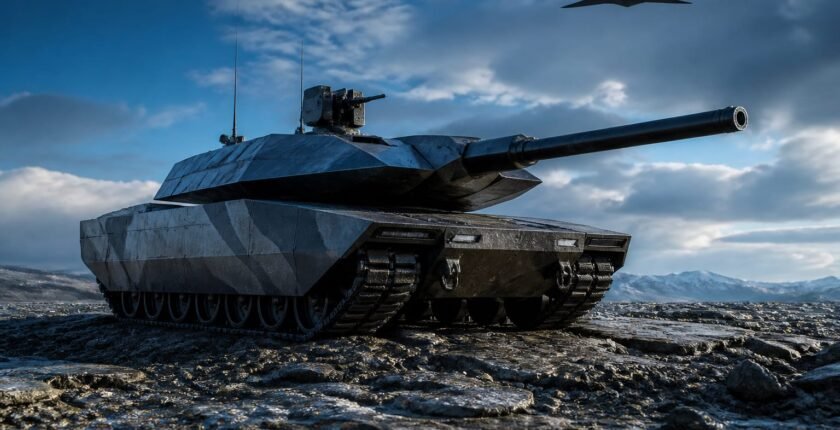
Hyundai Rotem and South Korea’s Agency for Defense Development (ADD) have sketched a next-generation main battle tank concept called the K3 that pairs a hybrid hydrogen-powered engine, AI sensor fusion and stealth geometry. The concept keeps the crew in an armoured capsule, replaces the manned turret with an autoloading unmanned turret and centres a 130mm smoothbore main gun supported by a 30mm secondary cannon. Top speed is listed at 50 mph with a range of 310 miles, and production is not planned until 2040, as first reported by 19FortyFive. The design’s low, angular lines have invited comparisons with the B-21 Raider stealth bomber.
Key takeaways
- Powertrain and range: The K3 uses a hybrid hydrogen-powered engine and a fuel-cell approach that the developer says enables a top speed of 50 mph and a range of 310 miles.
- Main armament: The concept mounts a 130mm smoothbore main gun with an autoloading unmanned turret and a 30mm secondary cannon.
- Sensors and reach: AI-driven sensor fusion combines 360-degree cameras, radar and scout drones to support target identification and firing solutions, with planned BLOS missiles reaching up to 8 kilometers.
- Timeline: Hyundai Rotem and the ADD present the K3 as a concept with mass production expected by 2040.
Table of contents
- Key takeaways
- Why Hyundai Rotem and ADD chose hydrogen propulsion
- AI, drones and the unmanned turret change how targets are found and engaged
- Stealth geometry, new armour and active defenses for survivability
- Concept status, timeline and practical limits
- Case for and against the K3 concept
- What to be careful about
- Frequently asked questions
Why Hyundai Rotem and ADD chose hydrogen propulsion
The K3 concept replaces a conventional diesel powertrain with a hybrid hydrogen-powered engine to cut heat and noise. Hydrogen fuel cells and associated hybrids typically produce less hot exhaust and lower acoustic output than diesel engines, which the designers highlight as a route to reduced infrared and acoustic detectability on modern battlefields.
That quieter, cooler signature is the core claim behind the propulsion choice: it seeks to shrink the tank’s thermal and acoustic footprint so infrared sensors and acoustic detection are less likely to locate it. Hyundai Rotem says the propulsion approach still delivers mobility — the concept’s published figures note a top speed of 50 mph and a range of 310 miles — while promising lower maintenance needs in some operating profiles.
AI, drones and the unmanned turret change how targets are found and engaged
Artificial intelligence is presented as the K3’s operational centre: an AI fire-control and "sensor fusion" system ingests data from 360-degree cameras, radar and external scout drones to detect, track and prioritise threats. The system is described as taking a firing solution from identification through to engagement, reducing the time between target acquisition and weapon delivery.
The weapons suite is built around an unmanned, autoloading turret with a 130mm smoothbore main gun and a 30mm secondary cannon, plus Beyond-Line-of-Sight missiles with ranges quoted up to 8 kilometers. Off-board sensors — notably scout drones — extend the crew’s vision beyond line of sight, feeding the AI so the vehicle can shoot at greater ranges while keeping the crew protected inside an armoured capsule.
Stealth geometry, new armour and active defenses for survivability
Design sketches and developer statements emphasise a low profile, radar-absorbent materials and modular composite armour aimed at lowering radar, thermal and acoustic signatures. The concept pairs passive stealth geometry with active measures named in the specifications, including an Active Protection System (APS), Directional Infrared Countermeasures (DIRCM) and electronic countermeasures intended to defeat anti-tank guided missiles, rockets and hostile drones.
Crew survivability is tackled by moving the crew into an isolated armoured capsule and carrying ammunition in the unmanned turret area. Hyundai Rotem says the layout borrows protection ideas such as a titanium "bathtub" capsule used in other modern designs, and the K3 is expected to keep the hydropneumatic suspension legacy of the K2 Black Panther for off-road performance.
Concept status, timeline and practical limits
The K3 is a concept, and Hyundai Rotem and the ADD place mass production no earlier than 2040. That extended timeline leaves open questions about prototype testing, doctrine changes and supply-chain adaptations required to field hydrogen-powered armoured units at scale.
The concept lists technological responses to modern weapons, but it does not publish detailed data on hydrogen refuelling logistics, fuel-cell types, demonstrator trials or maintenance requirements. Those gaps matter: adopting hydrogen shifts operational logistics, creates new vulnerability points at refuelling hubs and requires validated field trials before an army can accept a wholesale replacement for diesel-powered MBTs.
Case for and against the K3 concept
The case for
- Hydrogen propulsion and hybridisation should lower thermal and acoustic signatures, improving survivability against infrared and acoustic detection when those systems work as intended, and the concept lists a 50 mph top speed and a 310-mile range to preserve mobility.
- AI-driven sensor fusion and integration with scout drones promise faster target detection and longer engagement ranges; the listed weapons suite (130mm main gun, 30mm secondary, BLOS missiles up to 8 km) would materially raise lethality if the software and munitions mature as planned.
The case against
- The K3 is only a concept with production not planned until 2040, so prototypes, testing and logistics remain unresolved and could delay or change the design substantially.
- Fielding hydrogen-powered armoured formations requires new refuelling infrastructure and safety protocols; those logistical and sustainment challenges are not detailed in the published concept material.
What to be careful about
- No prototype performance data published: the concept gives mobility and range figures but no independent trial results.
- Hydrogen refuelling and supply-chain needs are not specified, creating a practical deployment risk if logistics are not solved.
- AI reliance raises vulnerability to electronic attack or sensor deception; the concept lists countermeasures but provides no operational testing evidence.
- Long development timeline to 2040 creates risk that threat and sensor technology will change before production begins.
The bottom line
The K3, as presented by Hyundai Rotem and the ADD, packages hydrogen propulsion, AI-driven sensor fusion and stealth geometry around a heavy new gun to reimagine the main battle tank. The concept lists concrete figures — a 130mm main cannon, a 50 mph top speed, a 310-mile range and missiles reaching 8 kilometers — but remains a sketch until demonstrator tests and logistics plans appear. The most immediate questions are practical: how hydrogen refuelling will work for armoured formations, what independent trials will show about signature reduction, and whether AI and active defenses can be proven under combat-like conditions before any production decision toward 2040.
What to watch
- Watch for Hyundai Rotem or the ADD to publish prototype test results; no date has been set.
- Watch for a formal mass-production decision or timeline update for the K3 around 2040.
Frequently asked questions
Who is developing the K3 tank?
The K3 is a concept developed by Hyundai Rotem in partnership with South Korea’s Agency for Defense Development (ADD).
What propulsion and range figures are listed for the K3?
The published concept pairs a hybrid hydrogen-powered engine with figures listing a top speed of 50 mph and a range of 310 miles.
What armament and sensors does the concept include?
Design details list a 130mm smoothbore main gun in an autoloading unmanned turret, a 30mm secondary cannon, a planned .50 caliber option, and BLOS missiles with ranges up to 8 kilometers supported by AI sensor fusion and scout drones.
Related reading