
Blog
Federal $250M Backs $1.2B Colorado–Texas Transmission Link
Estimated reading time: 5 minutes · Last updated:
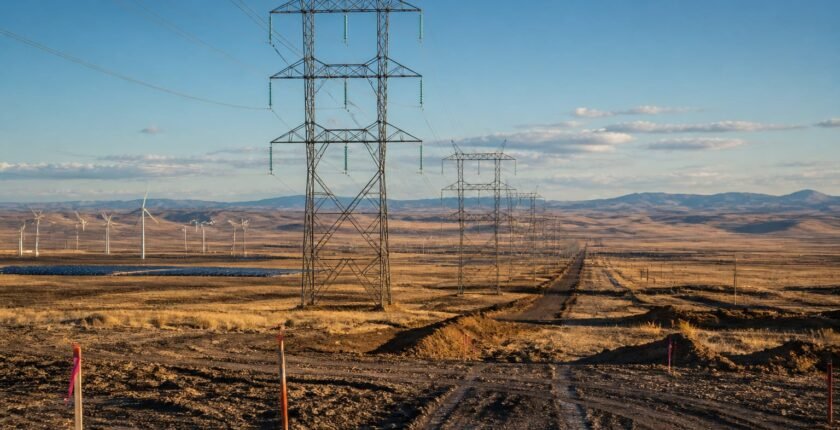
Xcel Energy is moving forward with a roughly $1.2 billion transmission upgrade to tie its Colorado system to its Texas affiliate and open access to the Southwest Power Pool. The work will raise the tie-line’s transfer capability from 210 MW to 700 MW, with room to expand to 2,000 MW in later phases, and will add 12 miles of new transmission while replacing 16 miles of existing line in Colorado. The U.S. Department of Energy has awarded $250 million through its SPARK (Speed to Power) program to support the project, as first reported by The Colorado Sun.
“This gives us a much larger geographical footprint for access to wind resources, when you look at the enormous wind resources in the Southwest Power Pool,”
Will Toor, executive director of the Colorado Energy Office
Key takeaways
- Project and federal grant: Xcel Energy will build a $1.2 billion transmission upgrade linking Colorado and Texas, supported by a $250 million DOE SPARK award.
- Capacity increase: The tie-line’s transfer capability will increase to 700 megawatts from 210 MW, with an eventual expansion option to 2,000 MW.
- Route and work: The project covers the Finney, Texas–Lamar corridor and involves 12 miles of new transmission and replacement of 16 miles of existing lines in Colorado.
- Cost allocation and scope: DOE provides $250 million; the remaining roughly 80% of project cost will be recovered from electric customers, and approvals are required from the Colorado Public Utilities Commission and FERC.
Table of contents
What the upgrade will change on the line
Xcel Energy’s plan targets the transmission tie connecting Finney, Texas, and Lamar, Colorado. Engineering work will add 12 miles of new transmission and replace 16 miles of older line inside Colorado with conductors and structures rated to carry substantially more power. The immediate capability gain is from 210 MW to 700 MW; Xcel Energy materials say the corridor can be fitted later to move up to 2,000 MW with further investment. The project also intends to use high‑voltage direct‑current technology on parts of the route to improve long‑distance transfer efficiency and to integrate with Xcel’s existing Power Pathway project.
Why access to the Southwest Power Pool matters
The tie into Southwestern Public Service will let Xcel Energy’s Colorado customers draw power from the Southwest Power Pool, a large regional grid operator. SPP’s footprint covers all or parts of 17 states and manages about 73,000 miles of transmission and roughly 65,000 MW of generating capacity, including about 35,000 MW of wind across 231 wind farms. Xcel’s Colorado subsidiary will use Southwestern Public Service transmission to reach SPP paths into Oklahoma and Texas, unlocking wind resources that Xcel Energy says are cheaper and more abundant than some local options. SPP director of seams strategy Casey Cadle told reporters the pool is studying ways to expand east‑west capacity and that a preliminary analysis shows about 5,500 MW of additional interconnection could be created.
Who pays, who spoke, and the federal role
The Department of Energy announced a $250 million award on Sept. 24, 2026, under the SPARK (Speed to Power) program, which is distributing $1.9 billion across 31 grid projects in 26 states. Xcel officials and Colorado leaders framed the grant as a lever to reduce customer billing impacts: Public Service of Colorado CEO Robert Kenny called the $1.2 billion figure an approximation and said the federal check will lower the amount passed to ratepayers. Governor Jared Polis and Will Toor, executive director of the Colorado Energy Office, said the line is essential for affordability and reliability. DOE Assistant Secretary Timothy J. Walsh described the upgrades as improving access to secure, reliable power during severe weather. Xcel is the largest Colorado provider with 1.6 million customers, and its Southwestern Public Service affiliate serves 393,000 customers in Texas and New Mexico.
Regulatory and technical hurdles that remain
The project is interstate and must win approvals from both the Colorado Public Utilities Commission and the Federal Energy Regulatory Commission before construction can proceed. That regulatory path will determine timing and the final allocation of costs to customers; Xcel has previously pursued accelerated routing decisions and faced state-level legal challenges. On the technical side, east–west transfers between the Eastern and Western interconnections are limited today: there are only six DC tie lines, totaling about 1,300 MW of capacity, and SPP manages three of those ties with roughly 510 MW. Coordinating seams, interconnection studies and later upgrades to reach the project’s 2,000 MW potential will require additional SPP analysis and planning, and Cadle has said the board recently authorized a study to unlock more east–west capacity.
| Attribute | Today | Planned upgrade | Notes |
|---|---|---|---|
| Transfer capacity | 210 MW | 700 MW (expandable to 2,000 MW) | Immediate gain; later expansion option |
| Colorado linework | 16 miles existing replaced | 12 miles new + replaced 16 miles | Work within Finney–Lamar corridor |
| Federal funding | — | $250 million | DOE SPARK award announced Sept. 24, 2026 |
| Connection | Regional ties only | Linked into SPP via Southwestern Public Service | Access to SPP’s 65,000 MW capacity |
How the project could succeed or stall
The case for
- The $250 million SPARK award reduces the amount that must be recovered from customers and speeds procurement and construction readiness.
- Access to SPP’s fleet — about 65,000 MW of generation including 35,000 MW of wind — can lower system costs and bring more renewables into Colorado’s markets.
- Tying into Xcel’s $1.7 billion Power Pathway gives the upgrade an existing transmission backbone and an efficient route to Front Range load centers.
The case against
- Regulatory approvals from the Colorado Public Utilities Commission and FERC are required and could delay or alter the project’s scope and cost allocation.
- Ratemaking will place roughly 80% of the $1.2 billion cost onto customers absent additional grants or offsets.
- Seams and technical limits remain: current east–west DC ties total about 1,300 MW and coordination will be needed to realize any 2,000 MW expansion.
What to be careful about
- Significant customer rate impact because roughly 80% of the $1.2 billion project cost will be recovered from electric customers under current plans.
- Regulatory delay or modification — the project still needs Colorado PUC and FERC approvals and could face contested proceedings.
- Technical and interconnection risk tied to seams between interconnections and limited existing DC tie capacity (~1,300 MW), which could constrain immediate transfers.
- Legal or routing disputes given past contested proceedings on Xcel’s line siting could add months to the schedule.
The bottom line
The grant from DOE’s SPARK program turns a technical corridor upgrade into a near-term modernization project with policy momentum: it raises transfer capacity on the Finney–Lamar tie-line to 700 MW and creates a path for Colorado to draw on SPP’s large fleet of wind and other generation. The federal check reduces the immediate customer bill impact, but the bulk of the $1.2 billion cost still depends on state and federal regulatory approvals and future planning to unlock any 2,000 MW potential. The timeline and final customer cost hinge on filings at the Colorado Public Utilities Commission and FERC and on the outcome of ongoing SPP seam studies.
What to watch
- Watch for the Colorado Public Utilities Commission filing and its decision on the project’s route and cost recovery; no date has been set.
- Watch for a FERC interstate transmission filing and action on rate recovery and siting; no date has been set.
- Watch for the Southwest Power Pool study results on east–west capacity expansion; no schedule has been published.
Frequently asked questions
How much federal funding did the project receive?
The Department of Energy awarded $250 million from its SPARK (Speed to Power) program on Sept. 24, 2026; that grant is part of a $1.9 billion SPARK portfolio funding 31 projects.
What will the tie-line’s transfer capacity be after the upgrade?
The project will raise the tie-line’s capability from 210 MW to 700 MW immediately, and the corridor is designed so future upgrades could increase capacity to 2,000 MW.
Who ultimately pays for the rest of the project cost?
DOE’s $250 million covers roughly one-fifth of the $1.2 billion estimate; the remaining roughly 80% will be recovered from electric customers under Xcel’s stated plan, subject to regulatory approval.
Related reading
This article is information, not financial advice. Anyone acting on it should do their own checks.