
Blog
1GWh Stoney Creek BESS gets construction approval in NSW
Estimated reading time: 4 minutes · Last updated:
A 125 MW / 1,000 MWh battery energy storage system called Stoney Creek has received New South Wales planning approval and may begin construction near Narrabri. Energy Vault owns the project and has engaged Enervest as developer; the scheme has obtained a 14-year Long-Term Energy Service Agreement (LTESA) awarded by AEMO Services Limited and is designed to provide eight hours of dispatchable storage. Work at the site and mobilisation are planned to commence in the fourth quarter of 2026, with commercial operations targeted for the first half of 2028. The approval clears a major regulatory milestone for the project and was first reported by pv-magazine-australia.com.
We are progressing a large-scale storage project toward delivery while retaining the long-term economics through ownership and operation.
Marco Terruzzin, Energy Vault Chief Revenue OFficer
Key takeaways
- The 125 MW / 1,000 MWh Stoney Creek BESS has secured New South Wales planning approval for construction near Narrabri.
- On-site works and mobilisation are slated to begin in the fourth quarter of 2026, with commercial operations aimed for the first half of 2028.
- The project will use approximately 191 containerised lithium-ion battery units and 64 inverters and will connect to the Narrabri 132/66 kV substation.
- A 14-year LTESA awarded through AEMO Services Limited under the NSW Electricity Infrastructure Roadmap supports projected annual recurring revenue of $36–$43 million (USD $25–$30 million).
Table of contents
What the approval covers and where the system will connect
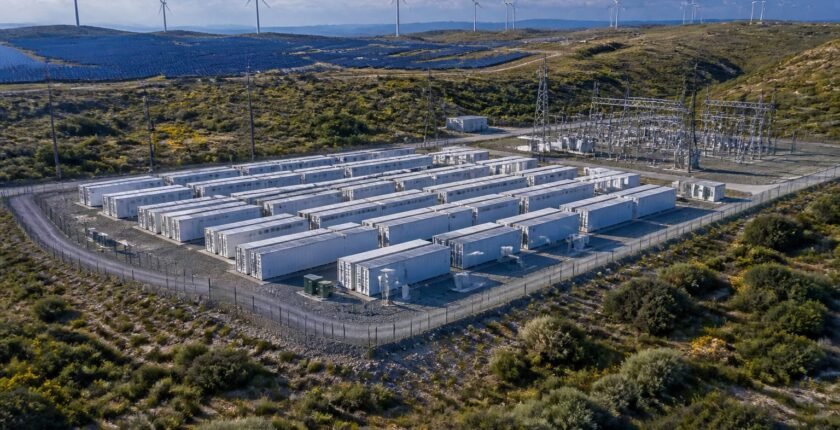
The planning approval covers the Stoney Creek Battery Energy Storage System, a 125 MW / 1,000 MWh facility sited on a roughly 4-acre footprint near Narrabri, about 525 kilometres northwest of Sydney. The shift-in-place design calls for containerised modules rather than a single plant building: approximately 191 battery containers and 64 inverters are listed in project documents, and the electrical hook-up is planned at the nearby Narrabri 132/66 kV substation. The 125 MW / 1,000 MWh Stoney Creek BESS is designed to provide eight hours of dispatchable storage capacity, which defines how the asset can be scheduled into energy and capacity services.
Timeline, delivery partners and operations software
Energy Vault owns the project and has contracted Enervest to develop and deliver the site. Work at the location and mobilisation are due to start in the fourth quarter of 2026, with commercial operations expected in the first half of 2028. Energy Vault plans to operate the asset using its VaultOS energy management platform to manage market participation, optimise dispatch and oversee lifecycle operations once the battery energy storage system is operational. Energy Vault describes the delivery approach as a build, own and operate model that retains long-term revenue with the owner-operator.
How the LTESA underpins the project economics
The project’s revenue case rests on a 14-year Long-Term Energy Service Agreement (LTESA) awarded through AEMO Services Limited under the NSW Electricity Infrastructure Roadmap. That contract, together with anticipated merchant income, is the basis for projected annual recurring revenue of about $36–$43 million (USD $25–$30 million) once the facility is operational. The LTESA provides a predictable revenue stream for a defined period, which in turn supports financing and long‑term ownership, while merchant market exposure will continue alongside contracted payments.
Outlook — the case for and against
The case for
- A 14-year LTESA awarded through AEMO Services Limited provides a multi-year contracted revenue backbone that improves bankability and underpins projected annual recurring revenue of $36–$43 million (USD $25–$30 million).
- Connection to the nearby Narrabri 132/66 kV substation and use of VaultOS for market participation reduce operational and integration risk and should help the asset capture value in energy and ancillary markets.
The case against
- Construction and commissioning risk could delay the Q4 2026 mobilisation and the H1 2028 commercial target, which would push out revenue flows and raise short-term financing costs.
- Merchant revenue remains exposed to wholesale market conditions beyond the LTESA window; weaker prices or changed market dynamics would reduce the total return to the owner-operator.
What to be careful about
- Schedule slippage during site works and mobilisation in Q4 2026 could delay the H1 2028 commercial operation date.
- Procurement or supply-chain issues for the approximately 191 battery containers and 64 inverters could increase costs or extend delivery times.
- Variation in merchant market prices outside the contracted LTESA term could materially affect total project revenue despite the 14-year contract.
The bottom line
Planning approval clears a major hurdle for the 125 MW / 1,000 MWh Stoney Creek BESS and lets Energy Vault and Enervest proceed to the mobilisation phase planned for Q4 2026. The 14-year LTESA awarded through AEMO Services Limited gives the project a multi-year contracted revenue stream and the stated $36–$43 million per year projection frames the economics for lenders and investors; however, delivery risk, supply-chain pressure and merchant-price exposure remain material to the ultimate return profile. Monitoring construction progress and the handover to VaultOS-managed operations will show whether the timetable and revenue assumptions hold.
What to watch
- Watch for site works and mobilisation to begin in Q4 2026 and any public update from Energy Vault or Enervest on an exact start date.
- Watch for the start of commercial operations targeted in H1 2028 and for the first revenue reporting tied to the 14-year LTESA.
Frequently asked questions
What is the capacity and how long can Stoney Creek discharge?
Stoney Creek is a 125 MW / 1,000 MWh battery energy storage system designed to deliver eight hours of dispatchable storage.
When will construction and operations occur?
Preparatory site activity and mobilisation are planned to start in the fourth quarter of 2026, and commercial commissioning is expected in the first half of 2028.
How will the project be paid and what revenue is expected?
A 14-year Long-Term Energy Service Agreement (LTESA) awarded through AEMO Services Limited supports the project and, combined with merchant income, underpins projected annual recurring revenue of $36–$43 million (USD $25–$30 million).
Related reading