
Blog
Museum of Flight to Install 1,863 Solar Panels
Estimated reading time: 4 minutes · Last updated:
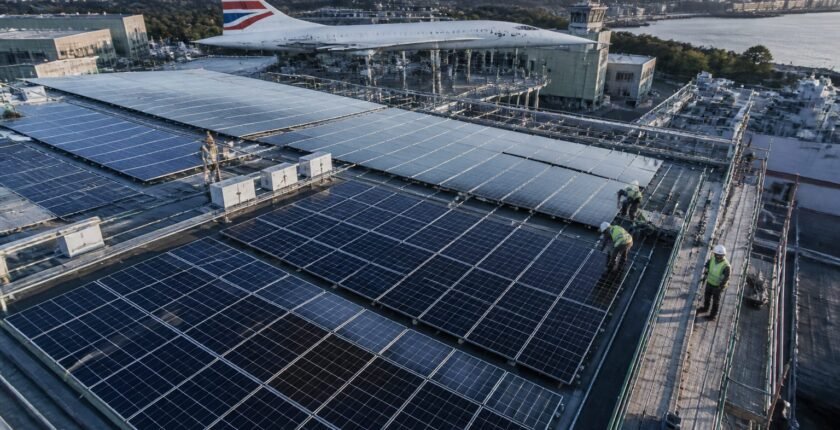
The Museum of Flight in Seattle begins rooftop work on Oct. 5 to place 1,863 solar panels on its nine‑story, 140,000‑square‑foot Aviation Pavilion, a program the museum says will meet 100 percent of the West Campus’s annual electricity needs. Large cranes are scheduled to lift panels onto the three‑acre roof between Oct. 5 and Oct. 7, with Oct. 6 expected to be the busiest day of the lifts. Crews will then spend approximately two months installing arrays and tying the system into the museum’s electrical infrastructure. The project carries a $4.02 million price tag and includes a $1,237,323 award from the Washington State Department of Commerce, funded through the Climate Commitment Act, as first reported by Vintage Aviation News.
This project ensures that future generations will experience the wonder of flight in a facility that reflects responsible stewardship of our planet,
Matt Hayes, President and CEO, The Museum of Flight
Key takeaways
- Panels and timeline: The installation will place 1,863 solar panels on the Aviation Pavilion roof starting Oct. 5, with major crane lifts slated Oct. 5–7 and about two months of installation work to follow.
- Cost and grant: The project costs $4.02 million in total and received a $1,237,323 award from the Washington State Department of Commerce under the Climate Commitment Act, covering roughly one‑third of the budget.
- Energy outcome: Once complete the array is projected to supply 100 percent of the museum’s West Campus annual energy needs, with any surplus exported to the public grid.
Table of contents
How the roof installation will be staged
Work begins with a concentrated lifting operation on Oct. 5 and continues through Oct. 7 as crews place modules on the roof of the Aviation Pavilion. Large cranes will hoist the arrays onto the nine‑story structure that sits on a three‑acre footprint; museum staff expect Oct. 6 to present the most active lifting. After the panels are staged on the roof, installation teams will mount racking, attach inverters and complete electrical connections before integrating the system with the building distribution and the meter to the public grid.
Museum crews and contractors plan an on‑roof schedule that the museum says will take approximately two months to finish the physical installation and integration work. That timetable covers module mounting, wiring, inverter commissioning and standard inspection steps required by the local utility and building officials. During the lift window the museum has invited media to observe the crane operations on site.
Funding, costs and the stated energy promise
The museum lists the overall project cost at $4.02 million. A Washington State Department of Commerce grant of $1,237,323, funded through the Climate Commitment Act, underwrites roughly one‑third of that amount. The museum says the state award was a key enabler for moving the design into procurement and installation.
The Museum of Flight projects the completed array will meet 100 percent of the West Campus’s annual electricity needs and return any excess generation to the public power grid. The installation sits atop the 140,000‑square‑foot Aviation Pavilion, a large volume display hall that houses historic aircraft and spacecraft; reducing on‑site electricity purchases is presented as a route to lower operating costs and advance the museum’s sustainability goals.
Heritage, visibility and operational risks
The Aviation Pavilion is one of the largest free‑span aircraft display structures in the United States, and placing panels on its roof makes the project highly visible to visitors and neighbours. The museum positions the work as both an environmental upgrade and one of its most conspicuous infrastructure changes in recent years. Because historic aircraft and delicate exhibits occupy the building below, the installation plan includes measures to protect collections during crane lifts and rooftop work.
Practical risks include weather delays in Seattle’s autumn, the need for close coordination with the local utility for inspection and interconnection, and the potential for cost increases during installation. The museum has not published details such as the installer’s name, the expected annual generation in megawatt‑hours, or the panels’ rated wattage; those operational specifics are necessary to verify the project’s long‑term performance claims.
| Item | Figure | Note |
|---|---|---|
| Number of panels | 1,863 | Roof array planned for the Aviation Pavilion |
| Project cost | $4.02 million | Total budget reported by the museum |
| State grant | $1,237,323 | Award from Washington State Department of Commerce (Climate Commitment Act) |
| Pavilion area | 140,000 sq ft | Existing building area that will carry the array |
Two sides of the outcome
The case for
- If commissioning and interconnection go smoothly, the array could eliminate the museum’s annual grid purchases for the West Campus and lower operating costs as promised.
- The visible installation creates a public demonstration of institutional sustainability that may unlock future state or local funding for additional decarbonisation work.
The case against
- Delays in permitting, inspection or utility interconnection could push commissioning past the roughly two‑month installation window and increase costs.
- Unplanned weather, supply or labour disruptions during rooftop work could raise the final installed cost above the $4.02 million budget and reduce near‑term emissions savings.
What to be careful about
- Damage to historic aircraft or exhibits during crane lifts or rooftop works if protection and exclusion zones are insufficient.
- Weather in October–December could delay lifts and installation, extending contractor hours and raising costs.
- Utility inspection or interconnection issues could postpone export of surplus electricity to the public grid.
- Budget overruns if unforeseen structural or electrical upgrades are required on the Pavilion roof.
The bottom line
The Museum of Flight’s rooftop array is a compact, well‑defined decarbonisation project: 1,863 panels on a 140,000‑square‑foot Pavilion, a $4.02 million budget and a $1,237,323 state award. If installation, commissioning and utility interconnection proceed on the museum’s schedule and within budget, the system should reduce on‑site electricity purchases as promised. Key operational details still missing from public materials are the installer, panel specifications and an annual generation estimate; those items will determine how quickly the museum realises operating‑cost savings and emissions reductions.
What to watch
- Watch for the museum’s formal completion announcement and commissioning date; no firm completion date has been set.
- Watch for the utility’s interconnection and inspection sign‑off before the system exports surplus electricity; no date has been published.
Frequently asked questions
How many panels are being installed and when does work start?
The museum is installing 1,863 solar panels and began lifting modules onto the Aviation Pavilion roof on Oct. 5, with major crane activity scheduled through Oct. 7.
How much does the project cost and who paid for it?
The total project budget is $4.02 million and it includes a $1,237,323 award from the Washington State Department of Commerce funded through the Climate Commitment Act, which the museum says covers roughly one‑third of the cost.
Will the array meet the museum’s energy needs?
The museum projects the rooftop system will provide 100 percent of the West Campus’s annual electricity needs and export any excess to the public grid; the museum has not published an annual MWh estimate to verify that claim.
Related reading