
Blog
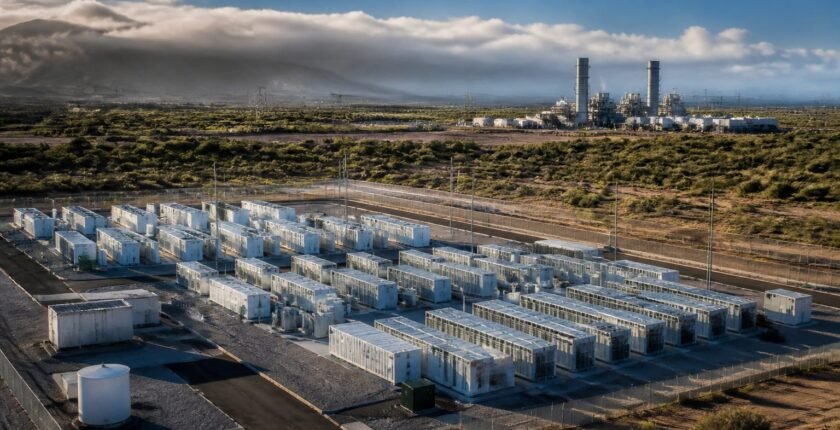
Battery storage beats gas peakers? Is Canada betting wrong
Estimated reading time: 6 minutes · Last updated:
Wood Mackenzie finds four-hour battery storage has a lower lifetime cost than open-cycle gas turbines in 43 markets, a milestone that changes how grids meet short demand spikes. That shift widens the market for solar, electric vehicles and heat pumps by making stored electricity cheaper and more dependable. Canada already has a federal heat-pump program meant to help roughly 100,000 households a year over eight years, but Statistics Canada records about nine per cent of homes using heat pumps as their primary system in 2023. This piece explains why the storage cost crossover matters, how regional manufacturing shapes the outcome, and what the numbers imply for Canadian policy and competitiveness.
Key takeaways
- Wood Mackenzie finding: Wood Mackenzie reports four-hour batteries now beat open-cycle gas turbines on lifetime cost in 43 markets.
- China’s cost advantage: Wood Mackenzie finds China’s grid-scale storage costs are more than 55 per cent below the Asia Pacific average.
- Canada heat-pump program scale: Ottawa’s heat-pump program is designed to help roughly 100,000 households per year over eight years — about 10 per cent of the roughly one million annual heating-system replacements.
- EV uptake: Battery-electric and plug-in hybrid vehicles were 9.5 per cent of Canada’s new vehicle registrations in 2025, down from 14.6 per cent in 2024.
Table of contents
- Key takeaways
- Why four-hour batteries now undercut gas peakers
- Regional winners: China, sunshine and the limits of policy
- What the numbers mean for Canada’s choices
- The electrification feedback loop and the policy lever
- How falling storage costs could play out
- What to be careful about
- Frequently asked questions
Why four-hour batteries now undercut gas peakers
Wood Mackenzie’s comparison centers on lifetime cost per unit of electricity. Two broad forces explain the crossover: rising costs for turbine-based options and falling costs for batteries. On the turbine side, capital pressures from supply-chain limits and volatile fuel prices have pushed open-cycle gas turbine economics upward. On the battery side, expanding global manufacturing capacity and learning-by-doing are driving unit costs down, particularly for four-hour systems that meet peak-duration needs.
That matters because peakers run only during short demand spikes; four-hour storage can replace many of those runs while also providing fast response and energy shifting for solar and wind. The study covered 43 markets and found batteries cheaper on a lifetime basis in nearly every one, which alters how grid planners and utilities will value capacity and ancillary services going forward.
Regional winners: China, sunshine and the limits of policy
Regional differences remain large. Wood Mackenzie quantifies China’s advantage: grid-scale storage costs there are more than 55 per cent below the Asia Pacific average. That manufacturing scale is changing prices well beyond China’s borders. For the rest of Asia Pacific, Wood Mackenzie models a regional average falling from US$134 per megawatt-hour to US$92 by 2036.
In the Middle East and Africa, abundant solar resource already pairs cheaply with storage; Wood Mackenzie forecasts four-hour storage costs will fall another 33 per cent by 2035 in those modeled markets. In contrast, Japan, Australia and the Philippines face higher import duties and installation costs, and North American outcomes depend heavily on tax credits, trade measures and local supply chains. The key point is that technology economics interact with industrial policy: where manufacturing scale exists, decline in storage costs accelerates.
What the numbers mean for Canada’s choices
Canada’s policy mix is the practical question raised by falling storage costs. Ottawa’s heat-pump program aims to convert roughly 100,000 households a year over eight years; that is modest next to the roughly one million Canadian homes that replace heating systems annually. Statistics Canada put heat-pump primary use at about nine per cent of households in 2023, far below Nordic peers, where the IEA reported 60 per cent of buildings in Norway and more than 40 per cent in Sweden and Finland equipped with heat pumps in 2022.
Electrification of transport also lags: combined battery-electric and plug-in hybrids were 9.5 per cent of Canadian new registrations in 2025, down from 14.6 per cent in 2024, while China reached nearly 55 per cent and Europe 28 per cent in 2025. Those gaps matter because cheaper storage expands the value of renewables, heat pumps and EVs simultaneously. If policy remains cautious, Canada risks exporting fewer goods and fuels to markets whose demand is electrifying.
The electrification feedback loop and the policy lever
Battery cost declines do more than replace peakers: they strengthen the business case for solar, EVs and electric heating by reducing intermittency and offering firm capacity. The effect is mutually reinforcing — better batteries raise returns on solar and EV investments, which in turn raise demand for more storage and grid flexibility.
Policy choices accelerate or slow that loop. Tax credits and industrial policy can amplify domestic deployment and local manufacturing. Conversely, trade barriers, supply constraints and political support for incumbent fossil sectors can blunt the momentum. The material names elected officials whose positions align with combustion-sector interests; those political realities shape the pace at which Canada adopts the technologies that cheaper batteries make more valuable.
| Region | Reported metric | Reference figure | Time horizon / note |
|---|---|---|---|
| China | Relative cost vs Asia Pacific average | More than 55% below | Wood Mackenzie |
| Rest of Asia Pacific (ex. China) | Regional average per MWh | US$134 → US$92 | By 2036, Wood Mackenzie |
| Middle East & Africa | Projected additional cost decline | 33% fall | By 2035, Wood Mackenzie |
How falling storage costs could play out
The case for
- Cheaper four-hour batteries lower the lifetime cost of meeting peak demand, reducing the need for open-cycle gas turbines and supporting higher renewable penetration.
- Chinese manufacturing scale and competitive supplies could bring regional averages down to US$92 per MWh in Asia Pacific by 2036, widening deployment.
- Tax credits and rising data-centre demand in North America can tilt capital away from gas toward storage and renewables, strengthening domestic demand for battery projects.
The case against
- Trade restrictions, import duties and domestic supply-chain bottlenecks could keep installation and capital costs high in countries like Japan, Australia and parts of North America.
- Political support for oil and gas and modest federal programs risk slow uptake of heat pumps and EVs, which would blunt the system-wide gains from cheaper storage.
- Dependence on a small set of manufacturers risks bottlenecks and geopolitical exposure that could reverse near-term cost declines.
What to be careful about
- Canada’s modest adoption rates for heat pumps (about nine per cent of homes in 2023) and the 9.5 per cent share of electrified new vehicles in 2025 risk slower domestic demand growth for electrified products.
- Industrial policy that fails to support domestic battery manufacturing may leave Canada reliant on external suppliers and vulnerable to trade shifts.
- A continued policy tilt toward fossil-fuel infrastructure could produce economic exposure as global demand for oil and gas contracts with electrification in buyer markets.
The bottom line
Wood Mackenzie’s cost crossover for four-hour batteries rewrites where short-duration capacity will come from in many markets. The economics amplify renewable value and make electrification across heat and transport more attractive, but the gains are neither automatic nor uniform. Canada’s current programs and adoption rates — a federal heat-pump effort covering roughly 100,000 homes a year and a 9.5 per cent share of electrified new-vehicle registrations in 2025 — fall short of what accelerated electrification will demand. If policymakers want Canada to sell into an electrifying global market, they must raise ambition on deployment and industrial strategy while the technology and global supply dynamics are still shifting in favour of electrons.
What to watch
- Watch Wood Mackenzie’s projection for four-hour storage costs to 2035; the study models a further fall in some markets by 2035.
- Watch the regional average fall from US$134 to US$92 per megawatt-hour by 2036 in Wood Mackenzie’s Asia Pacific modelling.
- Watch Ottawa’s eight-year heat-pump programme as it rolls out; no single milestone date for nationwide conversion targets has been set in the material.
Frequently asked questions
How broadly does Wood Mackenzie find batteries cheaper than gas peakers?
Wood Mackenzie reports that four-hour battery storage has a lower lifetime cost than open-cycle gas turbines in 43 markets, making storage competitive across the majority of modelled regions.
What scale is Canada’s heat-pump support compared with replacement cycles?
Ottawa’s program targets roughly 100,000 household conversions per year over eight years, while about one million Canadian homes replace heating systems annually, so the program covers an estimated 10 per cent of yearly replacements.
Which regions show the biggest storage-cost declines?
Wood Mackenzie highlights China as more than 55 per cent below the Asia Pacific average on grid-scale storage costs, and projects a regional average decline from US$134 to US$92 per megawatt-hour by 2036, with a 33 per cent fall modelled for parts of the Middle East and Africa by 2035.
Related reading