
Blog
World’s Tallest Wind Turbine Reaches 365 m in Germany
Estimated reading time: 5 minutes · Last updated:
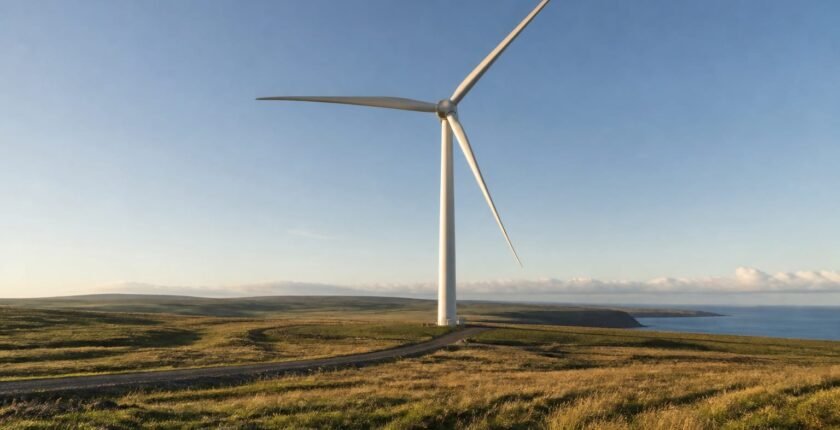
A wind turbine in Germany reached its full height of 365 m (1,197 ft) and is rated at 3.8 megawatts; GICON says the structure should deliver roughly double the annual energy compared with a conventional turbine of the same rotor diameter. The installation, linked to GICON’s announcement, marks a manufacturer step toward turbines GICON says could exceed 7 MW in future versions and, as first reported by Transport Evolved, is discussed alongside recent transport product news (BMW’s iX4 and Pebble’s 2027 Flow) and the US policy backdrop that Environment America’s analysis says is shifting capacity toward planned gas plants rather than wind.
Key takeaways
- Record turbine: A turbine in Germany reached 365 m (1,197 ft) in height and is rated at 3.8 MW, and its maker says it can produce about twice the energy of a conventional turbine with the same rotor size.
- Manufacturer plans: The maker says future sibling turbines will be rated at more than 7 MW.
- Pebble Flow update: Pebble’s 2027 Flow travel trailer carries a 45 kWh LFP battery pack, adds a twin bed option and introduces a 40 kW Boost Mode.
- BMW iX4 specs: BMW’s iX4 50 xDrive is estimated to offer up to 514 miles (828 km) WLTP range from a 108.7 kWh usable, 800 V battery pack.
- US planning shift: Environment America’s analysis of EIA data reports planned US gas capacity now at 60.4 GW, a 44% increase since December.
Table of contents
- Key takeaways
- What reached 365 m and who announced it
- Why extra height matters for energy capture
- Where this sits in current US energy planning and why it matters
- Transport and storage items linked to power demand
- How the case for and against faster wind deployment stacks up
- What to be careful about
- Frequently asked questions
What reached 365 m and who announced it
A new wind tower in Germany reached a completed height of 365 metres (1,197 feet) and is rated at 3.8 megawatts. The installation is associated with GICON’s announcement and the company is identified in the project link published alongside coverage. The press material says the tower accesses steadier winds at its elevation and that the specific design can deliver roughly twice the energy of a conventional turbine with the same rotor diameter.
That performance claim comes from the turbine’s maker; it is a manufacturer specification rather than an independently validated output figure. The tower’s 365 m height is the simple, verifiable milestone: it places the hub and nacelle substantially above typical onshore machines and even above many offshore installations, which is the basis for the maker’s access-to-better-wind argument.
Why extra height matters for energy capture
Wind speed typically increases with altitude and higher, more consistent wind reduces variability in output. Raising the rotor and hub increases mean wind speed across the swept area, which drives cubic gains in available power when wind speed rises. The project’s maker frames the 365 m height as the route to more reliable output and therefore higher annual energy yield for a given rotor size.
Design trade-offs are practical: taller towers increase material, transport and erection costs and require deeper geotechnical planning. The maker’s statement that this design can produce “around twice the energy” of a conventional turbine with the same rotor size should therefore be read as a performance projection tied to site-specific wind profiles and the chosen rotor. Independent field measurements and project-level capacity factors will be required to confirm how the claim translates into annual MWh at a given site.
Where this sits in current US energy planning and why it matters
A separate analysis by Environment America’s Research and Policy Center of US Energy Information Administration data shows a contrasting trend in planned capacity: planned natural-gas power capacity now stands at 60.4 GW, a reported increase of 44% since December. The same analysis lists projected additions of up to 121 GW for solar, 64 GW for grid-tied batteries and only 19 GW for wind through 2030.
That imbalance matters because taller, higher-yield turbines principally improve the economics of wind where projects can access those higher wind regimes. If policy and permitting favour gas plant proposals while wind additions lag, the sector may struggle to translate technological advances—like the 365 m tower—into more deployed wind capacity at scale in the near term. The Environment America figure is attributed to their analysis of EIA data and frames the policy challenge: technology progresses, but deployment depends on planning, permitting and market signals.
Transport and storage items linked to power demand
Transport products in the same news package show continuing pressure on electricity systems: BMW revealed the Neue Klasse-based iX4 50 xDrive with an estimated WLTP range of up to 514 miles (828 km) from a 108.7 kWh usable, 800 V battery pack, while Pebble’s 2027 Flow trailer carries a 45 kWh LFP battery and adds a 40 kW Boost Mode. Those figures matter because higher-range EVs and electrically capable trailers change charging profiles and, in some cases, raise peak power needs at destination sites.
A turbine that reliably produces more energy per rotor could ease local balancing and increase renewable supply to fast-charging networks, but only if projects reach build stage and are connected to the grid where demand grows. The transport announcements underscore the link between vehicle electrification and the need for more dispatchable, or at least predictable, renewable output.
| Item | Headline figure | Key spec | Source/date |
|---|---|---|---|
| Germany record turbine | 365 m (1,197 ft) | Rated 3.8 MW; maker says ~2× energy vs conventional rotor | GICON announcement (October 2026) |
| BMW iX4 50 xDrive | Up to 514 miles (828 km) WLTP | 108.7 kWh usable, 800 V battery; 345 kW combined | BMW press release (October 2026) |
| Pebble 2027 Flow trailer | 45 kWh LFP battery | 40 kW Boost Mode; twin bed option | Pebble product release (2027 model year) |
How the case for and against faster wind deployment stacks up
The case for
- Taller towers access steadier, higher winds and should raise annual energy yield per rotor, improving project economics where sites permit 365 m structures.
- Manufacturer plans for >7 MW siblings indicate an engineering path to higher nameplate capacity that can pair with larger rotors or site-specific turbines to displace fossil generation.
The case against
- Permitting, transport and erection costs for 365 m structures are higher and can delay or block deployment despite the technical gains.
- Environment America’s analysis shows planned US capacity skewing toward 60.4 GW of gas and only 19 GW of wind through 2030, which could limit near-term wind build-out even as turbine designs advance.
What to be careful about
- The maker’s performance claim that the turbine can produce around twice the energy of a conventional turbine with the same rotor size is a manufacturer assertion and needs independent field validation.
- Tall towers entail larger logistical and permitting hurdles; delays or refusals at planning stages would reduce the technology’s near-term deployment impact.
- A shift in planned capacity toward gas (60.4 GW reported) risks crowding out investment and grid connection capacity for wind projects.
The bottom line
The 365 m turbine in Germany is a clear engineering milestone and, if its maker’s claims hold under independent measurement, could shift the economics of onshore and nearshore wind where permitting and logistics allow such height. However, technical progress alone does not guarantee deployment: Environment America’s analysis of EIA data shows planned capacity in the US tilting toward 60.4 GW of gas additions and only 19 GW of wind to 2030, which underlines the policy and market steps needed for taller, higher-yield turbines to make a material difference. The coming months will show whether projects, permitting and grid plans align with the technical promise.
What to watch
- Watch Renault’s E-Space Concept reveal at the Paris Motor Show on 12 October 2026.
- Watch for Honda’s public road tests of dynamic wireless charging on the Tateyama Expressway, scheduled to begin from 2027.
- Watch for VinFast’s first US electric bus deliveries, expected in Q1 2028.
Frequently asked questions
Where is the record turbine located and how tall is it?
The installation reached a full height of 365 m (1,197 ft) in Germany, and coverage links associate the milestone with GICON’s announcement in October 2026.
What is the turbine’s power rating and the maker’s efficiency claim?
The tower is rated at 3.8 MW and the maker says the design can produce around twice the energy of a conventional turbine with the same rotor size; that performance is presented as a manufacturer claim.
How do these developments relate to transport electrification?
Transport items in the same briefing include BMW’s iX4 with an estimated WLTP range of up to 514 miles from a 108.7 kWh usable pack and Pebble’s 2027 Flow trailer with a 45 kWh LFP battery and 40 kW Boost Mode, signalling growing and diverse electricity demand profiles.
Related reading