
Blog
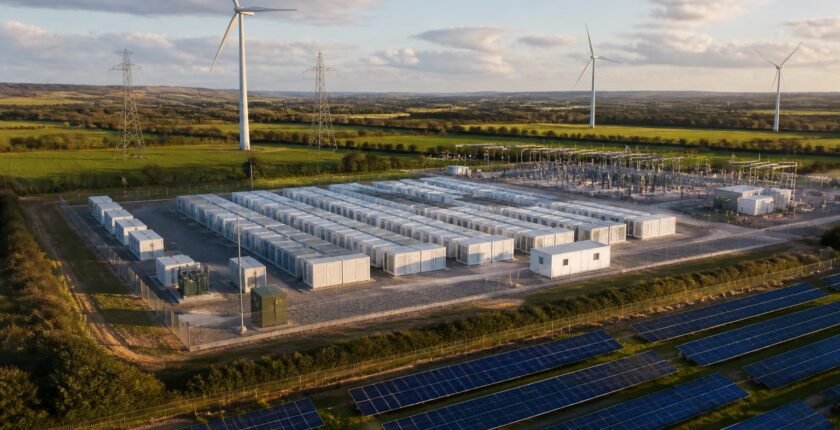
Germany adds 8.2 GWh of battery storage in 9‑mo 2026
Estimated reading time: 4 minutes · Last updated:
Germany added 8.2 GWh of battery storage capacity in the first nine months of 2026, a total shown on Renewables Now dated 22 October 2026. The number denotes aggregate energy-storage capacity brought to—or declared as—commissioned during that period and is presented in gigawatt-hours (GWh).
Key takeaways
- Headline figure: Germany added 8.2 GWh of battery storage capacity in 9‑mo 2026.
- Source and date: The dataset entry is dated 22 October 2026.
- Measure reported: The number is reported as installed battery storage capacity expressed in gigawatt‑hours (GWh).
Table of contents
- Key takeaways
- What the 8.2 GWh figure represents
- Why an 8.2 GWh addition matters for a system with rising renewables
- What the data does not disclose and why that matters
- How to interpret the figure for market and policy observers
- Outlook — case for and against
- What to be careful about
- Frequently asked questions
What the 8.2 GWh figure represents
The published figure is a single aggregated capacity total: 8.2 GWh of battery storage added in a nine‑month window in 2026. The page presents that number as a capacity measure rather than as a count of projects, revenue, or manufacturing output. Because the source gives only the headline metric, it does not break the total into duration (hours), power rating (MW), project size bands, geographic distribution within Germany, or the split between grid‑scale and behind‑the‑meter systems.
Readers should treat 8.2 GWh as an aggregate snapshot supplied on the outlet’s page rather than a detailed inventory. The number is useful as a top‑line indication of build activity but, on its own, it cannot answer follow‑up questions such as how many projects it covers, whether the capacity is newly commissioned or simply newly reported, or what mix of technologies and business models contributed to the total.
Why an 8.2 GWh addition matters for a system with rising renewables
Battery storage capacity is the grid resource that stores energy and discharges it later to smooth variable renewable generation and meet shortfalls. An 8.2 GWh increase in installed capacity over nine months is a measurable contribution to flexibility, frequency response and peak‑shaving capability, and it signals continued deployment of grid‑scale and distributed batteries across Germany.
Because the source page supplies no breakdown, however, the operational impact of that capacity depends on its power rating, location and control arrangements. A modest number of long‑duration projects will affect system balancing differently from many short‑duration units distributed across distribution networks. The single headline therefore flags progress but cannot by itself be translated into expected hours of backup, congestion relief or market dispatch outcomes without more granular data.
What the data does not disclose and why that matters
The listing gives only the 8.2 GWh total and the nine-month timeframe; it does not include a count of projects, developer names, commissioning dates, or whether the capacity is operational or commissioned but not yet grid-connected. Because of those gaps, the figure alone cannot reveal trends in project sizes or whether growth stems from a few large facilities or many small installations.
For planners, investors and policy makers the missing details matter. Connection queue backlogs, permitting timelines and the availability of grid reinforcements all shape when newly built capacity actually delivers services. Without project‑level disclosure, the number is a headline indicator rather than a basis for operational or investment decisions.
How to interpret the figure for market and policy observers
Treat 8.2 GWh as an early‑stage metric: it documents activity but not adequacy. For anyone tracking Germany’s energy transition, the figure confirms that battery deployment continued through the first nine months of 2026, but it does not by itself establish whether deployment is accelerating, plateauing or slowing versus earlier periods, because no comparative series is provided on the page.
The statistic is most useful when combined with other sources: system operator reports, ministry statistics, detailed market datasets and project registers. Those sources provide the project‑level granularity—commissioning dates, MW ratings, ownership and contractual arrangements—needed to convert headline capacity into expectations about grid services, market revenues and local impacts.
Outlook — case for and against
The case for
- Additional battery capacity increases system flexibility and supports integration of variable renewables if it is commissioned and network‑available.
- A continued pipeline of BESS projects can create scope for new market products and revenue streams tied to ancillary services and peak management.
The case against
- The headline total lacks project detail, so it may overstate near‑term deliverability if parts of the reported capacity remain subject to connection or permitting delays.
- Without distribution of capacity across regions and grid nodes, installers may face local congestion that limits how much of the added capacity can be dispatched when needed.
What to be careful about
- The sole published number is not broken down by project or status, creating a risk of misinterpreting reported capacity as fully operational.
- Potential grid connection or permitting delays could leave some of the reported capacity offline for months after it is counted.
- Regional concentration of new capacity could exacerbate local network constraints if not coordinated with grid reinforcements.
The bottom line
The 8.2 GWh figure—added in the nine-month period in 2026—indicates battery deployment in Germany continued through most of 2026. It is a useful headline for tracking momentum but lacks the project-level granularity needed to assess how much of that capacity is immediately available for grid services. Stakeholders seeking operational or investment conclusions should consult underlying registries and system-operator data for MW ratings, commissioning status and location before drawing decisions.
What to watch
- Watch for Germany’s full‑year 2026 energy and storage statistics; no date has been set for the official release on the page.
- Watch for project‑level registries or operator reports that break the 8.2 GWh total into MW ratings, commissioning dates and geographic location; no date has been set.
Frequently asked questions
What exactly does 8.2 GWh mean in this context?
The 8.2 GWh is presented as the aggregate battery storage capacity added in that nine-month period in 2026; the listing supplies only that single capacity total and omits any MW breakdown, project count and commissioning status.
Who reported the figure and when?
The entry displays the date 22 October 2026.
Can the 8.2 GWh figure be used to judge operational readiness?
Not on its own: because the source omits project‑level detail, the figure cannot confirm whether all reported capacity is fully commissioned and grid‑connected or still awaiting tests and connections.
Related reading