
Blog
Altenwörth Dam Fish Bypass Reopens Danube Migration Route
Estimated reading time: 6 minutes · Last updated:
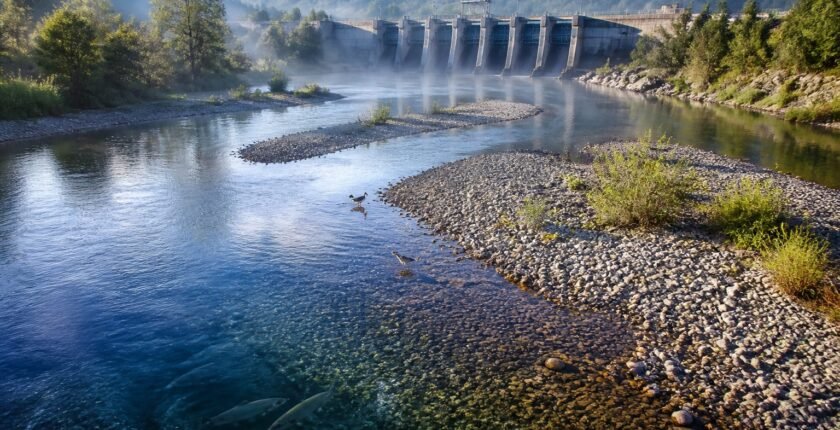
The Altenwörth Dam fish bypass gives migrating fish a way around one of the Danube's large power stations in Lower Austria. The channel was built under the LIFE Network Danube Plus project and runs for 7.8 miles beside the plant. It carries a steady flow of water that behaves like a natural stream, so fish can travel upstream and downstream past the barrier. VERBUND, Austria's main power producer, started the river restoration programmes that Altenwörth belongs to. The plant still produces more than 2 terawatt-hours of electricity a year. Four tributaries were also reconnected, and new gravel banks, deadwood and wetlands were built. Monitoring with sensors and chip tags has recorded dozens of native species breeding in the bypass.
Key takeaways
- The bypass: A channel of 7.8 miles, also reported as 7.5 miles, now carries continuous flow around the Altenwörth hydropower plant in Lower Austria, letting native fish move both upstream and downstream.
- Wider repair: The LIFE Network Danube Plus project reconnected the Göllersbach, Kamp, Krems and Schmida tributaries and restored side arms next to the Danube.
- Early results: Sensor and chip-tag monitoring has confirmed dozens of native fish species spawning in the Altenwörth bypass, though no counts or species list have been released.
- Power kept: Altenwörth still generates more than 2 terawatt-hours a year, part of a fleet of over 3,000 Austrian hydropower plants supplying roughly 60% to 65% of the country's electricity.
Table of contents
- Key takeaways
- How the Altenwörth Bypass Carries Fish Past the Dam
- Why Danube Dams Cut Fish Off From Their Spawning Grounds
- What Else the LIFE Network Danube Plus Work Rebuilt
- What the Monitoring Has Shown So Far
- Why Austria Needs Both the Power and the River
- Will the Altenwörth model work elsewhere?
- What to be careful about
- Frequently asked questions
How the Altenwörth Bypass Carries Fish Past the Dam
Altenwörth sits on the Danube in Lower Austria and generates more than 2 terawatt-hours of electricity each year. A barrier of that size stops fish swimming against the current, so the LIFE Network Danube Plus project dug a separate waterway around it.
The channel is built to imitate a natural stream rather than a staircase of concrete steps. Water runs through it without interruption, which gives fish a current to follow and a route that stays open in both directions. Native species can now head upstream to feeding and breeding areas and return downstream past the plant.
Published figures for the channel's length do not agree. One gives 7.8 miles, while a shorter figure of 7.5 miles has also been circulated. Until VERBUND's own specification is checked, the safest reading is that the bypass runs between 7.5 and 7.8 miles.
Why Danube Dams Cut Fish Off From Their Spawning Grounds
Run-of-river plants make power from the river's own flow, holding water behind a barrage instead of filling a large reservoir. Even so, a chain of them changes a river deeply. Over decades, the barriers on the Danube turned a fast, shifting waterway into a string of separate pools.
Fish that once travelled long distances could no longer reach the places they need at each stage of life: feeding areas, spawning beds and the sheltered nurseries where young fish grow. Danube salmon, European sturgeon and nase are among the native migrants whose numbers fell sharply.
The barriers also hold back gravel and sediment that would naturally move downstream. That alters how the riverbed behaves and lowers water quality. As the river's health declined, Austria's hydropower fleet came into conflict with strict EU environmental rules, and VERBUND responded with large restoration programmes.
What Else the LIFE Network Danube Plus Work Rebuilt
The bypass is one part of a wider repair. Four tributaries feeding the Danube were reconnected to the main river: the Göllersbach, the Kamp, the Krems and the Schmida. Side arms next to the main channel were restored as well.
Soil and rock dug out during construction stayed on site. The material was reused to build deadwood structures, shallow gravel banks and wetlands. Gravel banks give fish somewhere to lay eggs, while the wetlands clean the water naturally as it moves through them.
In total, more than 680 miles of Danube river corridor is described as reconnected. No breakdown of that figure has been given, including how much lies upstream of Altenwörth or how much depends on the tributary work. It is best treated as the scheme's headline claim rather than a measured length.
What the Monitoring Has Shown So Far
The scheme is fully in service and under continuous evaluation. Digital sensors track conditions in the channel. Chip tagging means fitting fish with small electronic tags that register each time they pass a reader, so their movements can be logged.
That monitoring has confirmed that dozens of native species are spawning in the bypass, not just swimming through it. Breeding is the harder test. A channel that fish reproduce in is working as a living stream, not merely as a pipe around a wall.
The detail has not been made public. There is no species list, no seasonal count of fish passing and no comparison with conditions before the channel opened. The data released so far supports a narrower claim than outright success: fish are using the channel to breed.
Why Austria Needs Both the Power and the River
Hydropower has underpinned Austria's economy for more than a century. In the late 19th century Alpine rivers drove mills and factories. After the Second World War, big Danube projects helped rebuild the country and made it a regional leader in producing and exporting clean electricity.
More than 3,000 hydropower plants now operate across Austria and supply roughly 60% to 65% of its electricity. On the Danube, ten run-of-river stations together generate more than 13 terawatt-hours a year.
That fleet is central to Austria's goals of 100% renewable electricity by 2030 and carbon neutrality by 2040. It also provides baseload output and the flexibility to absorb sudden surges in demand as industry, data centres and wider electrification grow. That is why the approach at Altenwörth is to retrofit the dam, not remove it.
| Measure | What was done | Stated purpose |
|---|---|---|
| Bypass channel | 7.8-mile stream-like channel (also given as 7.5 miles) | Fish passage upstream and downstream |
| Tributary reconnection | Göllersbach, Kamp, Krems, Schmida | Reopen links to the Danube |
| Side arms | Neighbouring side arms restored | Restore river habitat |
| Reused spoil | Deadwood, shallow gravel banks, wetlands | Spawning grounds, natural filtering |
| Monitoring | Digital sensors and chip tagging | Ongoing evaluation |
Will the Altenwörth model work elsewhere?
The case for
- Monitoring has confirmed dozens of native species spawning in the channel, not only passing through it.
- The plant keeps generating more than 2 terawatt-hours a year, so restoration did not cost the grid its output.
- Spoil from construction was reused to build gravel banks and wetlands, adding habitat without hauling material away.
The case against
- No fish counts, species list or before-and-after comparison have been released.
- The channel's length has been given as both 7.5 and 7.8 miles, and the 680-mile corridor figure has no breakdown.
- A bypass at one plant does not remove the sediment trapping and fragmentation caused by the other Danube barriers.
What to be careful about
- Without published counts, it is impossible to tell whether migrating species such as Danube salmon, European sturgeon and nase are recovering or merely present.
- Sediment and gravel remain trapped behind the Danube's chain of dams, which a single bypass does not fix.
- If restoration results fall short, Austria's hydropower fleet could stay in tension with EU environmental mandates.
The bottom line
Altenwörth shows the trade Austria is trying to make: keep a plant producing more than 2 terawatt-hours a year while giving fish back a route past it. The channel, the four reconnected tributaries and the rebuilt gravel and wetland habitat each target specific damage that dams cause, from blocked migration to trapped sediment. The early signal is encouraging, with dozens of native species breeding in the bypass. The weak spot is the numbers. The channel's length has been stated two ways, the 680-mile corridor figure comes without a breakdown, and no fish counts are public. If VERBUND releases its monitoring data, Altenwörth could move from a promising example to a tested template for other ageing dams.
What to watch
- Watch for VERBUND to publish species lists and fish-passage counts from the sensor and chip-tag monitoring at Altenwörth; no release date has been set.
- Watch whether retrofits like Altenwörth keep Austria's hydropower fleet on course for the national goal of 100% renewable electricity by 2030.
- Watch for comparable bypass channels at other legacy Danube plants; no schedule has been announced.
Frequently asked questions
Which fish does the Altenwörth bypass help?
It serves native Danube migrants, a group that includes Danube salmon, European sturgeon and nase, all of which declined after dams blocked their routes. Monitoring has confirmed dozens of native species spawning in the channel.
Does the Altenwörth Dam still produce electricity after the bypass?
Yes. The plant generates more than 2 terawatt-hours a year, and the channel diverts a steady flow around it rather than replacing it. It is one of ten run-of-river stations on the Danube that together exceed 13 terawatt-hours annually.
How do scientists know fish are using the bypass?
The channel is watched with digital sensors and chip tagging, where fish carry small electronic tags that register as they pass a reader. That system confirmed spawning by dozens of native species, though detailed counts have not been published.
Related reading