
Blog
BW ESS Buys 800 MWh French Battery Portfolio From Recurrent
Estimated reading time: 6 minutes · Last updated:
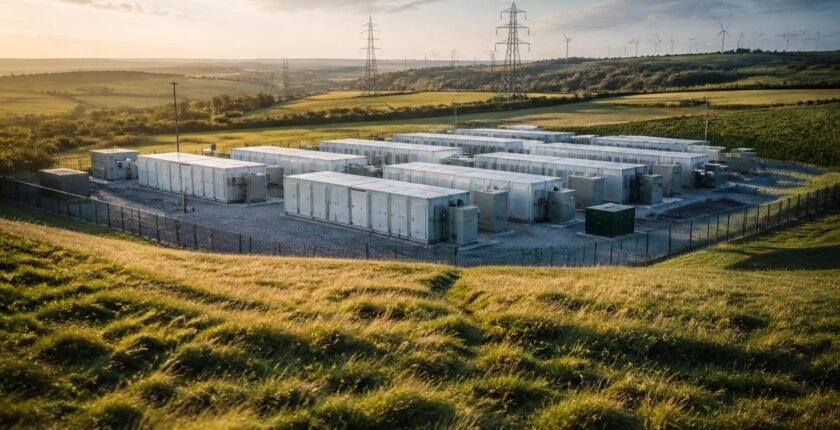
BW ESS has bought two standalone battery storage projects in France from Recurrent Energy, the Canadian Solar subsidiary, giving it 200 MW of power and 800 MWh of storage capacity. The deal was announced on 29 October 2026 and makes France the seventh country where BW ESS operates. Neither site is built yet. Recurrent will keep running development until the projects reach ready-to-build status, and then BW ESS takes over construction and operations. The BW ESS France portfolio splits evenly between Baixas in Pyrénées-Orientales and Coquainvilliers in Calvados, at 100 MW and 400 MWh each. No price was disclosed. Neither company has given a date for construction to start or for the batteries to begin operating.
Key takeaways
- The deal: BW ESS has acquired two French battery projects from Recurrent Energy, a Canadian Solar subsidiary, totalling 200 MW and 800 MWh, in a transaction announced on 29 October 2026.
- The sites: Baixas in Pyrénées-Orientales and Coquainvilliers in Calvados, Normandy, are each planned at 100 MW and 400 MWh, which gives four hours of discharge at full power.
- Who does what: Recurrent Energy keeps responsibility for development until ready-to-build status, after which BW ESS handles construction, commissioning and long-term operation.
- BW ESS footprint: France becomes BW ESS's seventh market, joining a portfolio of more than 540 MWh in operation and roughly 12 GWh under construction or in pre-construction.
- What is missing: BW ESS has disclosed neither the acquisition price nor a timeline for building or commissioning Baixas and Coquainvilliers.
Table of contents
Two Four-Hour Batteries at Opposite Ends of France
The first project, Baixas, sits in the Pyrénées-Orientales department in the south of the country. The second, Coquainvilliers, lies in the Calvados department in Normandy. Each is planned with 100 MW of power and 400 MWh of energy capacity.
That ratio sets how long each battery can run. Divide a battery's energy capacity by its power rating and you get the hours it can discharge at full output. Here both sites come to four hours. Combined, the pair would deliver 200 MW for that span.
Both will be standalone systems. A standalone battery has no direct link to a particular wind or solar plant. It charges from and feeds into the grid rather than storing the output of one generator. Recurrent Energy says each site holds an advanced connection position on the transmission network. The company also says it picked locations where it expects grid constraints to be limited.
Why Recurrent Energy Stays On Until Ready-to-Build
The sale changes who owns the projects before it changes who works on them. Recurrent Energy will finish the outstanding development procedures and bring both assets to ready-to-build status. That is the stage at which a project has cleared the steps needed before construction can begin.
Until now Recurrent has handled the groundwork. It secured the land, pushed the grid connection process forward, managed permits and kept up relations with local authorities and nearby communities. That work continues even though the projects have a new owner.
Once the sites are ready to build, BW ESS takes charge of construction, commissioning and operation, and it plans to keep the facilities for the long term. Dylan Marx, CEO of Recurrent Energy, presented the sale as part of a strategy of developing BESS projects while staying involved in the phases before commercial operation. In practice, Recurrent gives up ownership of two French projects but keeps the technical and development role.
France Becomes BW ESS's Seventh Market
Before this deal, BW ESS was active in the United Kingdom, Australia, Italy, Germany, Spain and Sweden. France now joins that list as its seventh country.
In its announcement, BW ESS put its existing portfolio at more than 540 MWh of batteries in operation. It also listed roughly 12 GWh either under construction or in pre-construction. The French pair adds 800 MWh of planned capacity, which is larger than the company's current operating fleet. None of it is installed yet.
Erik Strømsø, CEO and co-founder of BW ESS, described the purchase as an initial 200 MW and 800 MWh platform in France that the company intends to build on. He did not say how much more capacity BW ESS is targeting in the country, or where. For now the expansion is a stated intention. What exists so far is two sites still working through development.
What the Batteries Would Do for France's Grid
Grid batteries exist to bridge the gap between when power is produced and when it is used. They charge when electricity is plentiful and discharge when demand climbs or generation conditions change.
They can also respond quickly to disturbances. Frequency stability means keeping the grid's alternating current close to its standard rate. Batteries can inject or absorb power rapidly to help hold it there, which makes them suited to fast-response services.
BW ESS and Recurrent Energy say Baixas and Coquainvilliers are meant to meet flexibility needs in the French system and help integrate more renewable generation. That case depends on the sites being built. The financial value is undisclosed and there is no construction or operating timeline. The remaining development steps still have to be completed before any work starts on the ground.
| Project | Department | Region | Power | Energy |
|---|---|---|---|---|
| Baixas | Pyrénées-Orientales | Southern France | 100 MW | 400 MWh |
| Coquainvilliers | Calvados | Normandy | 100 MW | 400 MWh |
| Combined | Two departments | France | 200 MW | 800 MWh |
What could speed or slow the French projects
The case for
- Both sites already hold advanced connection positions on the transmission network, which Recurrent Energy says removes a common source of delay.
- Recurrent Energy says it chose locations where it expects grid constraints to be limited.
- Recurrent keeps the development work it has handled so far, including land, permits and local relations, so the team does not change before ready-to-build.
The case against
- The remaining development procedures must still be completed before construction can start.
- BW ESS has published no construction or commercial operation timeline.
- The acquisition price is undisclosed, so the deal's economics cannot be assessed.
What to be careful about
- Development risk: Baixas and Coquainvilliers cannot be built until Recurrent Energy completes the outstanding procedures, and no completion date has been given.
- Timing risk: with no construction or operating schedule announced, the 800 MWh may take an unknown period to reach the grid.
- Disclosure gap: the undisclosed price leaves outsiders unable to judge what BW ESS paid for its French entry.
The bottom line
The deal gives BW ESS a foothold in France while leaving the remaining development work with the company that started it. Recurrent Energy carries the projects to ready-to-build, and BW ESS then builds and keeps them. That split explains why the transaction says more about intent than about capacity. Today the 800 MWh exists as two grid connection positions, secured land and permit work in Pyrénées-Orientales and Calvados. Whether it becomes operating storage depends on Recurrent finishing the outstanding procedures and on BW ESS setting a build schedule, and neither has a date. Strømsø's aim to grow from this platform will be judged by how fast these two sites move and by what BW ESS adds next in France.
What to watch
- Watch for Recurrent Energy to announce that Baixas and Coquainvilliers have reached ready-to-build status; no date has been set.
- Watch for BW ESS to publish a construction and commercial operation timeline for the two French sites; none has been announced.
- Watch for further French acquisitions by BW ESS following Erik Strømsø's stated plan to expand from this initial platform; no target or date has been given.
Frequently asked questions
How much did BW ESS pay for the Recurrent Energy projects in France?
BW ESS has not disclosed the financial value of the deal. The seller, Recurrent Energy, is a subsidiary of Canadian Solar, and the transaction covers two projects totalling 200 MW and 800 MWh.
Will the Baixas and Coquainvilliers batteries be linked to a solar or wind farm?
No. Both are planned as standalone battery energy storage systems, meaning neither connects directly to a specific renewable plant. Each instead holds its own advanced connection position on France's transmission network.
Which countries does BW ESS operate in?
BW ESS lists the United Kingdom, Australia, Italy, Germany, Spain and Sweden, with France added as its seventh market after the 29 October 2026 deal. Across those markets it reports more than 540 MWh in operation and roughly 12 GWh under construction or in pre-construction.
Related reading