
Blog
KenGen Finishes Olkaria 1 Geothermal Upgrade, Capex Up 14.3%
Estimated reading time: 7 minutes · Last updated:
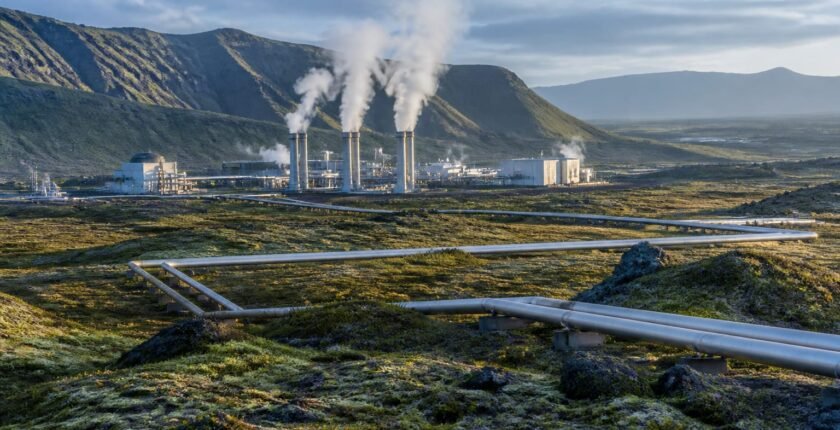
Kenya Electricity Generating Company PLC (KenGen) has finished rehabilitating its Olkaria 1 geothermal power station, raising the plant's capacity from 45MW to 63MW. The upgrade anchors a capital programme that grew 14.3% to KSh 15.5 billion in the year to June 2026, a programme that also covers solar, hydropower and battery storage. Revenue climbed over the period, but profit after tax slipped 1.2%, and shareholders accepted a smaller payout of KSh 0.75 per share. KenGen fed 8,975 GWh into Kenya's grid during the year, meeting 57.2% of national demand. It is also pitching geothermal steam to industry at Olkaria, and it will change chief executive on 1 February 2027.
Geothermal energy can do more than supply electricity to the grid.
Eng. Peter Njenga, Managing Director and CEO, KenGen
Key takeaways
- Olkaria 1 capacity: KenGen's rehabilitated Olkaria 1 geothermal station now runs at 63MW, up from 45MW, an increase of about 40%.
- Capital spending: KenGen raised capital investment 14.3% to KSh 15.5 billion in the year to June 2026, funding Olkaria 1 alongside proposed solar, hydro, storage and dam projects.
- Grid share: KenGen delivered 8,975 GWh, covering 57.2% of Kenya's electricity demand, with more than 90% of its dispatched power coming from renewable sources.
- Earnings and debt: Revenue rose 6.4% to KSh 59.7 billion while profit after tax eased 1.2% to KSh 10.35 billion, and borrowings dropped to KSh 97.1 billion.
- Dividend and CEO: The payout was cut to KSh 0.75 from KSh 0.90 per share, and Ronoh Kibet Charles will replace Peter Njenga as CEO on 1 February 2027.
Table of contents
- Key takeaways
- Olkaria 1 Anchors a Wider Rebuild of KenGen's Fleet
- KenGen Covers More Than Half of Kenya's Electricity
- Why KenGen's Profit Fell While Revenue Grew
- A Smaller Dividend to Pay for Reinvestment
- Selling Steam and Expertise, Not Only Power
- What could help or hurt KenGen's plan
- What to be careful about
- Frequently asked questions
Olkaria 1 Anchors a Wider Rebuild of KenGen's Fleet
The upgraded Olkaria 1 station now has 63MW of capacity against 45MW before the work, a gain of 18MW, or roughly 40%. The project renewed an existing plant rather than building a new one. KenGen presents it as the core of a portfolio that pairs refurbishment of ageing assets with fresh generation and storage.
Most of the rest of that portfolio has not yet been built. It includes a proposed 42.5MW solar plant at Seven Forks, the rebuilding of the Gogo hydropower station, battery storage, and a proposal to raise the Masinga dam. KenGen ties the dam proposal to improved water management for hydropower generation and to a sturdier electricity system overall.
No capacities or timelines were given for the Gogo, battery or Masinga elements. Of everything listed, Olkaria 1 is the only finished asset with a stated output figure. That makes it the clearest measure so far of what the KSh 15.5 billion programme is delivering on the ground.
KenGen Covers More Than Half of Kenya's Electricity
Over the year to June 2026, KenGen delivered 8,975 gigawatt hours (GWh) to the national grid. That volume met 57.2% of Kenya's electricity demand. Renewable sources supplied more than 90% of the power KenGen dispatched, which reflects a fleet built largely on geothermal and hydropower.
Eng. Peter Njenga, KenGen's Managing Director and CEO, put Kenya's peak demand to date at 2,549MW. "Kenya's growing economy needs dependable electricity," he said. Njenga added that the company's spending is aimed at keeping its current plants reliable while it develops the new capacity that businesses and households will need.
Measured against that peak, the 18MW added at Olkaria 1 is equal to about 0.7% of the system's highest load. The argument KenGen makes for the programme is cumulative: older units kept in service, plus new solar, hydro and storage capacity once the proposed projects are built. Whether those projects arrive on time is the open question.
Why KenGen's Profit Fell While Revenue Grew
Revenue grew 6.4% to KSh 59.7 billion over the financial year, and operating profit increased 4.1% to KSh 14.2 billion. Further down the income statement, profit after tax eased 1.2% to KSh 10.35 billion.
KenGen attributes the dip mainly to lower finance income. Finance income is the interest a company earns on cash it holds. As KenGen spent its cash on capital projects, it had less money on deposit to earn that interest.
The same spending came alongside a sizeable cut in debt. KenGen reduced its borrowings to KSh 97.1 billion, a fall of KSh 12.2 billion from roughly KSh 109.3 billion a year earlier. The company says the lower debt strengthens its balance sheet as it develops new projects. The profit decline, then, is a timing effect of cash moving into assets rather than an operating weakness, though the earnings those assets are meant to produce have yet to show up.
A Smaller Dividend to Pay for Reinvestment
At KenGen's annual general meeting, shareholders voted through a dividend of KSh 0.75 per share, described as first and final, for the financial year that ended on 30 June 2026. The previous year's payout was KSh 0.90, so the cut is KSh 0.15, or about 17%. Payment is expected on or about 21 January 2027, to shareholders registered by close of business on 29 October 2026.
Eng. Frank Konuche, KenGen's Board Chairman, framed the reduction as a trade-off. "We recognise the importance of dividends to our shareholders," he said, while arguing that the company must equally put money into the assets that will produce its earnings in the years ahead.
Konuche called the balance between shareholder returns, investment and debt reduction essential to the company's long-term strength. The lower dividend fits the slight profit decline and the faster debt paydown. Whether shareholders are rewarded for the smaller cheque depends on the new and refurbished plants producing the future earnings Konuche describes.
Selling Steam and Expertise, Not Only Power
KenGen wants Olkaria, in Naivasha, to become an industrial base as well as a power source. Its Green Energy Park is meant to place manufacturers and other businesses beside geothermal electricity and steam. The company names food processing, manufacturing and data centres as the industries it wants to attract. The park has been granted special economic zone status and designated a customs controlled area, which together give KenGen a framework for recruiting investors.
"Geothermal energy can do more than supply electricity to the grid," Njenga said, describing a plan to combine energy, steam and industrial land to draw in employers and strengthen Kenya's manufacturing base.
Under its G2G 2034 Strategy, KenGen is also growing a consultancy arm. It sells services in drilling geothermal wells, assessing resources, engineering, and running and maintaining power plants, a way to earn money beyond electricity sales. "Our responsibility is to turn Kenya's energy resources into lasting economic value," Njenga said.
| Project | Technology | Capacity | Status |
|---|---|---|---|
| Olkaria 1 | Geothermal | 45MW to 63MW | Rehabilitation completed |
| Seven Forks | Solar | 42.5MW | Proposed |
| Gogo | Hydropower | Not stated | Redevelopment planned |
| Masinga dam | Hydropower water storage | Not stated | Raising proposed |
| Battery storage | Energy storage | Not stated | Part of plan |
What could help or hurt KenGen's plan
The case for
- Olkaria 1 has already added 18MW of renewable capacity to a fleet that supplies 57.2% of Kenya's demand.
- Borrowings fell by KSh 12.2 billion to KSh 97.1 billion, leaving more room to fund new projects.
- Special economic zone status and customs controlled area designation give the Green Energy Park a legal basis for attracting industrial investors.
- Consultancy work under the G2G 2034 Strategy could diversify revenue beyond electricity sales.
The case against
- Profit after tax fell 1.2% to KSh 10.35 billion as cash moved out of interest-earning deposits.
- The Seven Forks solar plant and the Masinga dam raising are still proposals, with no published capacities or dates for several elements.
- The dividend dropped from KSh 0.90 to KSh 0.75 per share.
- A chief executive handover on 1 February 2027 comes while several projects are mid-development.
What to be careful about
- Several portfolio projects, including the Seven Forks solar plant and the Masinga dam raising, are proposals without published timelines, so delivery could slip.
- Lower finance income will keep weighing on profit after tax for as long as KenGen continues to spend its cash on capital projects.
- The CEO transition from Peter Njenga to Ronoh Kibet Charles on 1 February 2027 could disrupt project execution if the handover does not go smoothly.
- The Green Energy Park depends on businesses choosing to locate at Olkaria, and no tenants have been named.
The bottom line
The Olkaria 1 upgrade is the one finished, measurable result of KenGen's KSh 15.5 billion spending year: 18MW of extra geothermal capacity at a plant the company has renewed rather than replaced. The financial picture shows the cost of that ambition. Profit after tax dipped, the dividend shrank to KSh 0.75, and debt came down to KSh 97.1 billion. Much of the remaining programme, from Seven Forks solar to the Masinga dam, is still at the proposal stage. The bets on industrial steam sales at Naivasha and on consultancy revenue are similarly early. Ronoh Kibet Charles inherits that unfinished pipeline on 1 February 2027, and the earnings it produces will decide whether this year's trade-off was worth making.
What to watch
- KenGen expects to pay its KSh 0.75 dividend on or about 21 January 2027.
- Ronoh Kibet Charles takes over from Peter Njenga as Managing Director and CEO on 1 February 2027; watch whether project timelines change under the new leadership.
- Watch for a construction decision on the proposed 42.5MW Seven Forks solar plant and the Masinga dam raising; no dates have been set for either.
Frequently asked questions
When will KenGen pay its 2026 dividend?
KenGen expects to pay its KSh 0.75 per share dividend on or about 21 January 2027. It goes to shareholders who were on the register at close of business on 29 October 2026.
How much did the Olkaria 1 rehabilitation add to Kenya's power capacity?
The work lifted Olkaria 1 from 45MW to 63MW, an addition of 18MW. That is equal to about 0.7% of the 2,549MW peak demand Peter Njenga cited for Kenya.
What is the Olkaria Green Energy Park?
It is a KenGen project in Naivasha that aims to site manufacturers, food processors and data centres next to geothermal electricity and steam. The park has special economic zone status and is designated a customs controlled area.
Who is replacing Peter Njenga as KenGen CEO?
Ronoh Kibet Charles, currently KenGen's General Manager for Commercial Services, becomes Managing Director and CEO on 1 February 2027. KenGen says the handover period is meant to keep its generation, industrial and technical-services work on track.
Related reading
This article is information, not financial advice. Anyone acting on it should do their own checks.