
Blog
Turkey YEKA Auction Awards 1.5 GW Wind and 785 MW Solar
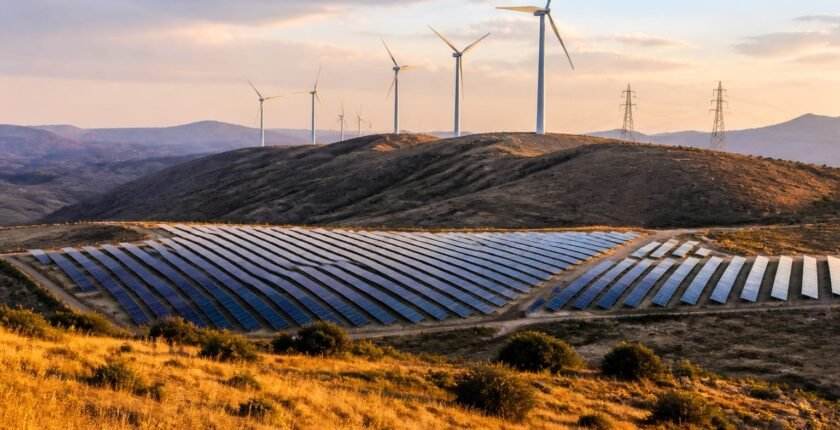
Estimated reading time: 7 minutes · Last updated:
Turkey's Ministry of Energy and Natural Resources awarded 2.3 GW of renewable capacity in its 2026 YEKA auction round, and every megawatt cleared at the lowest price the rules allowed. Wind projects totalling 1.5 GW will earn EUR 35 per MWh under their long-term contracts. The 785 MW of solar settled at EUR 32.5 per MWh. Because bidders hit those floors, they kept competing by offering to pay the state for the right to build. That brought in EUR 113.4 million upfront, including value-added tax. YEKA is the Turkish acronym for the Renewable Energy Zones mechanism. Not every site found a taker: three solar zones totalling 115 MW drew no applications.
Key takeaways
- Floor prices: All 2.3 GW in Turkey's 2026 YEKA round went at the floor: EUR 35 per MWh for 1.5 GW of wind and EUR 32.5 per MWh for 785 MW of solar.
- Upfront payments: Winners pledged contribution fees worth EUR 113.4 million including VAT, with EUR 75.5 million coming from wind and EUR 37.9 million from solar.
- Fee extremes: Fe Girişim Enerji pledged EUR 154,000 per MW for the 140 MW Balikesir 4 wind zone, while Egesa Elektrik won a 235 MW zone unopposed and pays no fee.
- Unclaimed solar: Malatya 2, Mardin 1 and Kahramanmaraş 1, three solar zones totalling 115 MW, received no applications.
- Minister's estimate: Minister Alparslan Bayraktar estimates USD 1.9 billion of investment and 6.1 TWh of annual output across 18 sites.
Table of contents
- Key takeaways
- How Bidders Ended Up Paying Turkey for the Right to Build
- Wind Takes 1.5 GW Across Seven Zones in Four Provinces
- Why Solar Filled 11 Zones but Left 115 MW Unclaimed
- What Bayraktar Says the 18 Sites Will Deliver
- What could help or hinder the 2026 YEKA projects
- What to be careful about
- Frequently asked questions
How Bidders Ended Up Paying Turkey for the Right to Build
The YEKA format is a descending auction. Bidders lower their price per megawatt-hour until they reach a floor the government set in advance. This year that floor stood at EUR 35 for wind and EUR 32.5 for solar. When several bidders reach the floor, the tie is broken another way. They pledge a contribution fee, opening at EUR 10,000 per MW, and the highest pledge wins. The sessions are streamed live.
In 2026 all capacity on offer went at the floor, so the contribution fee decided every contested zone. The fee is money the developer pays the state, not a subsidy it receives.
Revenue comes in two phases. Wind winners may sell power on the open market for six years, and solar winners for five. During that window both hold a one-way contract for difference. This hedge guarantees at least EUR 47.5 per MWh without taking back gains when prices run higher. Afterwards, each project moves to a 20-year power purchase agreement at its auction strike price.
That sequence helps explain why developers will pay heavily to win at EUR 35. The early merchant years carry the upside, cushioned by the EUR 47.5 floor. The long contract provides the predictable baseline.
Wind Takes 1.5 GW Across Seven Zones in Four Provinces
The REZ WPP 2026 tender, known in Turkish as YEKA RES 2026, attracted 29 applications from 12 companies. In the end the ministry handed out 1.5 GW, divided among seven zones located in the provinces of Sivas, Balıkesir, Manisa and Kütahya.
Winners committed EUR 62.9 million in contribution fees, or EUR 75.5 million once VAT is added. A single site supplied a large share of that. Fe Girişim Enerji pledged EUR 154,000 per MW for Balikesir 4, a 140 MW zone. On that zone size the fee works out at about EUR 21.6 million, roughly a third of the wind total before VAT.
At the other end, Egesa Elektrik secured a 235 MW zone with no rival bidder and therefore pays no contribution fee. The published results give this zone the same Balikesir 4 name as the 140 MW site, a discrepancy that has not been cleared up.
The gap between EUR 154,000 and zero per megawatt shows how unevenly competition was spread. Where several developers wanted the same wind resource, the floor price stopped mattering and the fee did the work. Where nobody else turned up, the winner took the zone at the floor with nothing added.
Why Solar Filled 11 Zones but Left 115 MW Unclaimed
Nineteen companies lodged 44 applications in the REZ SPP 2026 round, known in Turkish as YEKA GES 2026. The commission awarded 11 zones totalling 785 MW, measured as grid connection capacity, the same basis used for the wind awards.
Three sites attracted nobody. They were Malatya 2 at 40 MW, Mardin 1 at 30 MW and Kahramanmaraş 1 at 45 MW. Together they make up the 115 MW left on the table.
Solar contribution fees came to EUR 31.6 million before VAT and EUR 37.9 million after it. That is about half the wind total, even though solar had more zones awarded. The top bid was EUR 91,000 per MW, from Ezel Mensucat Sanayi for the 55 MW Malatya 1 zone. İklim Invest Enerji won Ankara 2, a 30 MW site, for EUR 12,000 per MW, barely above the EUR 10,000 opening level.
The empty zones and the thin bidding at Ankara 2 point the same way. At EUR 32.5 per MWh, some solar sites in this round appear to have sat at the edge of what developers would accept.
What Bayraktar Says the 18 Sites Will Deliver
Alparslan Bayraktar, Turkey's Minister of Energy and Natural Resources, put the combined award at 2.29 GW spread over 18 predetermined sites. He estimated investment at USD 1.9 billion and annual generation at 6.1 TWh. By his calculation, that output equals 1.22 billion cubic meters of imported natural gas.
For wind alone, Bayraktar expects 4.6 TWh a year. He says that is enough for two million households and avoids EUR 852 million of gas imports annually. Subtracting the wind figure from his total leaves roughly 1.5 TWh for the solar plants.
These are the minister's projections, not measured output. The projects have only just been awarded, and the estimates depend on how much capacity actually reaches the grid. The 18-site count matches the 11 solar and seven wind zones awarded, so the three unbid solar zones fall outside it.
Offshore wind is next on the ministry's agenda. Turkey plans to launch offshore wind auctions in the first quarter of next year, which means early 2027.
| Segment | Awarded capacity | Zones awarded | Companies / applications | Floor price | Fees excl. VAT |
|---|---|---|---|---|---|
| Wind (YEKA RES 2026) | 1.5 GW | 7 | 12 / 29 | EUR 35 per MWh | EUR 62.9 million |
| Solar (YEKA GES 2026) | 785 MW | 11 (3 unbid, 115 MW) | 19 / 44 | EUR 32.5 per MWh | EUR 31.6 million |
What could help or hinder the 2026 YEKA projects
The case for
- Strong wind demand pushed one contribution fee to EUR 154,000 per MW, a sign developers value the zones above the EUR 35 strike price.
- The guaranteed EUR 47.5 per MWh during the six- or five-year merchant period protects early revenue.
- Bayraktar projects 6.1 TWh a year, equal by his estimate to 1.22 billion cubic meters of imported gas.
- Planned offshore wind auctions in the first quarter of 2027 would extend the project pipeline.
The case against
- Three solar zones totalling 115 MW drew no applications at EUR 32.5 per MWh.
- Egesa Elektrik's 235 MW wind zone was uncontested, so no competition tested its value.
- All capacity cleared at the floor, so the auction revealed nothing about how low developers would have gone.
- Output and investment figures remain the minister's estimates until plants are built and connected.
What to be careful about
- The three unbid solar zones (Malatya 2, Mardin 1, Kahramanmaraş 1) show that the solar floor price may be too low for some sites.
- A EUR 154,000 per MW upfront fee raises the cost base of the 140 MW Balikesir 4 project before construction starts.
- The published results give two different awards the Balikesir 4 name, which leaves the zone record unclear.
- Bayraktar's 6.1 TWh and USD 1.9 billion figures depend on the awarded capacity being built and connected.
The bottom line
The 2026 YEKA round shows a price-capped auction turning into a sale of development rights. With strike prices fixed at EUR 35 for wind and EUR 32.5 for solar, all the competition moved into contribution fees. Those fees ranged from nothing at Egesa Elektrik's 235 MW zone to EUR 154,000 per MW at Balikesir 4. Wind attracted deeper interest and larger payments. Solar filled most of its zones but left 115 MW without a single bid. The EUR 47.5 per MWh floor during the merchant years is what makes paying upfront rational, and the 20-year contract secures the long tail. Whether Bayraktar's output and investment estimates hold now depends on construction and grid connection.
What to watch
- Watch for Turkey's offshore wind auctions, which the government plans to launch in the first quarter of 2027.
- Watch whether the ministry re-offers the three unbid solar zones totalling 115 MW; no date has been set.
- Watch for contract signing with the 2026 winners, including Fe Girişim Enerji at Balikesir 4; no date has been given.
Frequently asked questions
How much money did Turkey raise from the 2026 YEKA auctions?
Winners pledged EUR 113.4 million including VAT, made up of EUR 75.5 million from wind and EUR 37.9 million from solar. Before VAT the combined total is about EUR 94.5 million. The money comes from contribution fees paid to break ties at the floor price.
Where will Turkey's new YEKA wind farms be built?
Those seven zones, across Sivas, Balıkesir, Manisa and Kütahya, share the 1.5 GW of wind capacity between them. It was Balıkesir that delivered both extremes of the round: Fe Girişim Enerji agreed to a fee of EUR 154,000 per MW there, while Egesa Elektrik won 235 MW in the same province without facing a rival bid.
When will Turkey hold offshore wind auctions?
Turkey plans to launch offshore wind auctions in the first quarter of 2027. They are separate from the 2026 YEKA round, which awarded 1.5 GW of wind and 785 MW of solar.
Related reading