
Blog
Tenevo Battery Storage Gets €60M EBRD and RBI Financing
Estimated reading time: 5 minutes · Last updated:
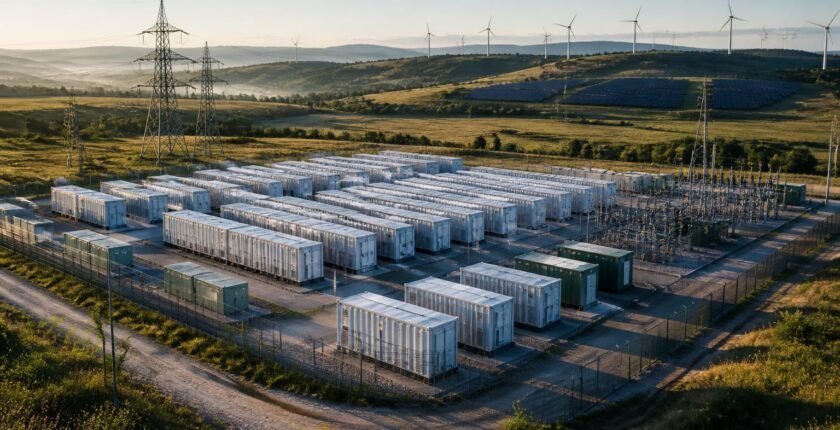
The European Bank for Reconstruction and Development (EBRD) is lending €30 million to Tenevo Solar Technologies for a battery energy storage system in south-eastern Bulgaria, and Raiffeisen Bank International AG (RBI) is adding €30 million in parallel. The €60 million covers building and running a unit rated at 246 MW of power and 512.5 MWh of storage. Tenevo battery storage will share its site with a 242 MWp solar plant and a 65 MW, 260 MWh battery that already operate there. The EBRD announced the loan on 2 November 2026 and calls Tenevo one of Bulgaria's largest storage projects. By the bank's estimate, national battery capacity has already passed 6.2 GW.
By increasing the system's flexibility and helping to integrate more renewable energy, Tenevo will contribute to a more resilient, secure and sustainable power sector.
Manuela Naessl, EBRD Head of Bulgaria
Key takeaways
- Two equal lenders: The EBRD and Raiffeisen Bank International AG each provide €30 million, for a €60 million package behind the Tenevo battery in south-eastern Bulgaria.
- System size: The new Tenevo battery is rated at 246 MW and 512.5 MWh, roughly two hours of storage at full output.
- Shared site: Once built, Tenevo will host about 311 MW and 772.5 MWh of batteries alongside a 242 MWp solar plant the EBRD backed with €50 million.
- National context: The EBRD puts Bulgaria's battery fleet above 6.2 GW and 19 GWh, after grant schemes it helped the Ministry of Energy design concluded in September 2026.
Table of contents
How the €60 Million Tenevo Package Is Split
The money arrives in two equal halves. The EBRD supplies a €30 million loan, and RBI provides another €30 million as parallel funding, meaning each bank lends on its own account alongside the other. Together the two sums pay for construction of the battery system and for its operation afterwards.
The pairing is not new. The same two banks financed the 242 MWp solar plant that the battery will sit beside, and the EBRD on its own committed €50 million to building and running that plant. The bank describes Tenevo Solar Technologies as a long-standing client.
That solar plant operates fully merchant, which means it sells electricity at market prices rather than under a fixed-price contract. The EBRD supported it with first loss risk cover under its InvestEU Framework for Sustainable Transition. First loss cover is an arrangement in which another party agrees to absorb the earliest losses on a loan, lowering the lender's exposure. The bank has not said whether the battery loan carries similar protection.
Tenevo Will Hold About 772.5 MWh Across Two Batteries
Adding the new unit to the 65 MW, 260 MWh battery already on site gives Tenevo roughly 311 MW of combined power and about 772.5 MWh of stored energy. That is a large block of flexible capacity tied to a single solar plant.
Two numbers describe any battery. Power capacity, in megawatts, sets how fast it can push electricity into the grid. Energy capacity, in megawatt-hours, sets how long it can keep doing so. On that basis the new unit can run at full output for a little over two hours, while the existing battery holds about four hours.
Putting storage beside solar lets a site soak up output when panels produce more than the grid can absorb and release it later. The EBRD says the expansion will strengthen grid stability and allow more clean power into Bulgaria's electricity system.
Bulgaria's 6.2 GW Battery Fleet and the Schemes Behind It
The EBRD's latest figures put Bulgaria's battery storage above 6.2 GW and 19 GWh, an average of roughly three hours per installed megawatt. The new Tenevo unit alone would equal about 4 percent of that power capacity. The bank says this growth places Bulgaria among the region's leaders in integrating renewable energy.
Part of that build-out traces to work the EBRD began with Bulgaria's Ministry of Energy in 2023. The bank helped design grant schemes, competitive allocation and technical checks for renewable and storage projects funded through the country's Recovery and Resilience Plan. Those schemes wrapped up in September 2026, and the EBRD credits them with reshaping the national renewables market.
Manuela Naessl, EBRD Head of Bulgaria, called Tenevo a further step in the country's storage progress. The bank reports almost €5.3 billion invested across 330 projects in Bulgaria to date.
| Asset | Power | Energy | Financing |
|---|---|---|---|
| New battery system | 246 MW | 512.5 MWh | €30m EBRD plus €30m RBI |
| Existing battery | 65 MW | 260 MWh | Not disclosed |
| Solar PV plant | 242 MWp | Not applicable | €50m EBRD, with RBI |
What supports Tenevo, and what could hold it back
The case for
- Two lenders that already financed the neighbouring solar plant are backing the battery, so the site's finances are familiar to both.
- At about two hours of storage, the new unit can shift a meaningful share of the 242 MWp plant's output to later in the day.
- Bulgaria's completed grant schemes and a fleet above 6.2 GW indicate a grid operator already used to large batteries.
The case against
- The solar plant sells fully merchant, and no contracted revenue for the battery has been disclosed.
- Tenevo will compete with a national fleet above 6.2 GW and 19 GWh for the same balancing and price opportunities.
- No construction start or commissioning date has been published.
What to be careful about
- The battery's revenue model is undisclosed, while its sister solar plant earns only market prices.
- A fast-growing national battery fleet could narrow the opportunities Tenevo was financed to capture.
- With no published timeline, delays to construction would not be visible to outsiders until announced.
The bottom line
Tenevo shows how Bulgaria's storage market now works in practice. Two banks that already financed a merchant solar plant are returning to put a large battery beside it, turning one generator into a site with about 772.5 MWh of flexibility. The financing is settled; the timetable is not. Neither lender has published a construction start or commissioning date, and the battery's revenue model is undisclosed, which matters on a site whose solar output sells at market prices. The national picture is the bigger question. With the fleet past 6.2 GW and the grant schemes concluded in September 2026, new projects will increasingly compete with batteries that are already running.
What to watch
- Watch for the start of construction on the 246 MW Tenevo battery; no date has been set.
- Watch for a commissioning date for the new 512.5 MWh unit, which neither the EBRD nor RBI has announced.
- Watch for the EBRD's next update on Bulgaria's national storage total, last put above 6.2 GW and 19 GWh; no date has been given.
Frequently asked questions
Who is financing the Tenevo battery in Bulgaria?
The EBRD is lending €30 million and Raiffeisen Bank International AG is providing €30 million in parallel. The €60 million package goes to Tenevo Solar Technologies.
How long can the new Tenevo battery discharge at full power?
With 512.5 MWh of energy and 246 MW of power, it can run at full output for a little over two hours. The existing 65 MW, 260 MWh battery on the same site holds about four hours.
How much battery storage does Bulgaria have?
The EBRD estimates Bulgaria's battery capacity exceeds 6.2 GW and 19 GWh. The new Tenevo unit would add about 4 percent to that power figure.
Related reading